
Multifocal Lens Fitting: How Custom Frames Precisely Align with Your Visual Center
For millions of people, vision correction isn’t as simple as a single prescription. As our eyes age, the need to see clearly at multiple distances—near, intermediate, and far—becomes essential. Multifocal lenses, including progressive lenses, offer a seamless solution. But achieving true visual comfort with these lenses depends on more than just the prescription.
The real key lies in precision fitting—specifically, how well your lenses align with your unique “visual center.”
This is where custom frames and advanced fitting techniques come into play. When done correctly, they transform multifocal lenses from a frustrating compromise into a natural, effortless visual experience.
In this in-depth guide, we’ll explore the science behind multifocal lens fitting, the importance of accurate alignment, and how custom frames help position your lenses exactly where they need to be.
Understanding Multifocal Lenses
Multifocal lenses are designed to correct vision at multiple distances within a single lens.
Types of Multifocal Lenses
- Bifocal lenses: Two distinct zones for near and distance vision
- Trifocal lenses: Three zones for near, intermediate, and distance
- Progressive lenses: A smooth gradient of power with no visible lines
Among these, progressive lenses are the most advanced and widely used today.
What Is the “Visual Center”?
Your visual center refers to the precise point where your eyes naturally align when looking straight ahead. It is influenced by:
- Pupillary distance (PD)
- Eye dominance
- Head posture
- Frame position on your face
In multifocal lenses, aligning the optical zones with your visual center is critical for clear, comfortable vision.
Why Alignment Matters So Much
Unlike single-vision lenses, multifocal lenses contain multiple optical zones. If these zones are not correctly aligned:
- You may experience blurred vision
- Eye strain and headaches can occur
- You may need to tilt your head unnaturally
- Adaptation becomes difficult or impossible
Proper alignment ensures that each viewing distance falls naturally into place as your eyes move.
The Role of Custom Frames
Custom frames are designed or adjusted specifically for your face and visual needs.
Key Advantages
- Precise positioning of lenses
- Better stability on the face
- Improved comfort and fit
- Enhanced optical performance
Off-the-shelf frames can work, but they often lack the fine-tuning required for optimal multifocal performance.
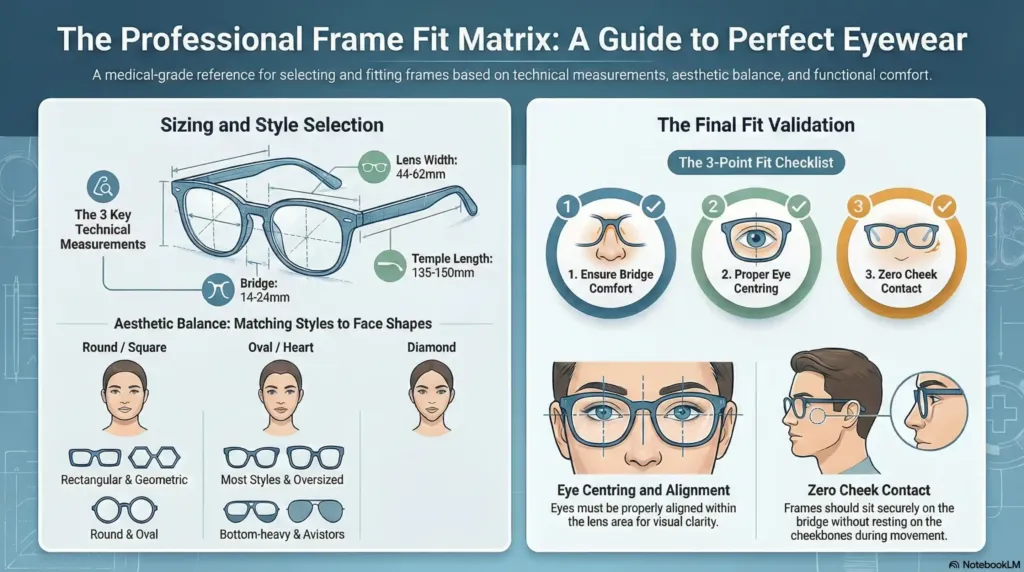
Key Measurements in Multifocal Fitting
Accurate measurements are the foundation of proper alignment.
Pupillary Distance (PD)
This measures the distance between your pupils. It ensures the optical center of each lens aligns with your eyes.
Segment Height (Fitting Height)
This determines where the reading portion or progressive corridor begins.
Vertex Distance
The distance between the lens and your eye affects how the prescription performs.
Pantoscopic Tilt
This refers to the angle of the frame relative to your face. Proper tilt ensures natural eye movement through lens zones.
Frame Wrap
The curvature of the frame affects how lenses align with your visual field.
How Custom Frames Enhance Precision
Custom frames allow opticians to control these variables more accurately.
Tailored Fit
Frames can be adjusted to:
- Sit evenly on your face
- Maintain consistent positioning
- Prevent slipping
Optimized Lens Placement
Custom frames ensure that:
- Optical centers align perfectly
- Progressive corridors match your gaze
- Peripheral distortion is minimized
Stability During Movement
A well-fitted frame stays in place, maintaining alignment even when you move your head.
Digital Fitting Technology
Modern optical practices use advanced tools to improve accuracy.
3D Facial Scanning
Captures detailed measurements of your face and eye position.
Digital Measurement Systems
Analyze:
- Eye movement patterns
- Frame positioning
- Head posture

Simulation Software
Allows you to preview how lenses will perform before they are made.
The Science Behind Progressive Lens Design
Progressive lenses are engineered using complex calculations.
Gradual Power Transition
The lens power changes smoothly from top to bottom, allowing natural focus shifts.
Corridor Length
The transition zone must match your visual behavior and frame size.
Peripheral Distortion Control
Advanced designs minimize distortion at the edges of the lens.
Common Fitting Challenges
Even with advanced technology, challenges can arise.
Incorrect Measurements
Small errors can lead to significant discomfort.
Poor Frame Selection
Frames that are too small or poorly shaped can limit lens performance.
Inadequate Adjustments
Even a well-made lens can perform poorly if the frame isn’t properly adjusted.
Signs of Poor Alignment
If your lenses are not properly aligned, you may notice:
- Blurred or distorted vision
- Difficulty focusing at certain distances
- Frequent head tilting
- Eye fatigue
These issues often indicate the need for refitting or adjustment.
How to Choose the Right Frame
Not all frames are suitable for multifocal lenses.
Consider Frame Height
Adequate vertical space is needed for multiple vision zones.
Ensure Proper Fit
Frames should:
- Sit comfortably on your nose
- Align with your eyes
- Stay stable during movement
Avoid Extreme Styles
Highly curved or very small frames can complicate lens design.
The Fitting Process: Step by Step
Step 1: Eye Examination
Your prescription is determined.
Step 2: Frame Selection
Choose a frame that supports multifocal design.
Step 3: Measurement Collection
Detailed measurements are taken.
Step 4: Lens Design Customization
Lenses are tailored to your measurements and lifestyle.
Step 5: Frame Adjustment
The frame is adjusted for optimal positioning.
Step 6: Final Fitting
Your glasses are checked and fine-tuned.
Adapting to Multifocal Lenses
Even with perfect alignment, adaptation takes time.
Tips for Easier Adjustment
- Wear your glasses consistently
- Move your head instead of just your eyes initially
- Be patient during the first few days
Maintenance for Long-Term Performance
Proper care ensures continued alignment and performance.
Regular Adjustments
Frames can shift over time and may need readjustment.
Cleaning and Care
Keep lenses clean to maintain clarity.
Periodic Checkups
Revisit your optician to ensure optimal fit.
The Future of Precision Eyewear
Advancements continue to improve fitting accuracy.
AI-Driven Customization
Artificial intelligence is being used to refine lens design.
Smart Frames
Emerging technologies may adjust in real time to user behavior.
Personalized Manufacturing
3D printing enables highly customized frame designs.
Final Thoughts
Multifocal lenses are a powerful solution for modern vision needs—but their success depends on precision.
Custom frames and accurate fitting ensure that your lenses align perfectly with your visual center, allowing you to see clearly and comfortably at all distances.
When everything is properly aligned, you don’t notice your glasses—you simply see the world as it should be.
And that’s the ultimate goal of great eyewear: not just correction, but seamless, effortless vision tailored uniquely to you.
Share this post

2026 Spring/Summer Fashion Trends: When Retro Small-Frame Glasses Meet the Underarm Bag
Fashion has always had a talent for bringing the past back in unexpected ways.A silhouette that once belonged to another decade can...

Soft Aesthetics for Girls with Square Faces: How Rounded Handbags and Gentle Eyeglass Frames Soften Facial Lines
A square face can be striking, elegant, and full of character. Defined by a broader forehead, a relatively straight jawline, and noticeable...
How to Buy Prescription Glasses Online on XCombo
Looking to buy glasses online? XCombo makes it easy to get stylish, high-quality glasses tailored to your prescription. Follow this simple step-by-step...

The Executive Style Code: A Career Guide to Suits, Briefcases, and Sophisticated Eyewear
In the modern workplace, professional style is about much more than wearing expensive clothes.The strongest business wardrobe communicates something before you say...

Street-Cool Style: How to Make Motorcycle Jackets, Belt Bags, and Futuristic Sunglasses Stand Out
Street fashion has never been about following every rule.It is about knowing which rules to break.A motorcycle jacket, a compact belt bag,...

The Art of Color Coordination: How to Match Your Bag With Your Eyeglass Frames for an Effortlessly Sophisticated Look
Fashion is often about the little details.A beautifully tailored outfit can look polished, yet something may still feel incomplete. The reason is...
Dating Night Style Secrets: The Perfect Collision of an Elegant Cocktail Dress, a Chain Evening Bag, and Sophisticated Semi-Rimless Glasses
Dating night is about more than choosing an outfit. It is about creating an impression without looking like you tried too hard....
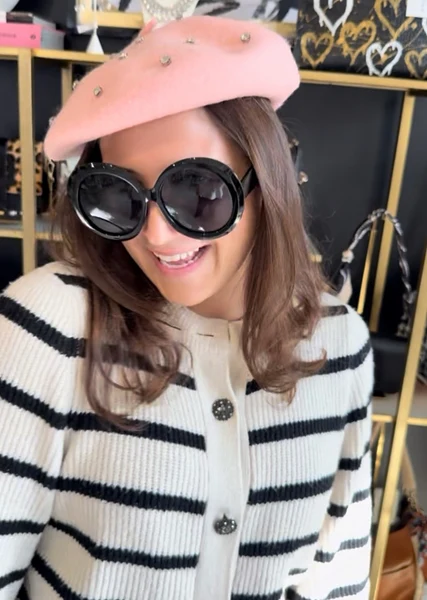
Effortless French Elegance: The Perfect Pairing of Knitwear, Tote Bags, and Cat-Eye Glasses
There is something undeniably captivating about French style.It is polished without looking overly polished, feminine without being overly delicate, and comfortable without...
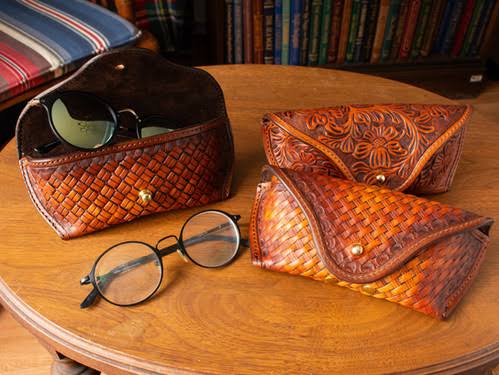
A Cross-Textural Conversation: The Tactile Collision of Leather Bags, Tweed Clothing, and Wood-Frame Eyewear
Introduction: When Materials Become the Main CharacterFashion is often discussed in terms of color, silhouette, trend, and season. Yet some of the...

The Ultimate Guide to Vacation-Style Outfits: Floral Dresses, Straw Bags, and Round Sunglasses for Summer
Summer is the season of relaxed mornings, warm afternoons, outdoor dinners, weekend getaways, and long-awaited vacations. It is also the perfect time...
The Romance of Earth Tones in Fall: The Color Aesthetics of Trench Coats, Saddle Bags, and Tea-Tinted Sunglasses
Introduction: Falling in Love With the Colors of AutumnThere is something irresistibly romantic about autumn fashion.As summer fades, bright colors gradually give...
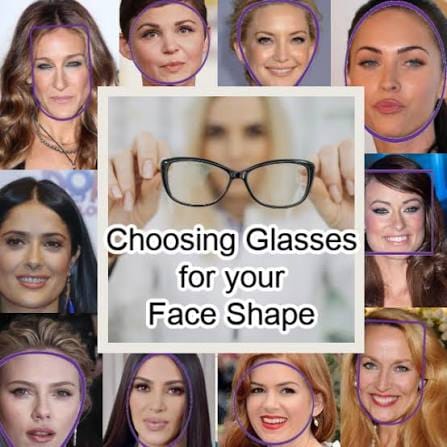
Best Glasses for Your Face Shape: Round, Square, Oval & More
Introduction: The Right Glasses Can Transform Your Entire AppearanceChoosing a pair of glasses is about much more than simply correcting your vision....