


Multifocal Lens Fitting: How Custom Frames Precisely Align with Your Visual Center
For millions of people, vision correction isn’t as simple as a single prescription. As our eyes age, the need to see clearly at multiple distances—near, intermediate, and far—becomes essential. Multifocal lenses, including progressive lenses, offer a seamless solution. But achieving true visual comfort with these lenses depends on more than just the prescription.
The real key lies in precision fitting—specifically, how well your lenses align with your unique “visual center.”
This is where custom frames and advanced fitting techniques come into play. When done correctly, they transform multifocal lenses from a frustrating compromise into a natural, effortless visual experience.
In this in-depth guide, we’ll explore the science behind multifocal lens fitting, the importance of accurate alignment, and how custom frames help position your lenses exactly where they need to be.
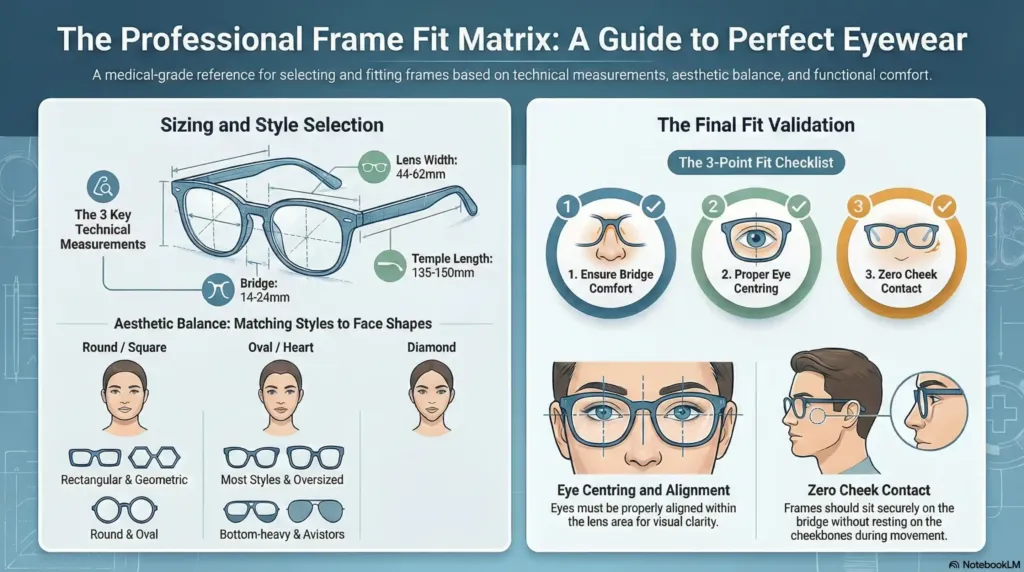
Understanding Multifocal Lenses
Multifocal lenses are designed to correct vision at multiple distances within a single lens.
Types of Multifocal Lenses
- Bifocal lenses: Two distinct zones for near and distance vision
- Trifocal lenses: Three zones for near, intermediate, and distance
- Progressive lenses: A smooth gradient of power with no visible lines
Among these, progressive lenses are the most advanced and widely used today.
What Is the “Visual Center”?
Your visual center refers to the precise point where your eyes naturally align when looking straight ahead. It is influenced by:
- Pupillary distance (PD)
- Eye dominance
- Head posture
- Frame position on your face
In multifocal lenses, aligning the optical zones with your visual center is critical for clear, comfortable vision.
Why Alignment Matters So Much
Unlike single-vision lenses, multifocal lenses contain multiple optical zones. If these zones are not correctly aligned:
- You may experience blurred vision
- Eye strain and headaches can occur
- You may need to tilt your head unnaturally
- Adaptation becomes difficult or impossible
Proper alignment ensures that each viewing distance falls naturally into place as your eyes move.
The Role of Custom Frames
Custom frames are designed or adjusted specifically for your face and visual needs.
Key Advantages
- Precise positioning of lenses
- Better stability on the face
- Improved comfort and fit
- Enhanced optical performance
Off-the-shelf frames can work, but they often lack the fine-tuning required for optimal multifocal performance.
Key Measurements in Multifocal Fitting
Accurate measurements are the foundation of proper alignment.
Pupillary Distance (PD)
This measures the distance between your pupils. It ensures the optical center of each lens aligns with your eyes.
Segment Height (Fitting Height)
This determines where the reading portion or progressive corridor begins.
Vertex Distance
The distance between the lens and your eye affects how the prescription performs.
Pantoscopic Tilt
This refers to the angle of the frame relative to your face. Proper tilt ensures natural eye movement through lens zones.
Frame Wrap
The curvature of the frame affects how lenses align with your visual field.
How Custom Frames Enhance Precision
Custom frames allow opticians to control these variables more accurately.
Tailored Fit
Frames can be adjusted to:
- Sit evenly on your face
- Maintain consistent positioning
- Prevent slipping
Optimized Lens Placement
Custom frames ensure that:
- Optical centers align perfectly
- Progressive corridors match your gaze
- Peripheral distortion is minimized
Stability During Movement
A well-fitted frame stays in place, maintaining alignment even when you move your head.
Digital Fitting Technology
Modern optical practices use advanced tools to improve accuracy.
3D Facial Scanning
Captures detailed measurements of your face and eye position.
Digital Measurement Systems
Analyze:
- Eye movement patterns
- Frame positioning
- Head posture

Simulation Software
Allows you to preview how lenses will perform before they are made.
The Science Behind Progressive Lens Design
Progressive lenses are engineered using complex calculations.
Gradual Power Transition
The lens power changes smoothly from top to bottom, allowing natural focus shifts.
Corridor Length
The transition zone must match your visual behavior and frame size.
Peripheral Distortion Control
Advanced designs minimize distortion at the edges of the lens.
Common Fitting Challenges
Even with advanced technology, challenges can arise.
Incorrect Measurements
Small errors can lead to significant discomfort.
Poor Frame Selection
Frames that are too small or poorly shaped can limit lens performance.
Inadequate Adjustments
Even a well-made lens can perform poorly if the frame isn’t properly adjusted.
Signs of Poor Alignment
If your lenses are not properly aligned, you may notice:
- Blurred or distorted vision
- Difficulty focusing at certain distances
- Frequent head tilting
- Eye fatigue
These issues often indicate the need for refitting or adjustment.
How to Choose the Right Frame
Not all frames are suitable for multifocal lenses.
Consider Frame Height
Adequate vertical space is needed for multiple vision zones.
Ensure Proper Fit
Frames should:
- Sit comfortably on your nose
- Align with your eyes
- Stay stable during movement
Avoid Extreme Styles
Highly curved or very small frames can complicate lens design.
The Fitting Process: Step by Step
Step 1: Eye Examination
Your prescription is determined.
Step 2: Frame Selection
Choose a frame that supports multifocal design.
Step 3: Measurement Collection
Detailed measurements are taken.
Step 4: Lens Design Customization
Lenses are tailored to your measurements and lifestyle.
Step 5: Frame Adjustment
The frame is adjusted for optimal positioning.
Step 6: Final Fitting
Your glasses are checked and fine-tuned.
Adapting to Multifocal Lenses
Even with perfect alignment, adaptation takes time.
Tips for Easier Adjustment
- Wear your glasses consistently
- Move your head instead of just your eyes initially
- Be patient during the first few days
Maintenance for Long-Term Performance
Proper care ensures continued alignment and performance.
Regular Adjustments
Frames can shift over time and may need readjustment.
Cleaning and Care
Keep lenses clean to maintain clarity.
Periodic Checkups
Revisit your optician to ensure optimal fit.
The Future of Precision Eyewear
Advancements continue to improve fitting accuracy.
AI-Driven Customization
Artificial intelligence is being used to refine lens design.
Smart Frames
Emerging technologies may adjust in real time to user behavior.
Personalized Manufacturing
3D printing enables highly customized frame designs.
Final Thoughts
Multifocal lenses are a powerful solution for modern vision needs—but their success depends on precision.
Custom frames and accurate fitting ensure that your lenses align perfectly with your visual center, allowing you to see clearly and comfortably at all distances.
When everything is properly aligned, you don’t notice your glasses—you simply see the world as it should be.
And that’s the ultimate goal of great eyewear: not just correction, but seamless, effortless vision tailored uniquely to you.
Share this post



Soline Gunmetal Gray Interchangeable Base Frame – Wide Rectangle Metal Glasses
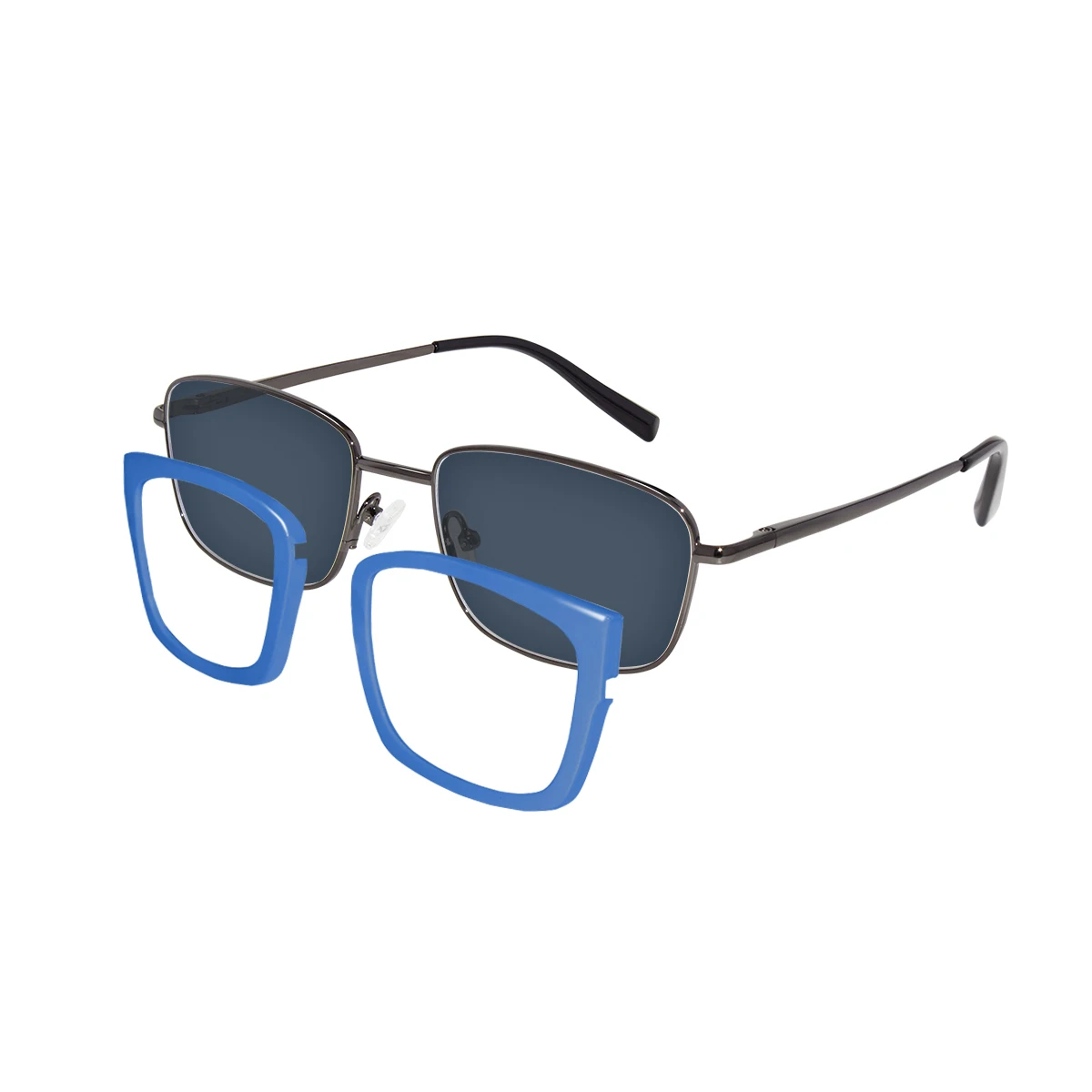
Soline Gunmetal Gray Sunglasses – Wide Rectangle, Tinted Lenses - Interchangeable Eyewear


Soline Classic Gold Base Frame for Interchangeable Toppers – Wide Metal Rectangle Glasses


Mira Rose Gold Interchangeable Base Frame – Wide Cat-Eye Metal Glasses


Mira Classic Gold Interchangeable Base Frame – Wide Cat-Eye Metal Glasses
Soline Metallic Silver Interchangeable Base Frame – Wide Rectangle Metal Glasses
- Bone Rattle (PH01)
- Haunted Plaid (PH02)
- Pumpkin King (PH03)
- Night Sky Bat (PH04)
- Pumpkin Parade (PH05)
- Spooky Duo (PH06)
- Witch’s Cat (PH07)
- Mint Ghost (PH08)
- Dark Spell (PH09)
- Midnight Meow (PH10)
- Ghost Mosaic (PH11)
- Skull Storm (PH13)
- Wicked Glow (PH14)
- Haunted Gray (PH15)
- Phantom Mosaic (PH16)
- Midnight Dots (PH17)
- Haunted Medley (PH18)
- Nightmare Mix (PH19)
- Ghost Fade (PH20)
- Candy Curse (PH26)
- Ghost Drift (PH21)
- Pumpkin Fusion (PH22)
- Shadow Spirit (PH23)
- Spooky Toon (PH24)
- Demon Grin (PH25)
- Autumn Bloom (PH27)
Halloween Collection Top Frames for Soline Rectangle Base Frame | Modular Glasses Toppers
- Burgundy – Crystal (C01)
- Red – Crystal(C02)
- Burnt Orange – Crystal(C03)
- Marmalade – Crystal(C04)
- Sunshine Yellow – Crystal(C05)
- Lime Green – Crystal(C06)
- Sage – Crystal(C08)
- Green Forest – Crystal(C07)
- Army Green – Crystal(C09)
- Spruce – Crystal(C10)
- Turquiise – Crystal(C11)
- Cornflower– Crystal(C12)
- Navy – Crystal(C13)
- Indigo – Crystal(C14)
- Blue Orchid – Crystal(C15)
- Mauve – Crystal(C16)
- Lavender – Crystal(C21)
- Purple – Crystal(C17)
- Grape – Crystal(C18)
- Coral – Crystal(C19)
- Hot Pink – Crystal(C20)
- Chocolate – Crystal(C22)
Crystal Color Top Frames for Soline Rectangle Wide Base Frame | Interchangeable Glasses Toppers


Mira Metallic Silver Interchangeable Base Frame – Wide Cat-Eye Metal Glasses
Mira Ice Blue Wide Cat-Eye Sunglasses – Metal Frame, Tinted Lenses - Interchangeable Eyewear
The “Invisible” Companion in Daily Life: My 30-Day Journey from Ready-Made Glasses to Custom Eyewear
There are some things in life you don’t notice—until they change.For years, my glasses were just… there. I wore ready-made frames from...
Glasses Keep Sliding Down Your Nose? 3 Easy At-Home Adjustments to Fix the Fit
There’s nothing more frustrating than constantly pushing your glasses back up your nose. Whether you’re working, driving, exercising, or simply relaxing, slipping...
Total Cost of Ownership: Comparing the Lifespan of Cheap Eyeglass Frames vs. Custom Quality Frames
When shopping for new glasses, most people focus on the sticker price. A $29 frame seems like a steal. A $250 custom...
The Anti-Slip Revolution: A Tech-Focused Guide to Maintaining Low Bridge Eyewear
If you have a lower nasal bridge—a common facial feature for many of Asian, African, or Mediterranean descent—you know the "Eyewear Struggle."...
The Architecture of Presence: Why Custom Eyewear Makes Your Eyes Look More Alive
Some people walk into a room and immediately command attention. Their presence feels balanced, confident, and intentional — even before they speak....
Goodbye to “Magnetic Slip-Off”: Why Clip-Lock Eyewear Frames Outperform Magnetic Frames in Dynamic Lifestyles
In today’s fast-moving world, eyewear isn’t just a vision tool — it’s performance gear. Whether you’re commuting through crowded subway platforms, chasing...
One Degree Makes the Difference: A Deep Dive into Custom Prescription Glasses
In the world of eyewear, it’s easy to assume that vision correction is a game of big numbers—minus five or plus three,...
How Should Your Glasses Fit for Comfort and Style?
Choosing the right pair of eyeglasses involves not only selecting the perfect frame design but also ensuring a proper fit for maximum...

The Active Athlete’s Eyewear Survival Guide: How to Prevent Impact Damage and Sweat Wear
For athletes and fitness enthusiasts, eyewear isn’t just an accessory—it’s essential gear. Whether you’re sprinting under the sun, grinding through a high-intensity...
Beginner’s Guide: How to Choose Your First Pair of Custom Glasses
Buying your first pair of custom glasses can feel exciting, overwhelming, and slightly confusing at the same time. Unlike standard off-the-shelf eyewear,...
Magnets Lose Strength, Mechanical Closures Last: An Economic Audit of Custom Eyewear as a Long-Term Investment
In a marketplace driven by novelty, convenience, and clever marketing, magnetic eyeglass frames have gained attention for their snap-on ease and modular...
The Ultimate Value Champion - How One Pair of Modular Glasses Can Handle Work, Workouts, and Dates
Real value is about buying smarter.We expect one smartphone to replace a camera, a GPS, a notebook, and a wallet.We expect one...