


How to Measure Pupillary Distance(PD)?
What Is Pupillary Distance(PD)?
Pupillary Distance (PD) is the measurement, in millimeters, between the centers of your two pupils. This measurement is essential for crafting eyeglasses, as it ensures that the lenses’ optical centers align with your line of sight for optimal vision clarity.
Steps to measure your PD
Note: The average PD ranges from 54 to 78mm, but actual measurements may vary. To ensure accuracy, measure your PD 2-3 times.
Step1
Stand at arm's length from a friend or position yourself about 8 inches (20cm) away from a mirror.

Step2
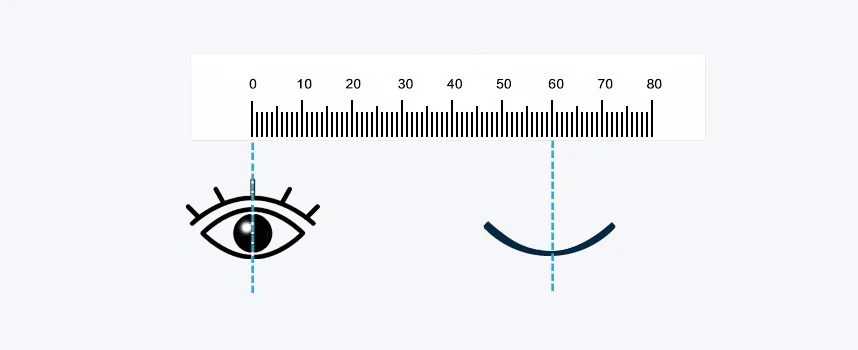
Close your right eye and position the 0 mm mark of a ruler over the center of your left pupil.
Step3
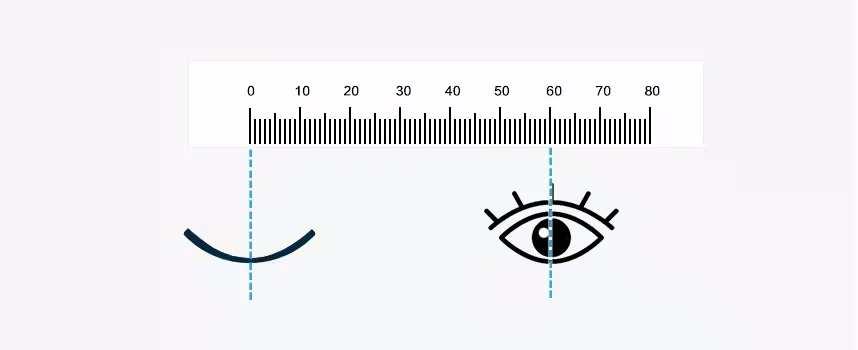
Close your left eye and note the measurement that aligns with the center of your right pupil. This value is your Total PD.
Step4
Measure the distance from the center of each pupil to the bridge of your nose separately. This will confirm if you have two distinct PD measurements for each eye.
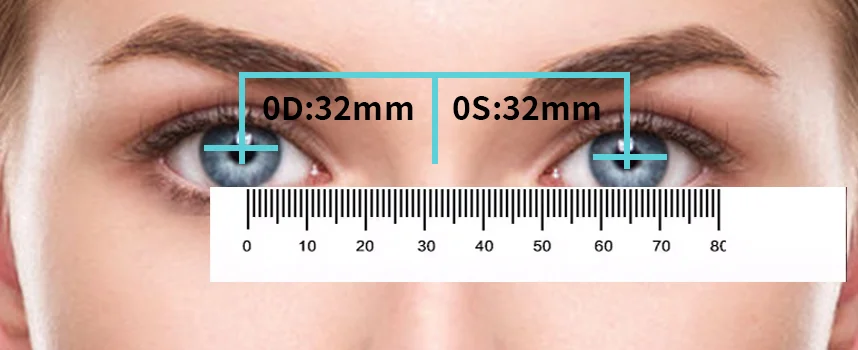
By following these steps, you can obtain accurate PD measurements, ensuring your glasses provide maximum comfort and visual precision.
Share this post


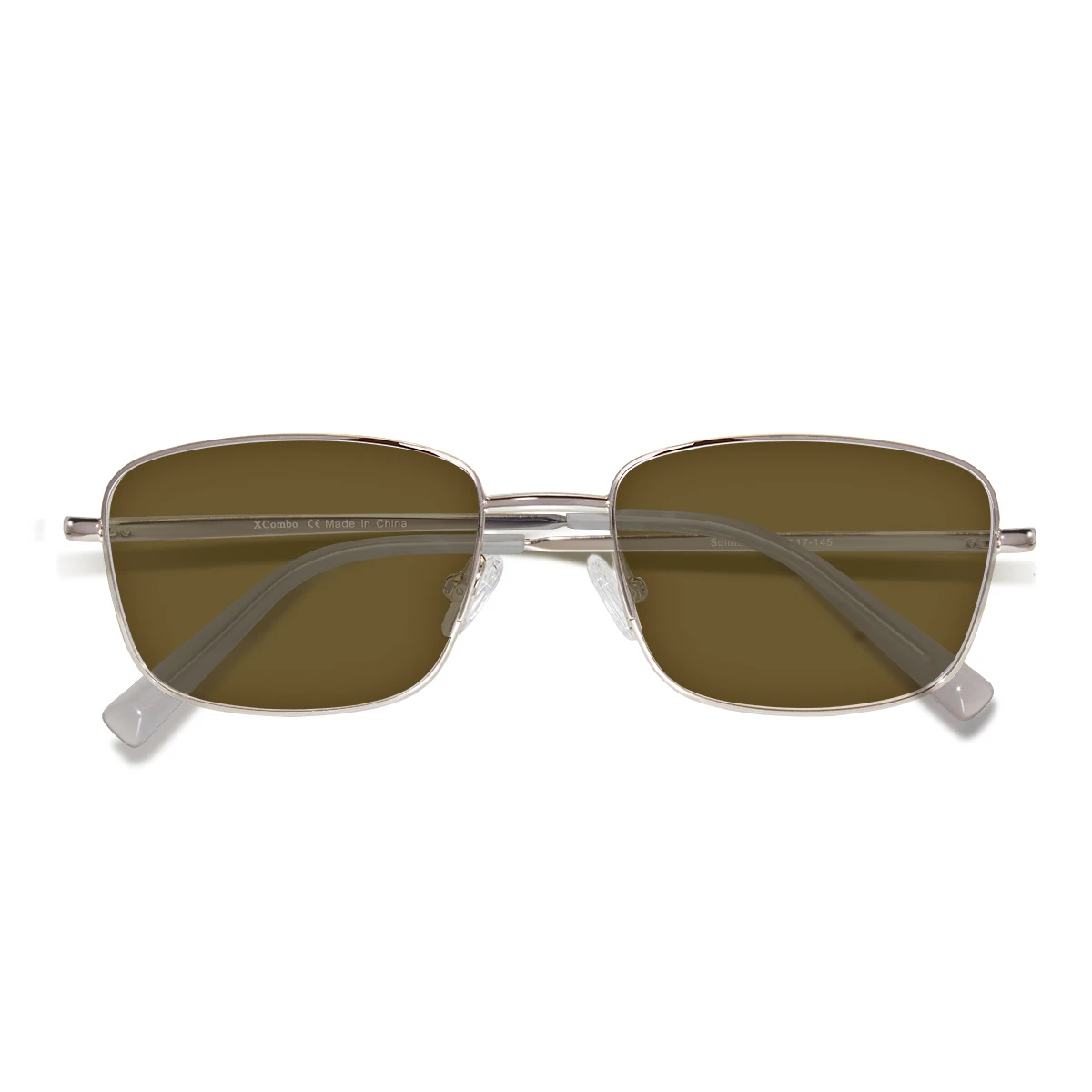
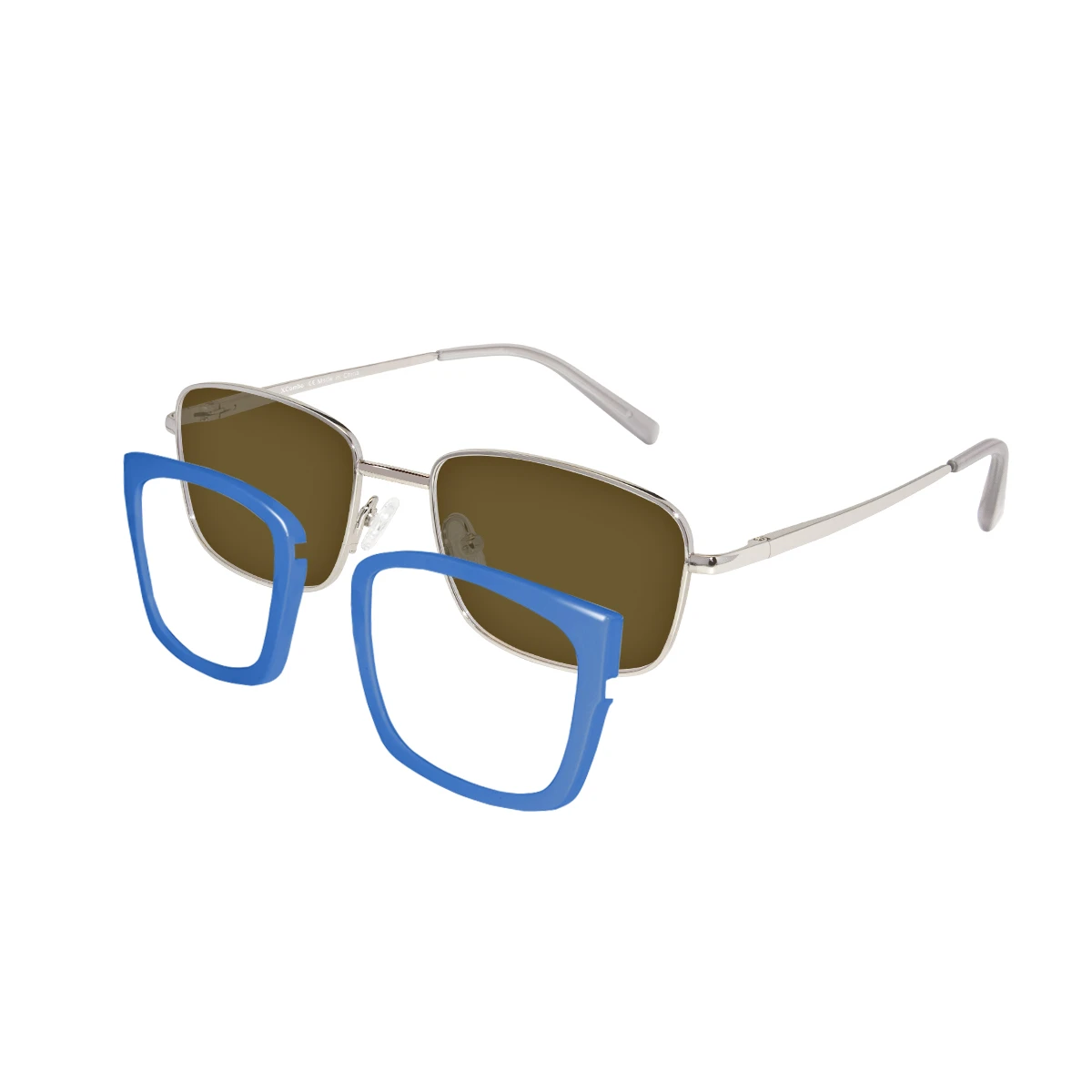
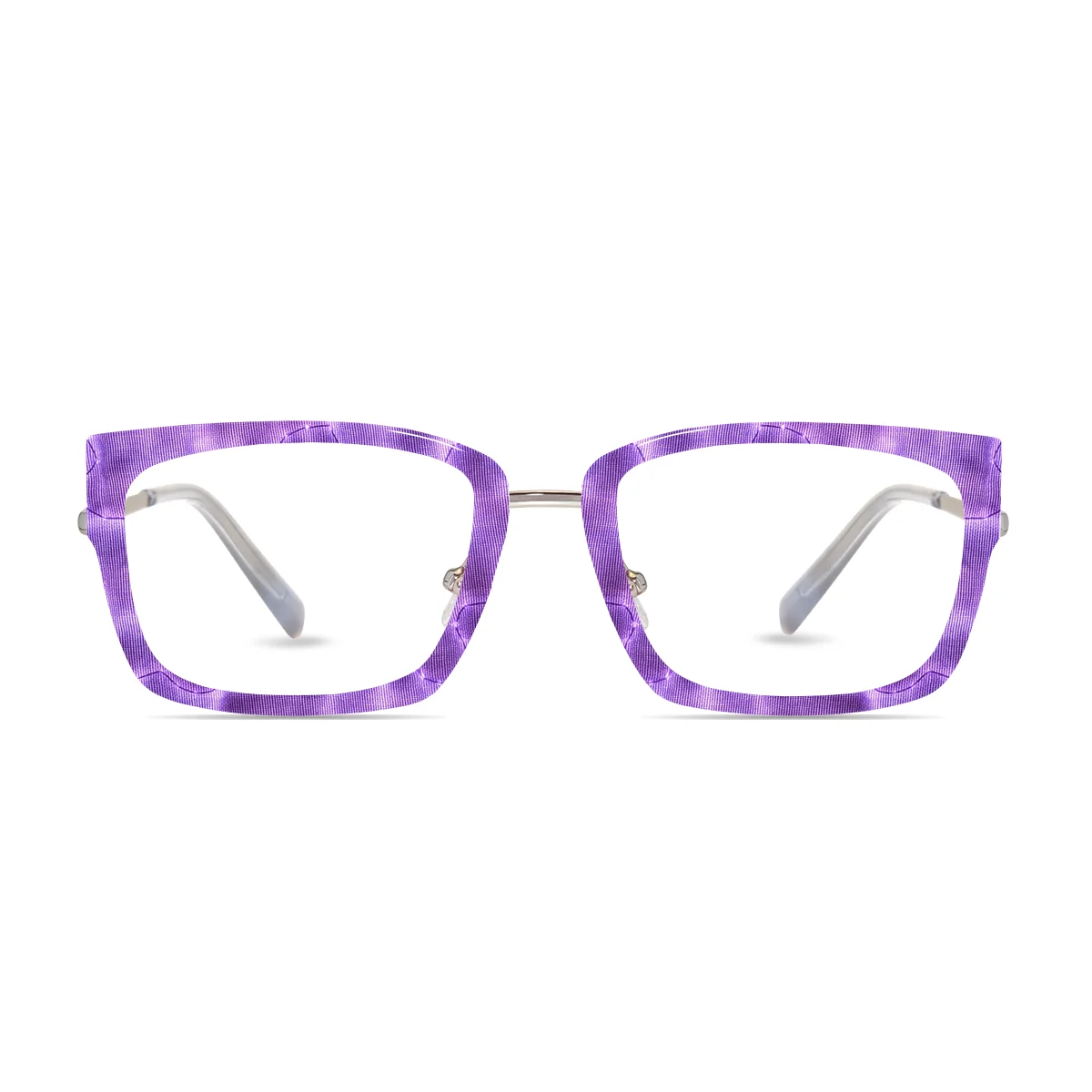
Soline Interchangeable Sunglasses – Metallic Silver, Wide Rectangle, Tinted Lenses


Mira Classic Gold Interchangeable Base Frame – Wide Cat-Eye Metal Glasses
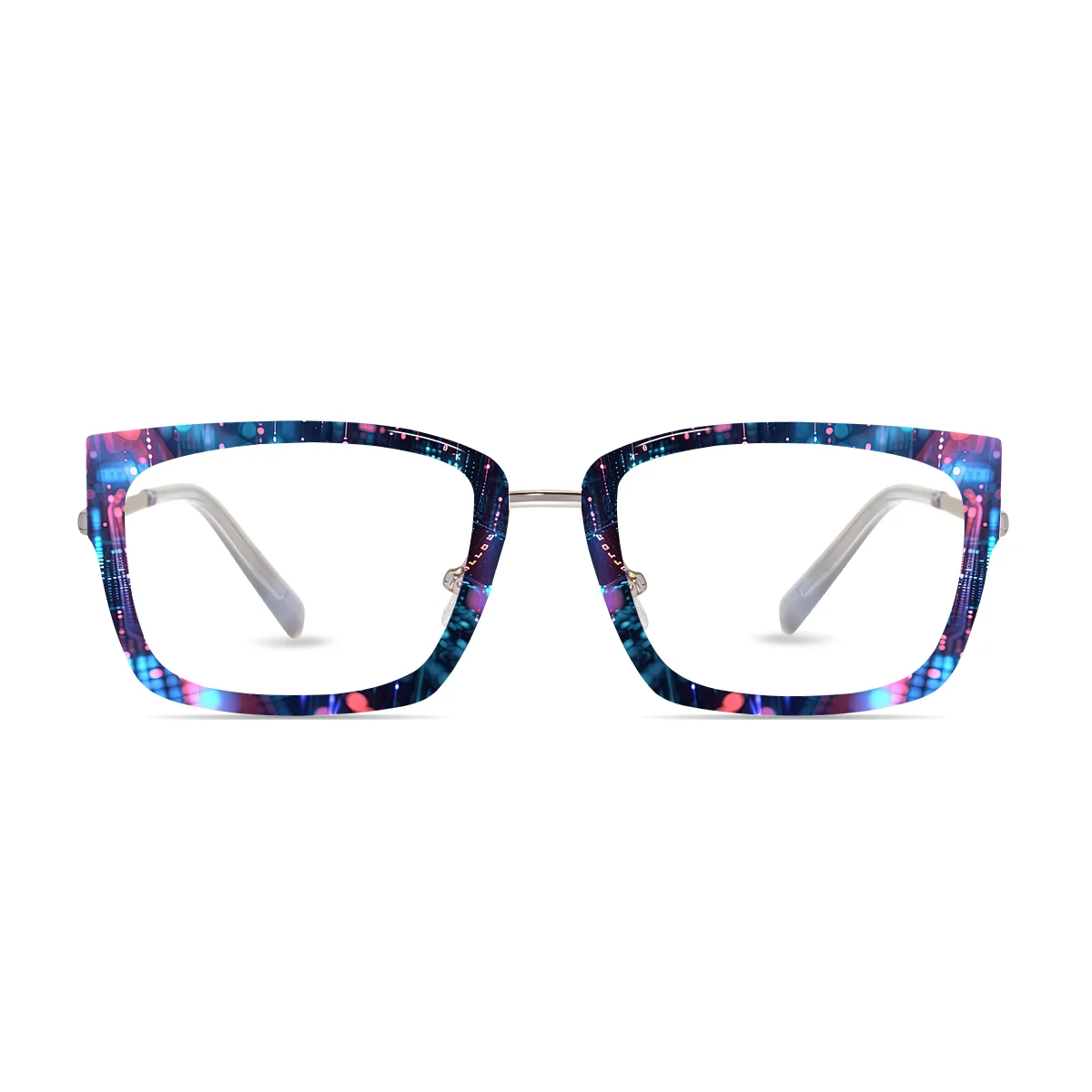
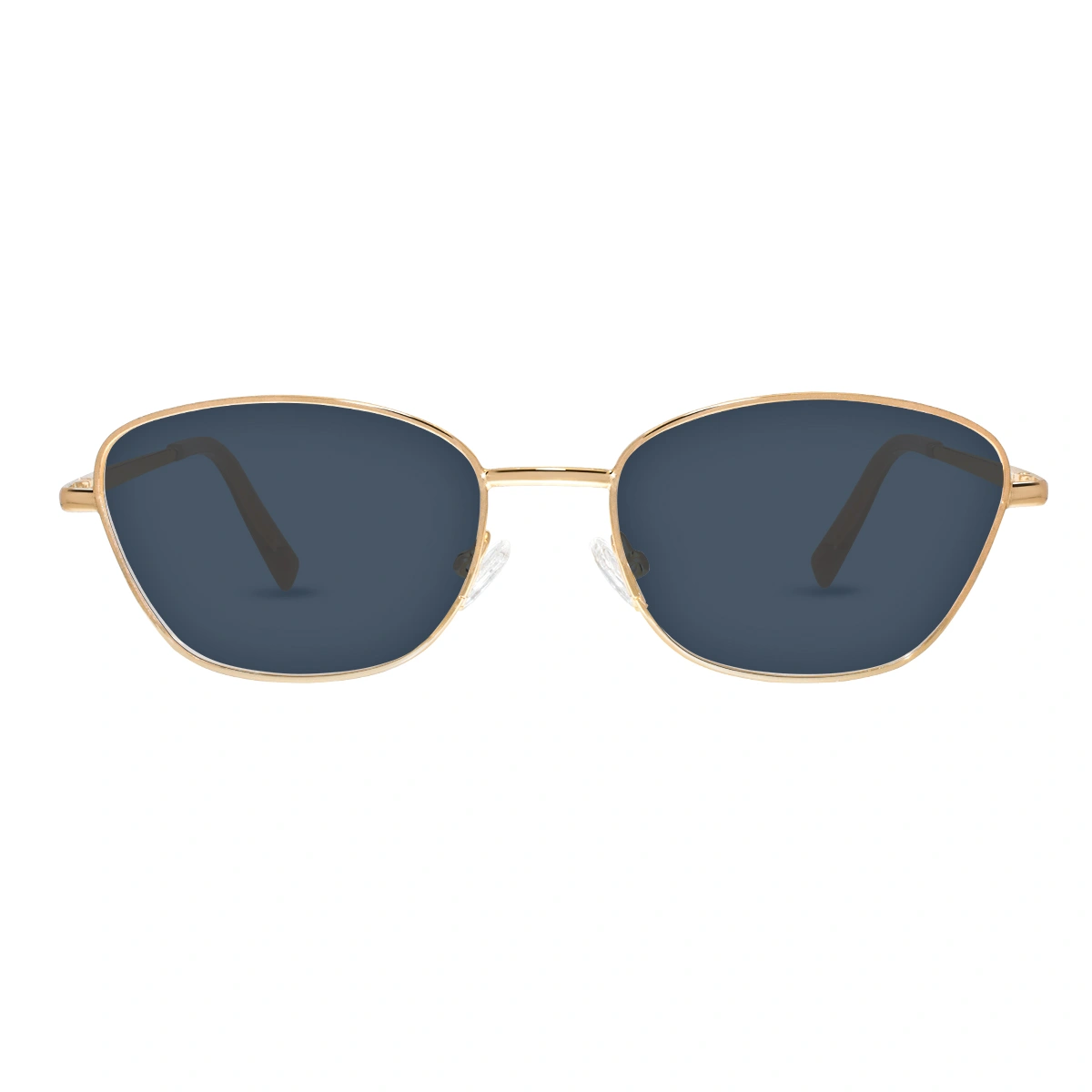
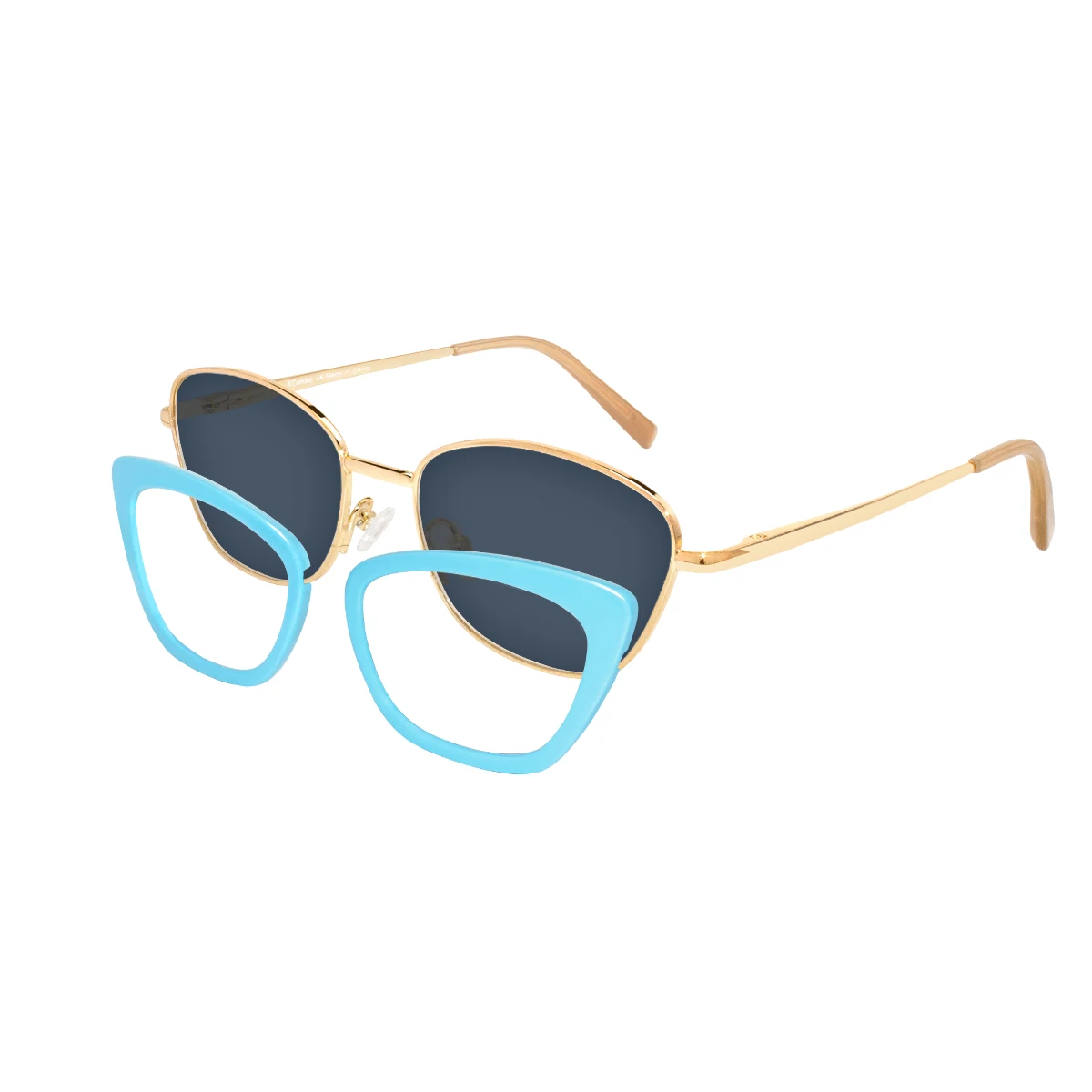
Mira Classic Gold Metal Sunglasses – Wide Cat Eye, Tinted Lenses - Interchangeable Eyewear
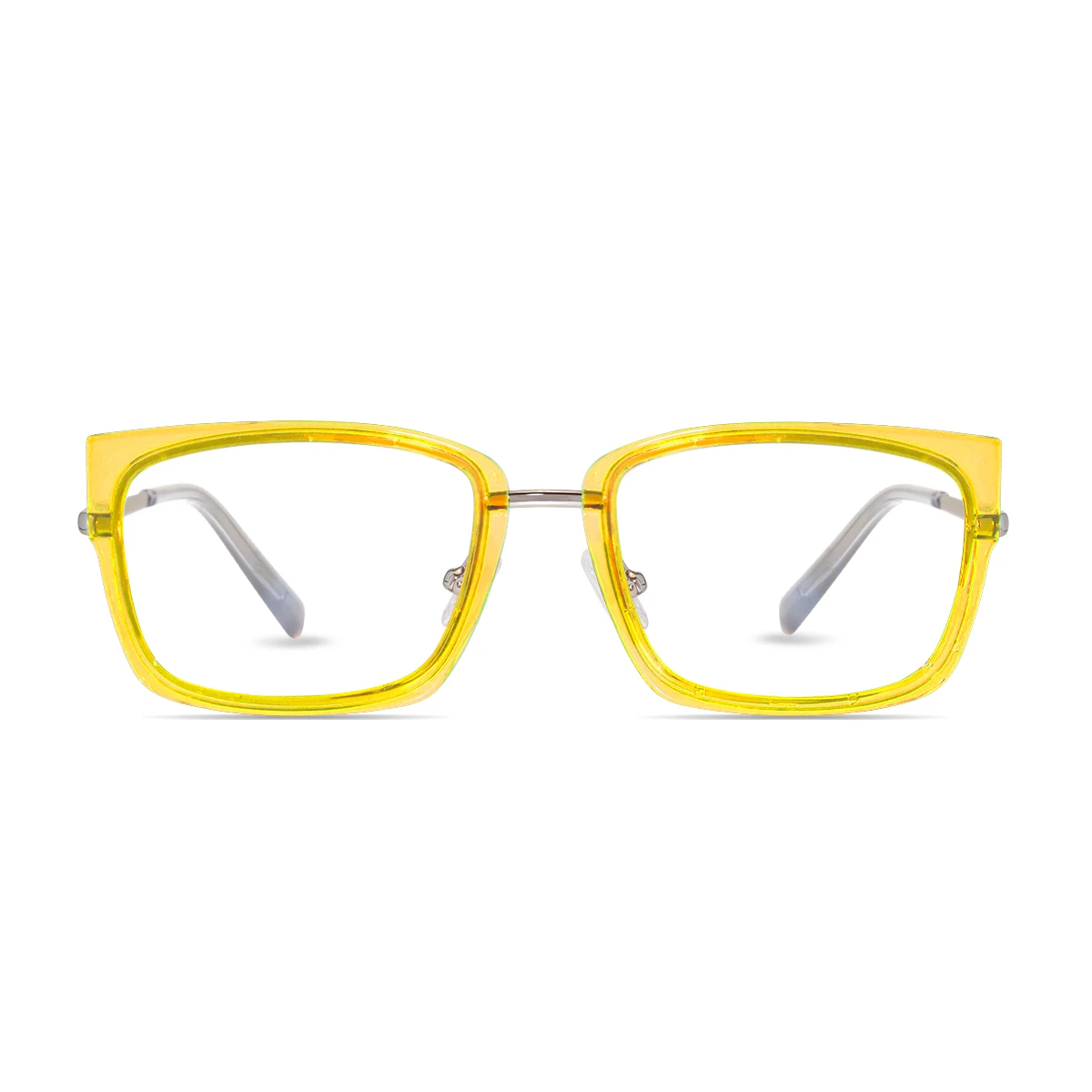
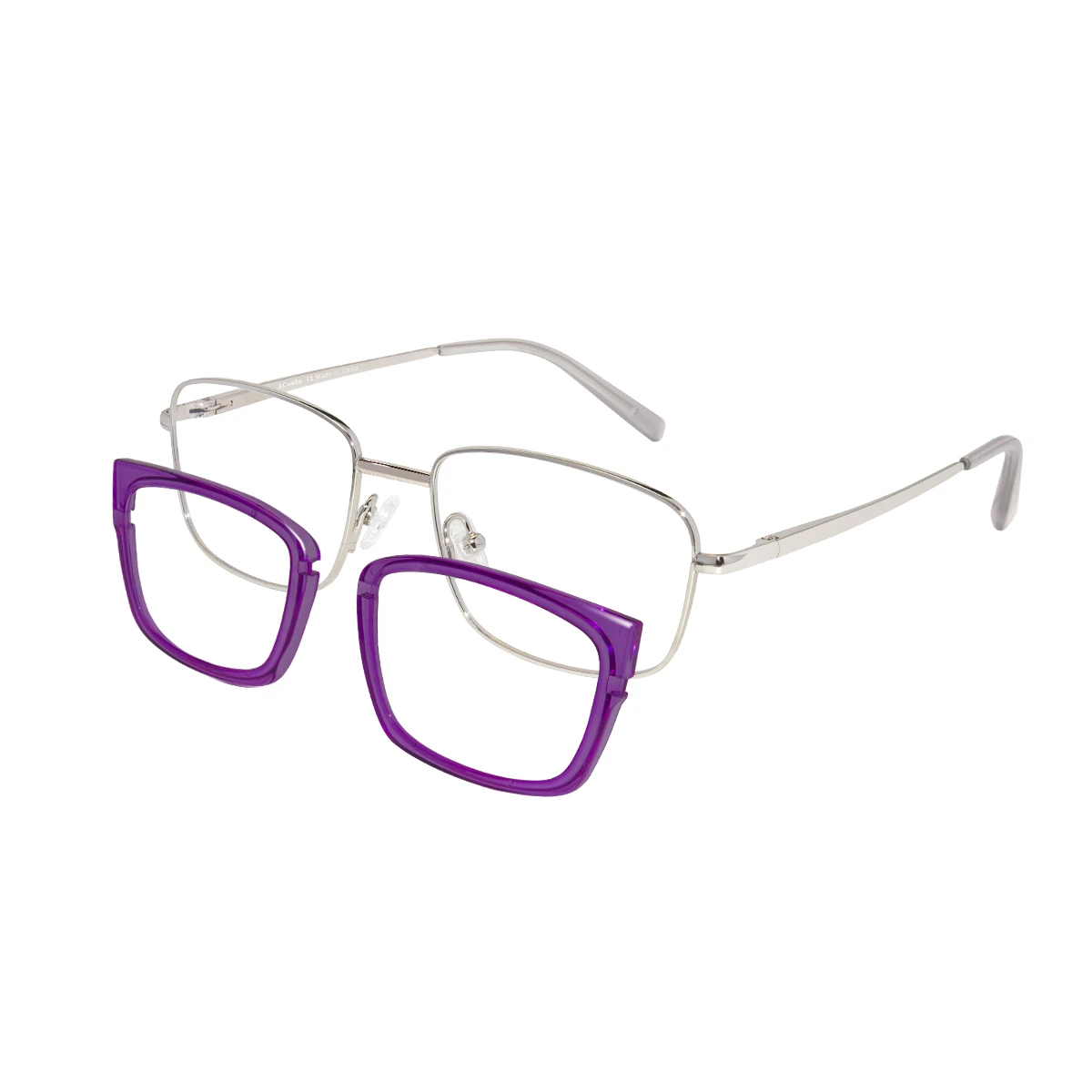
- Burgundy – Crystal (C01)
- Red – Crystal(C02)
- Burnt Orange – Crystal(C03)
- Marmalade – Crystal(C04)
- Sunshine Yellow – Crystal(C05)
- Lime Green – Crystal(C06)
- Sage – Crystal(C08)
- Green Forest – Crystal(C07)
- Army Green – Crystal(C09)
- Spruce – Crystal(C10)
- Turquiise – Crystal(C11)
- Cornflower– Crystal(C12)
- Navy – Crystal(C13)
- Indigo – Crystal(C14)
- Blue Orchid – Crystal(C15)
- Mauve – Crystal(C16)
- Lavender – Crystal(C21)
- Purple – Crystal(C17)
- Grape – Crystal(C18)
- Coral – Crystal(C19)
- Hot Pink – Crystal(C20)
- Chocolate – Crystal(C22)
Crystal Color Toppers + Soline Rectangle Base Frame – Modular Eyewear Simple Set
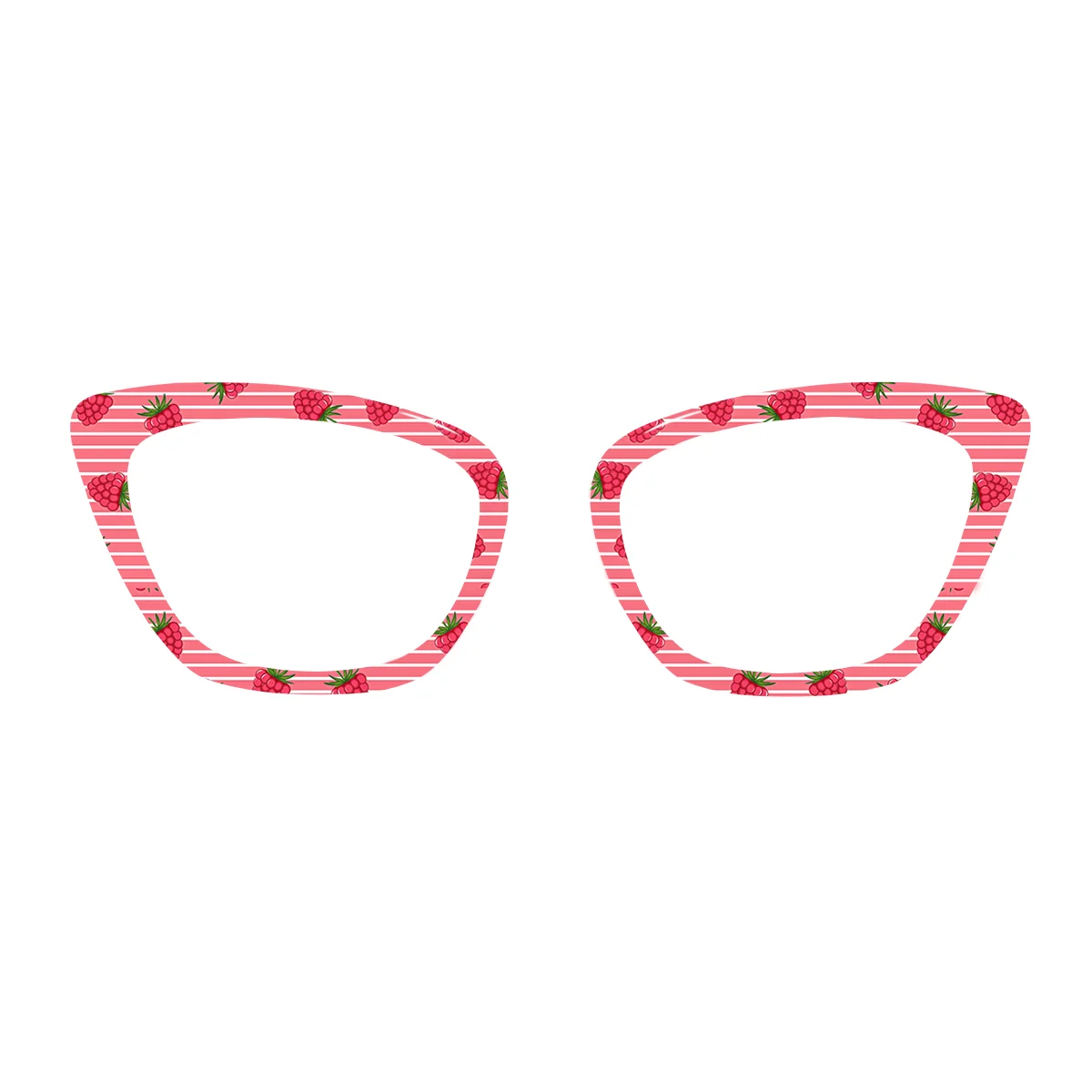
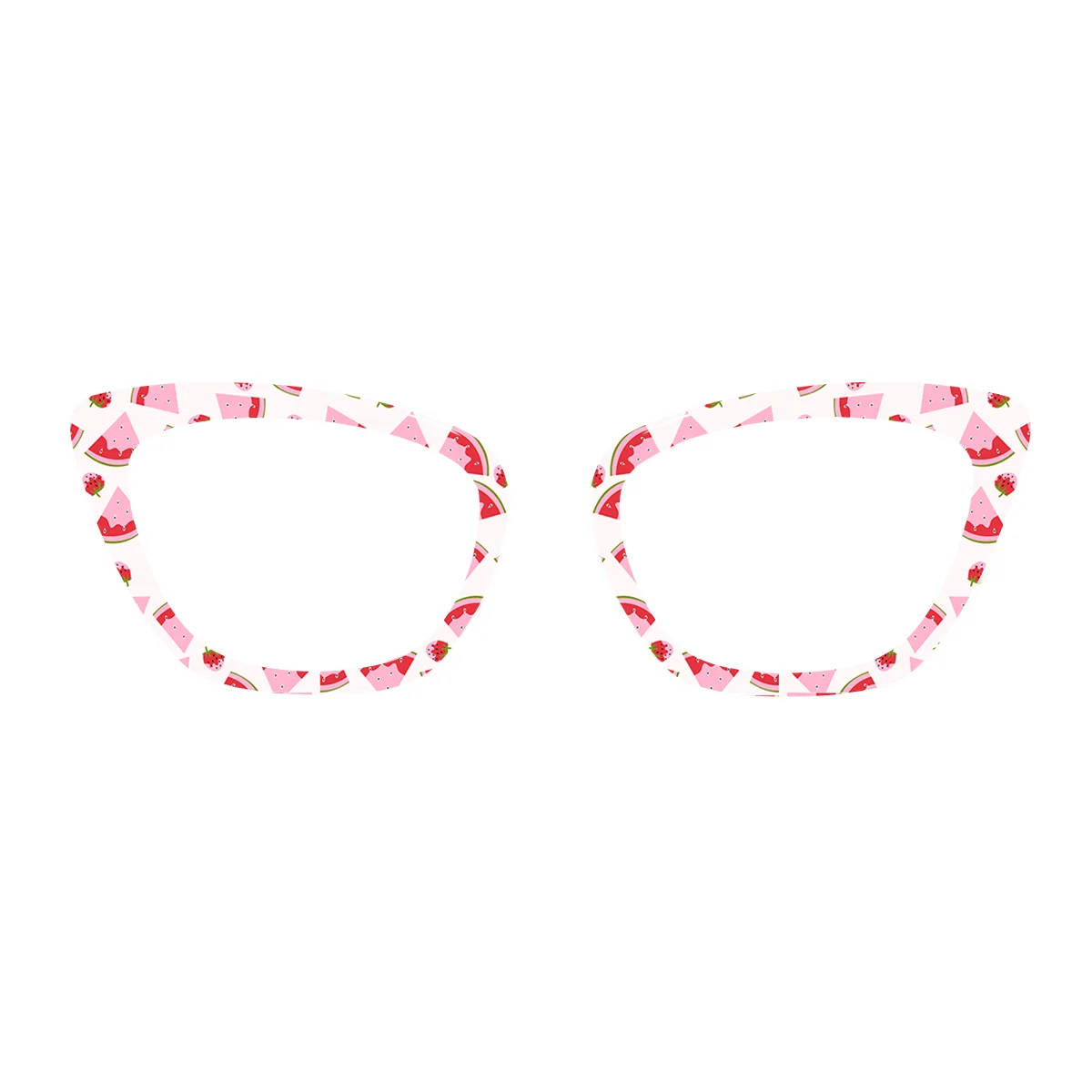
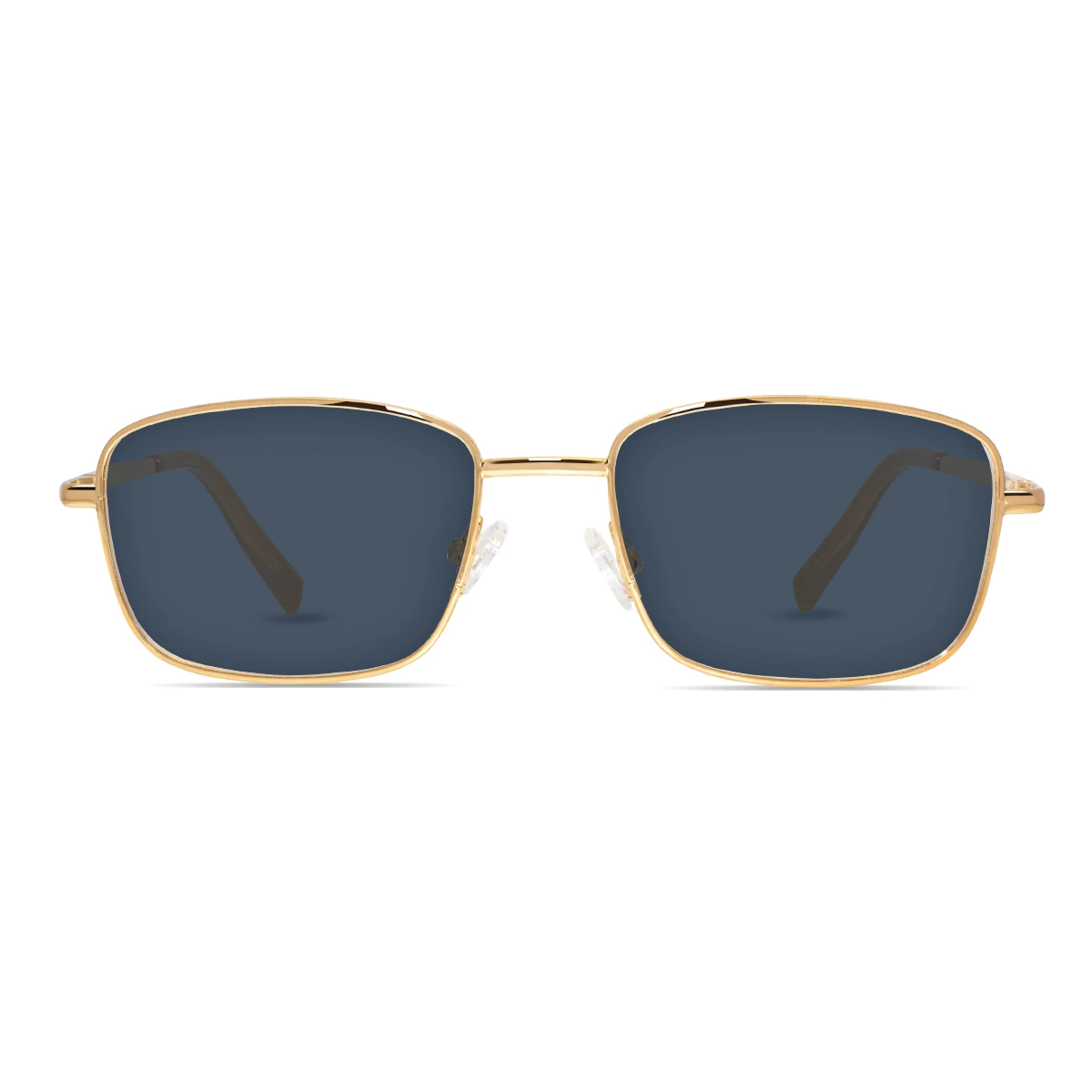
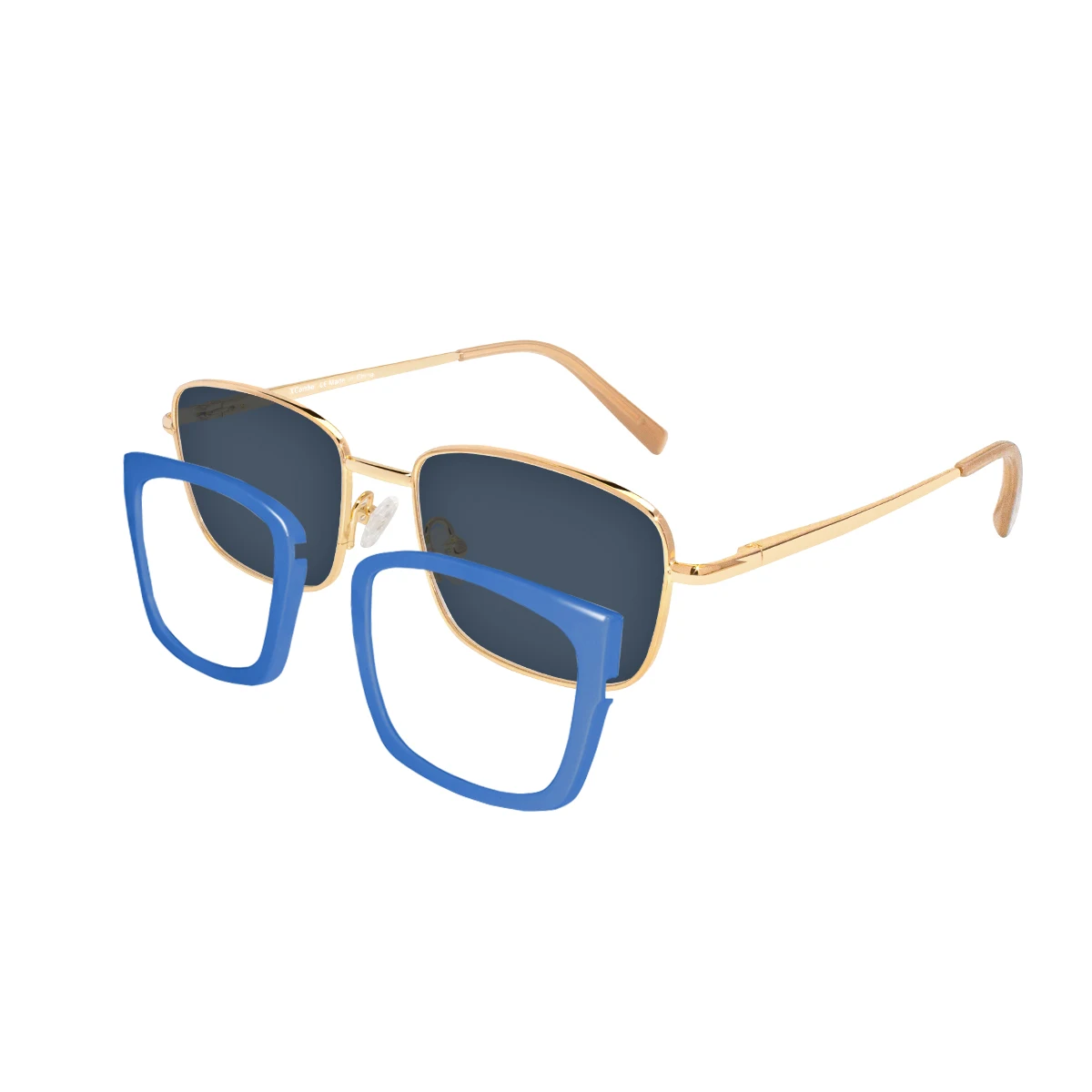
Soline Classic Gold Sunglasses – Wide Rectangle, Tinted Lenses - Interchangeable Eyewear
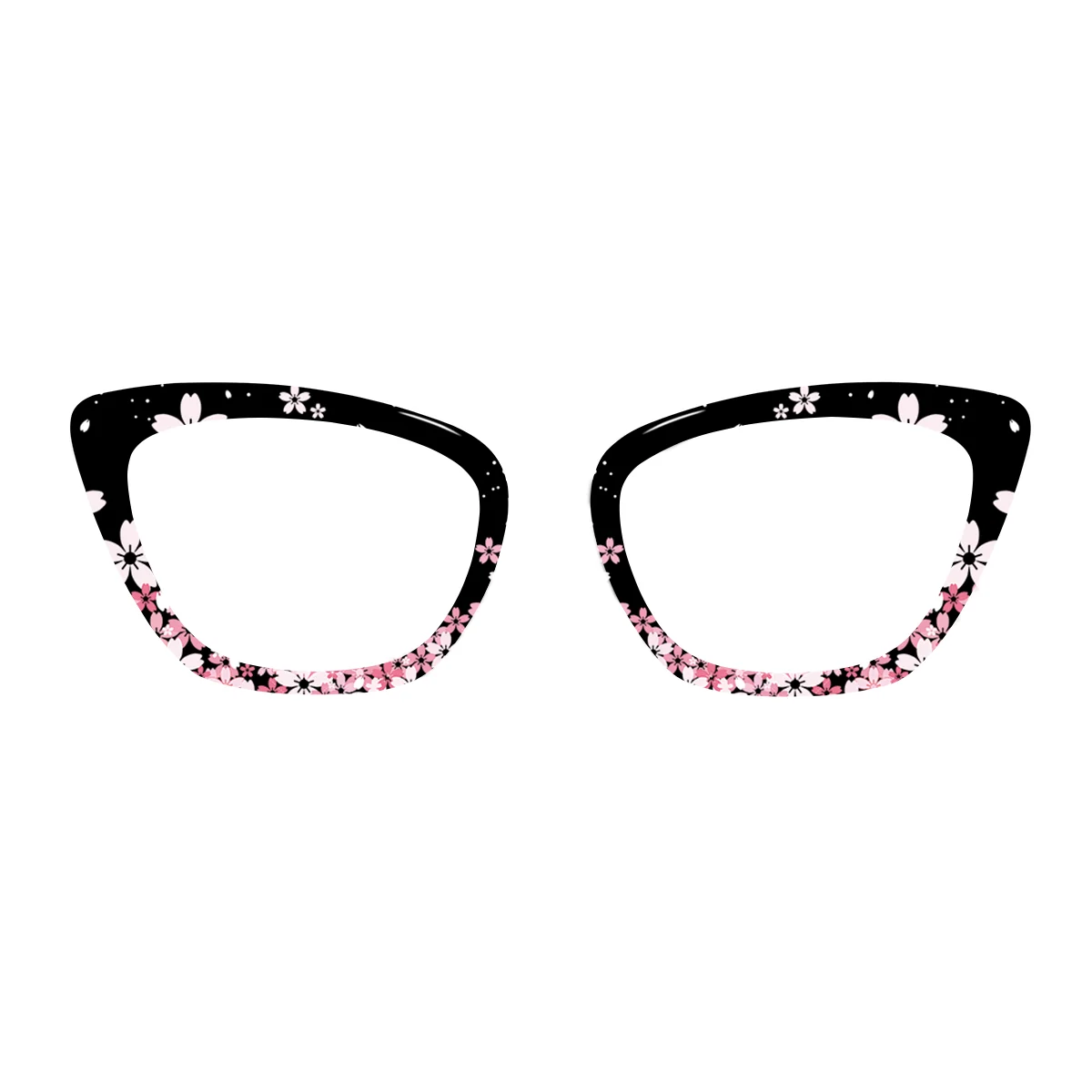
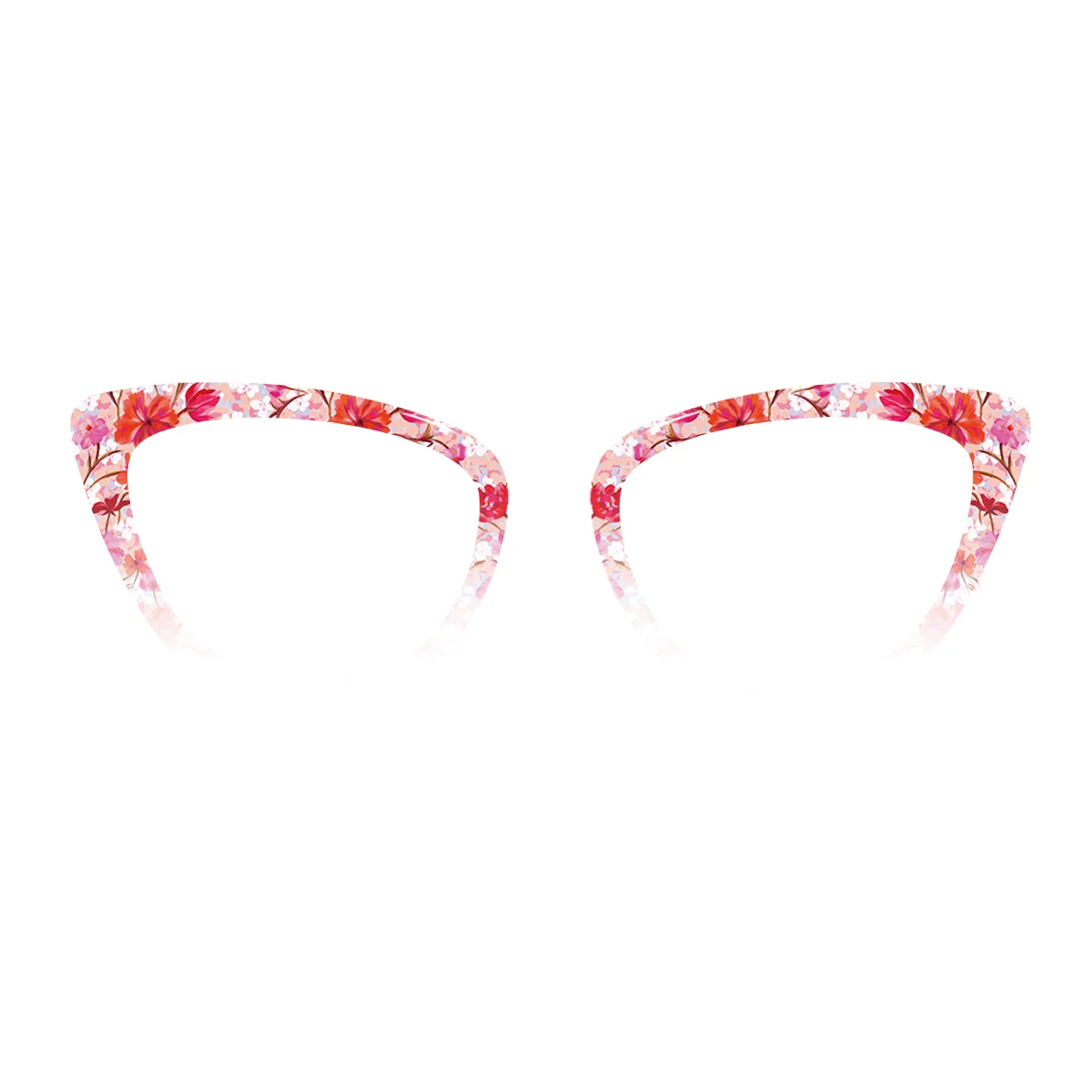


Mira Gunmetal Gray Interchangeable Base Frame – Wide Cat-Eye Metal Glasses


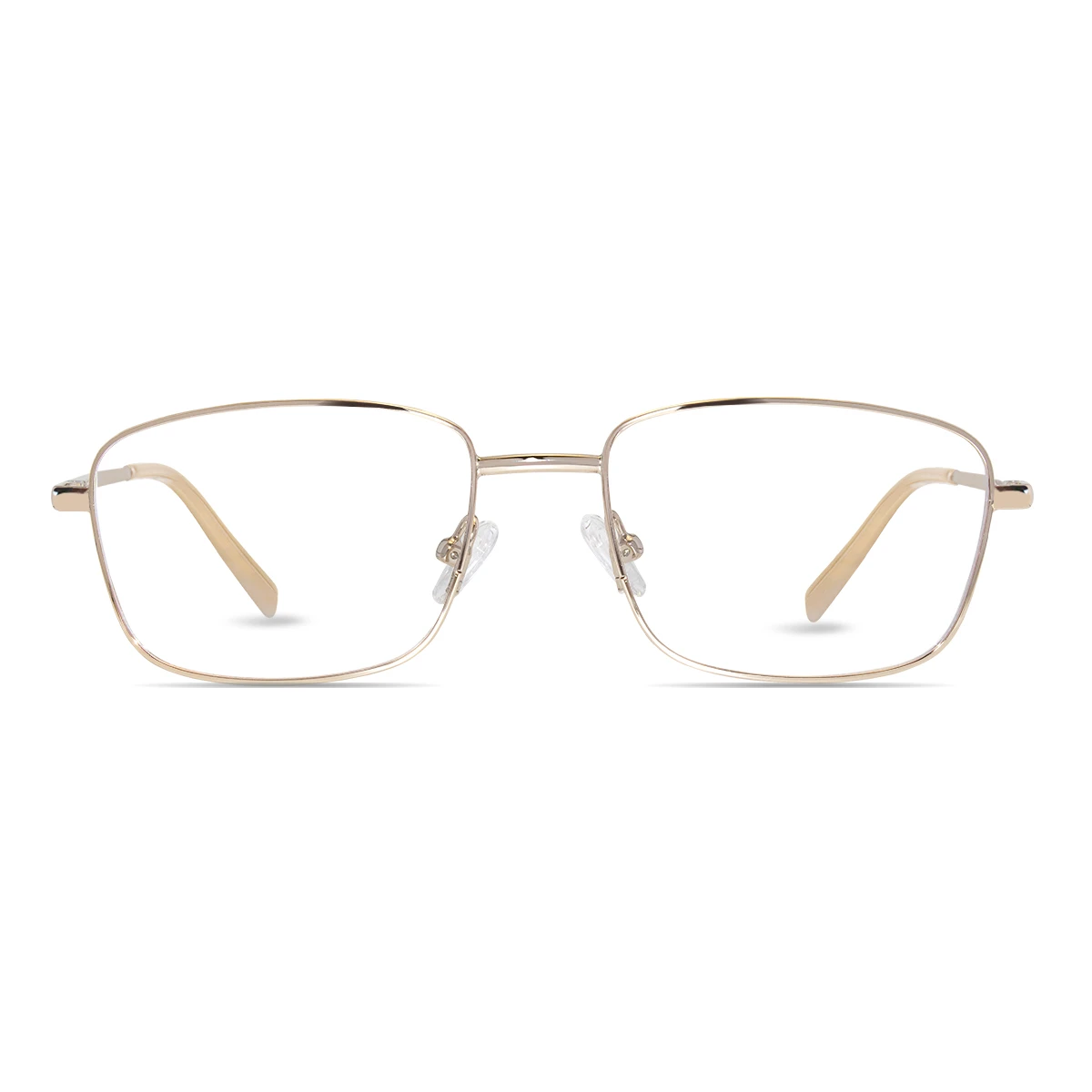
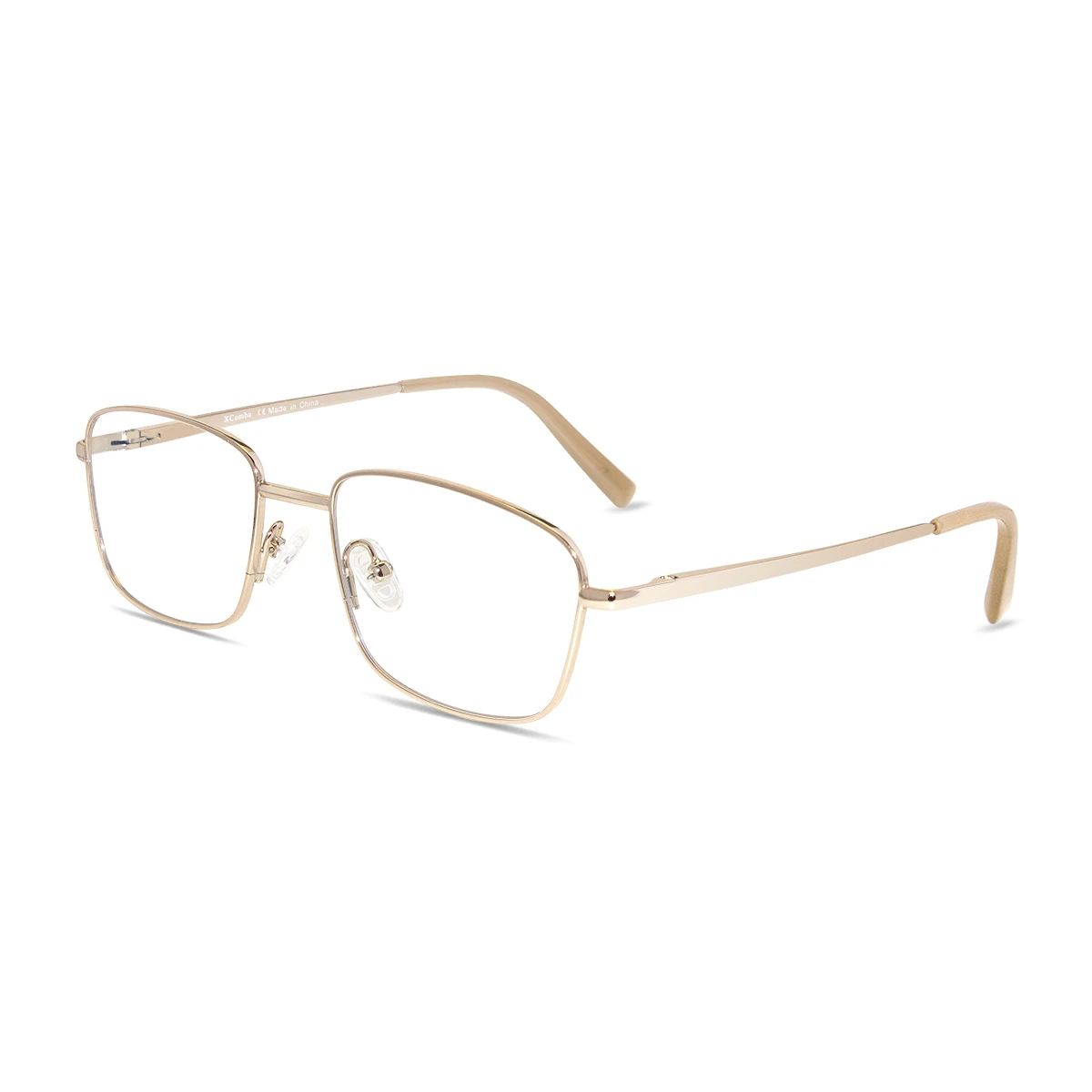
Soline Light Gold Base Frame for Interchangeable Toppers – Wide Rectangle Metal Glasses
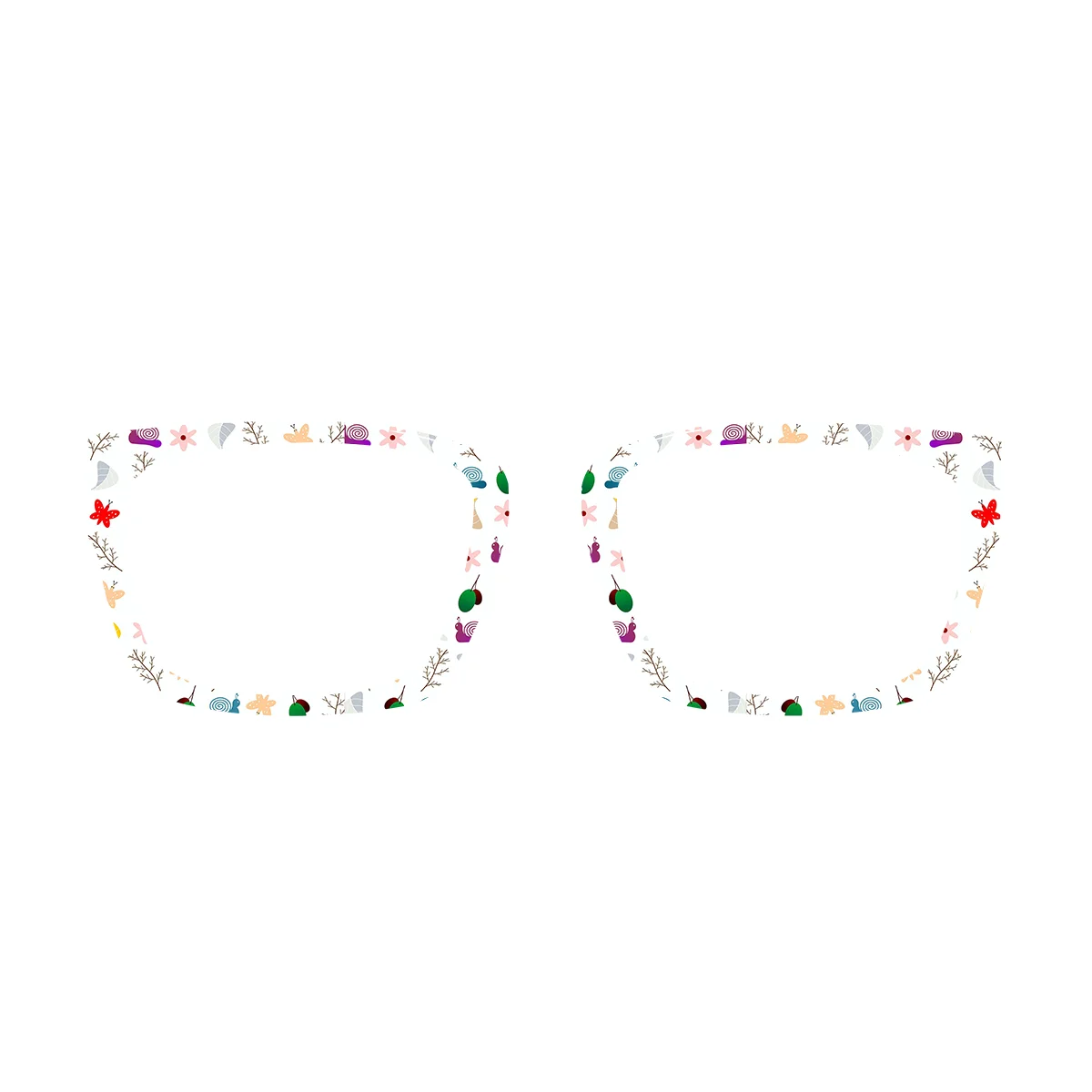

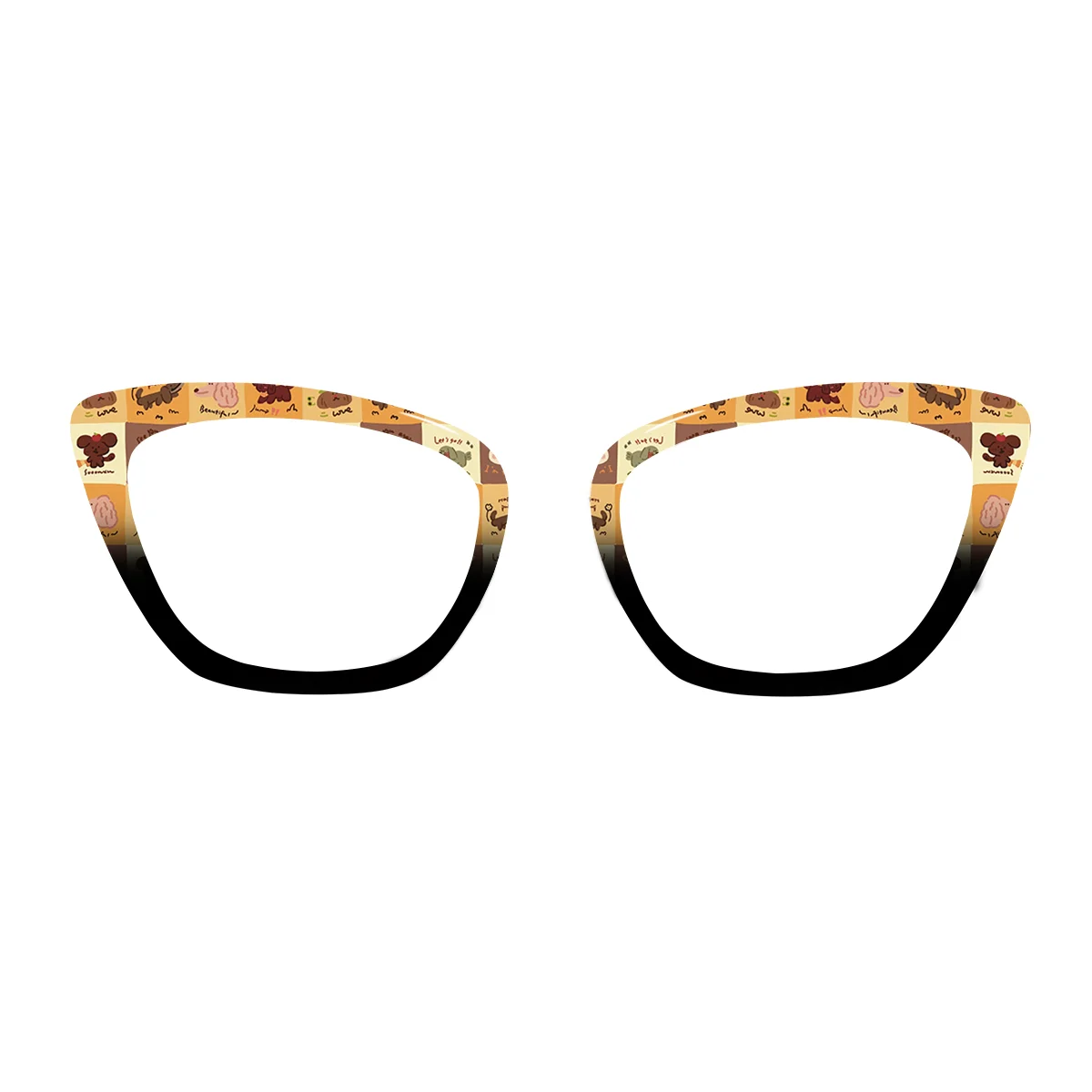
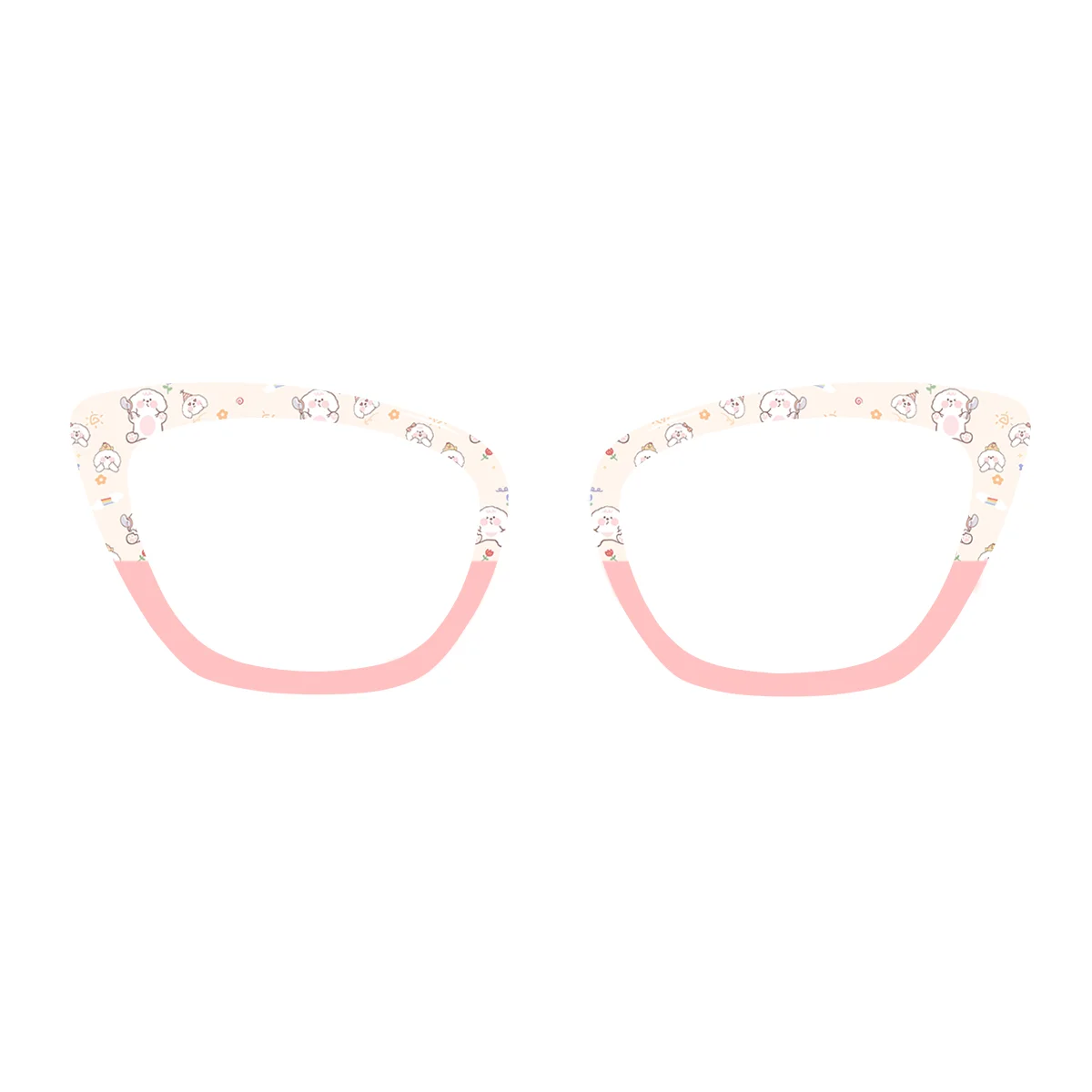
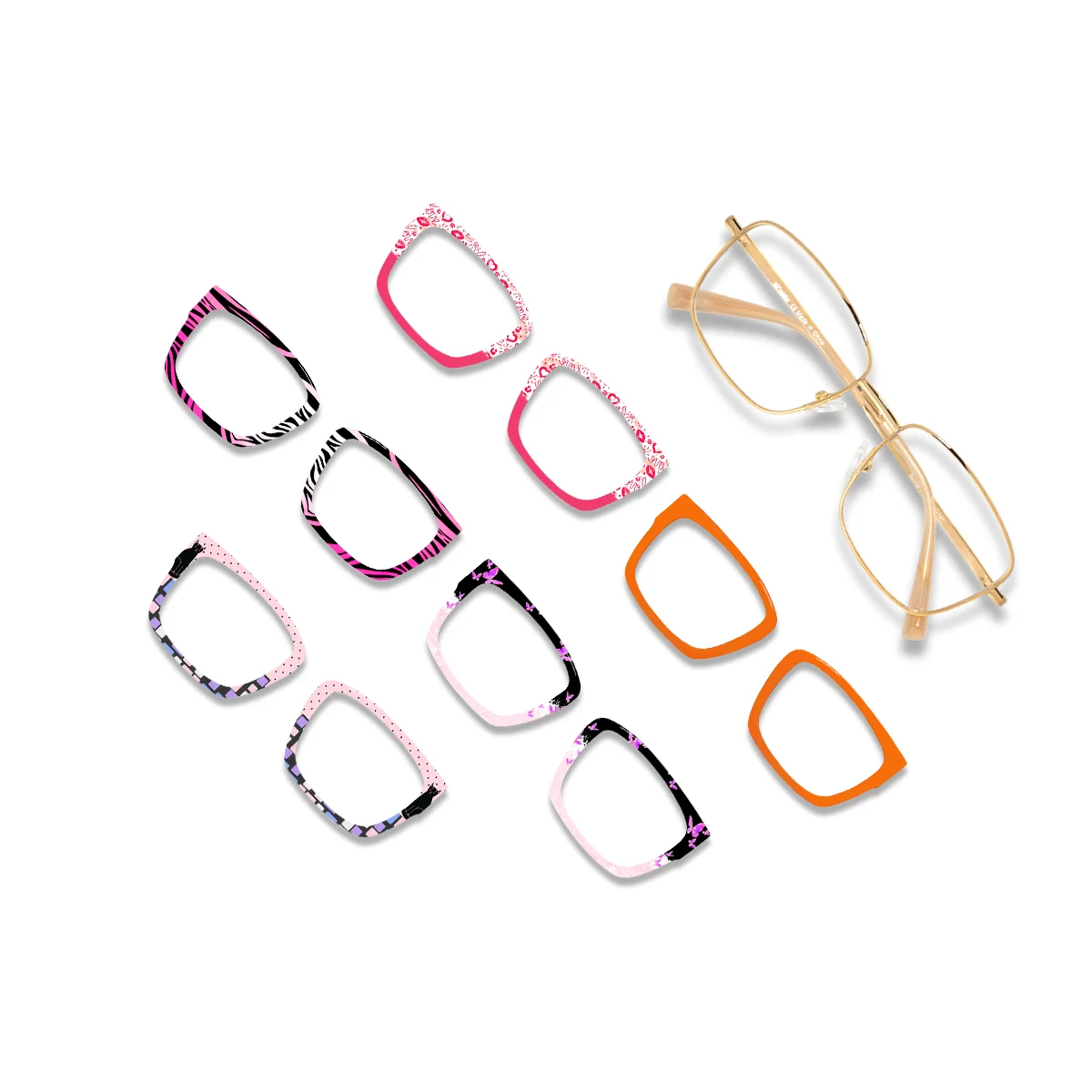
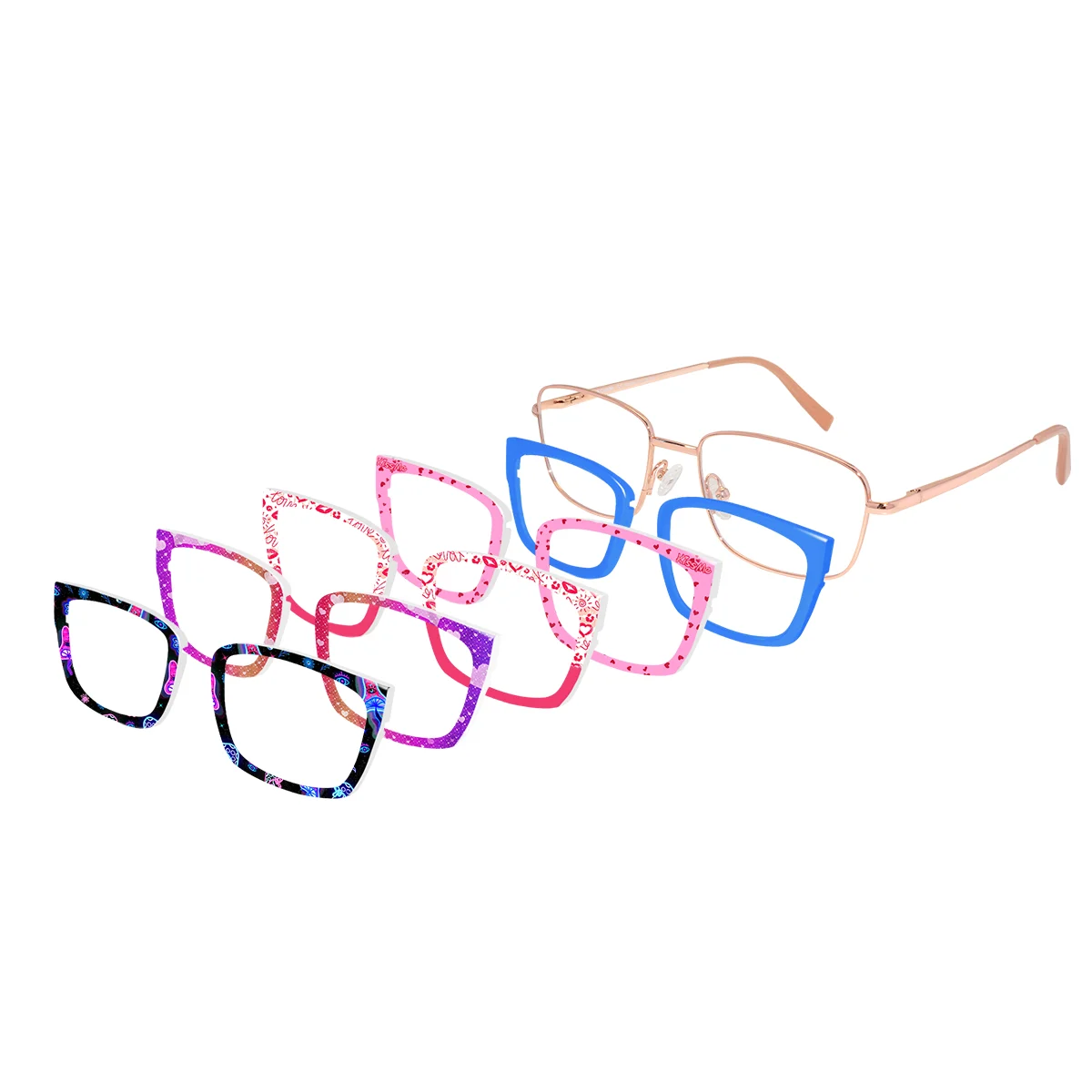
1 Base Frame + 5 Toppers | Interchangeable Glasses Bundle | Magnet-free Modular Eyewear | Rectangle
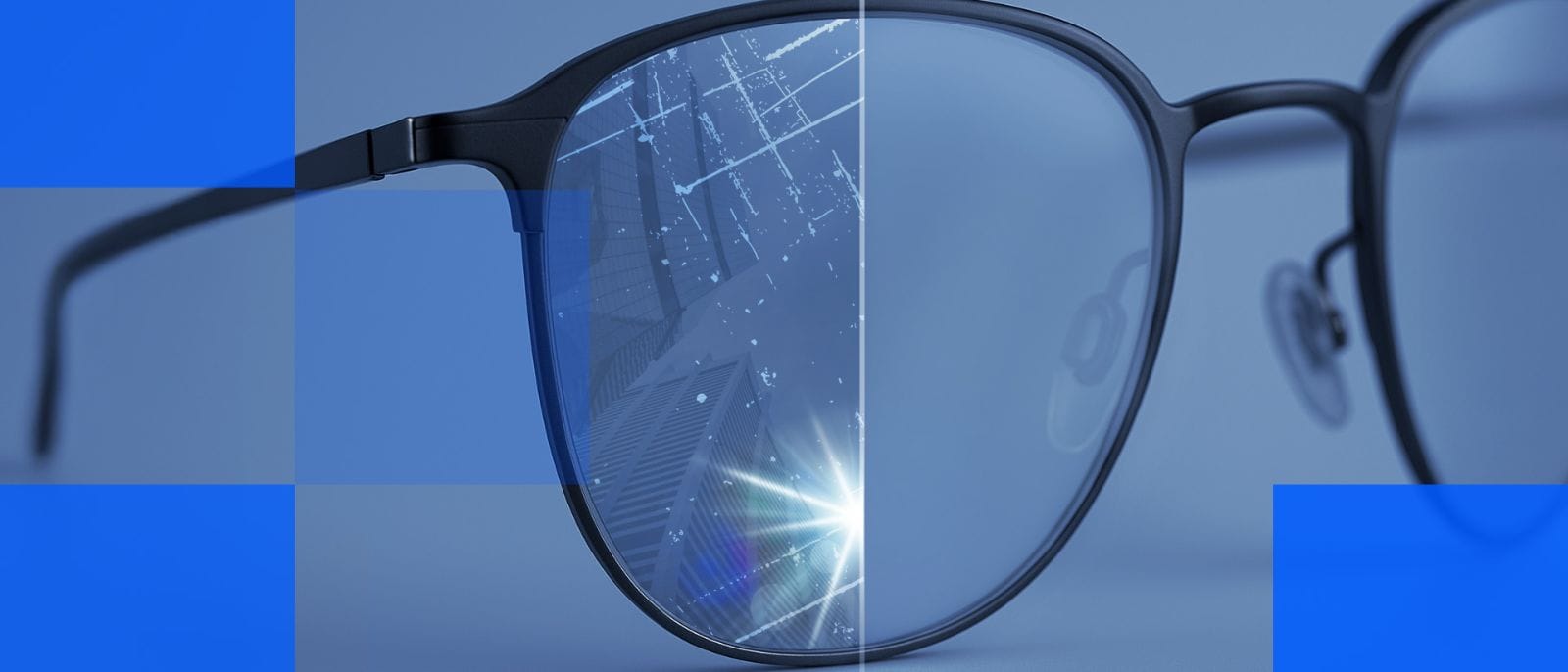
Does Blue Light Coating Peel Off Easily? The Real Secrets to Extending the Life of Functional Lenses
In today’s digital-first world, our eyes are under constant pressure. From laptops and smartphones to LED lighting and tablets, exposure to artificial...
Digital Life Customization: Blue-Light Protection and Focus Optimization Solutions for Programmers and Designers
Modern work lives increasingly unfold behind screens. Programmers write thousands of lines of code daily, designers spend hours refining pixels and typography,...
Can You Customize Glasses with High Myopia? The Truth About Lens Thickness and Frame Compatibility
If you have high myopia, you’ve probably heard at least one of these statements:“Your prescription is too strong for stylish frames.”“You’ll need...
Eye Care Diary: Giving Your Lenses a “Mini Makeover”
For many people, eyeglasses are more than a vision correction tool. They are part of daily life, personal style, work performance, digital...
A Breakthrough for High Myopia: How Custom Frames Make Thick “Coke Bottle” Lenses Look Half as Thin
For people with high myopia, wearing glasses often comes with a familiar frustration — thick, heavy lenses that distort appearance, add weight,...
Buy One, Get Five? Are Interchangeable Combo Glasses a Smart Investment—or Just a Marketing Gimmick?
If you’ve ever browsed online eyewear stores or social media ads, you’ve probably seen this pitch. A single pair of glasses, combined...
The Mechanic’s Manifesto: A Daily Guide to Maintaining Screwless Snap-Fit Eyewear
In the world of high-end eyewear, there is a sharp divide between those who accept the status quo and those who demand...
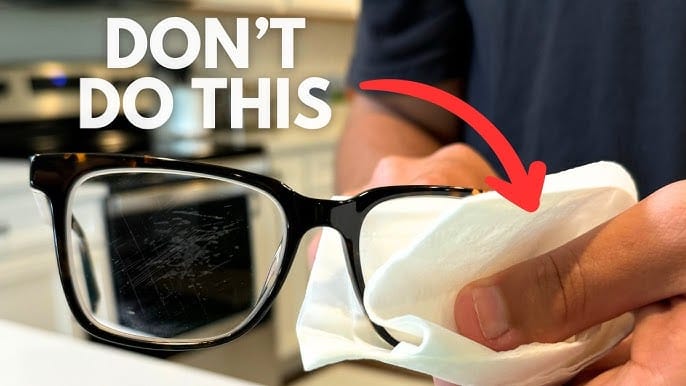
How to Clean Your Eyeglasses the Right Way: 5 Simple Steps to Say Goodbye to Scratches
Eyeglasses are an essential part of daily life for millions of people. Whether you rely on them for vision correction, blue light...

Is It Time for New Glasses? 4 Signs Maintenance Can’t Save Them Anymore
Introduction: When “Good Enough” Stops Being GoodMost people hold onto their glasses longer than they should. It’s understandable—frames still look okay, lenses...
How Mechanical Clip Systems Make Quick Temple Replacement Possible: The Future of Modular Eyewear Design
Eyewear has evolved far beyond simple vision correction. Today, glasses are fashion statements, performance tools, and everyday essentials that must adapt to...
How to Choose the Best VLT for Ski Goggles
Ever noticed how the world looks different through ski goggles? That's all thanks to VLT, or Visible Light Transmission. Think of it...
Digital Vision Calibration: How Custom Eyewear Frames Align Your Pupils with the Optical “Golden Position”
In today’s digital-first world, eyewear is no longer just a medical device or a fashion accessory—it has become a precision optical instrument....