
The Mechanic’s Manifesto: A Daily Guide to Maintaining Screwless Snap-Fit Eyewear
In the world of high-end eyewear, there is a sharp divide between those who accept the status quo and those who demand engineering perfection. Most people are content with standard optical frames—the kind held together by microscopic screws that inevitably loosen, strip, or vanish into the carpet at the worst possible moment.
But for the mechanical enthusiast, the screwless snap-fit frame is the pinnacle of functional art.
Whether it’s a 3D-printed polyamide frame or a laser-cut beta-titanium masterpiece, these glasses rely on precision tolerances and material memory rather than hardware. However, because these frames function as a single integrated machine, they require a different kind of "mechanical sympathy." If you want your screwless frames to maintain their "factory-fresh" snap for a decade, you need to master the art of the Bite Check.
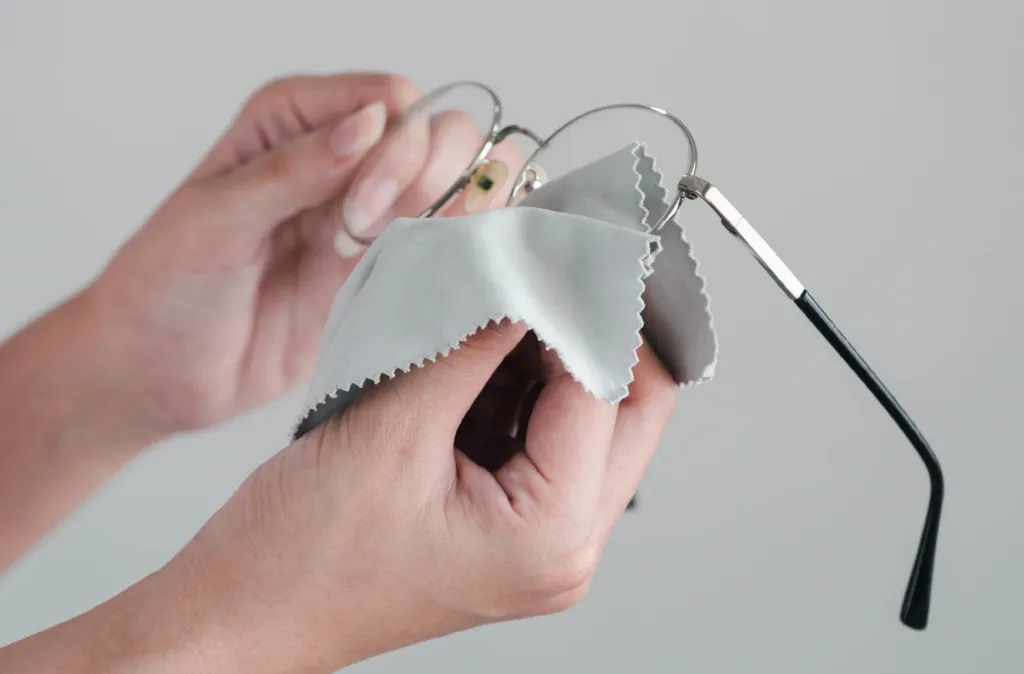
1. The Engineering Marvel: How Snap-Fit Works
To maintain your frames, you must first understand the physics of the "snap." Unlike a screw, which uses rotational force to create tension, a screwless frame utilizes Elastic Deformation.
The temple (the arm) and the hinge are designed with a tiny "interference fit." When you open or close the glasses, the material flexes just enough to allow one component to slide over a "detent" or into a "socket," snapping back into its original shape once seated. This is a high-stakes game of microns. If the fit is too tight, the material shears; if it’s too loose, the "bite" is lost, and the glasses feel flimsy.
2. The "Three-Point" Daily Bite Check
You don’t need a toolbox to maintain these glasses; you need your senses. Perform this three-point inspection every morning when you take your glasses out of their case.
Point A: The Tension Arc (Opening)
When you swing the temples open, the resistance should be smooth and linear.
- The Red Flag: If there is a "dead spot" where the arm moves freely without resistance, the snap-fit hook has likely widened.
- The Fix: For metal screwless frames (like certain German brands), this often means the "loop" needs a microscopic pinch. For 3D-printed frames, check for debris or "nurdles" of dust trapped in the hinge socket.
Point B: The Audible "Click"
A healthy mechanical frame has a "voice." When the temple reaches its fully extended position, there should be a subtle, tactile "thud" or a crisp "click."
- The Red Flag: A "mushy" feeling at the end of the arc. This usually indicates that oils from your skin or hair products have lubricated the friction-fit surfaces, reducing the mechanical grip.
- The Fix: Degrease the hinge area using a drop of pH-neutral dish soap and a soft-bristled brush. Drying the hinge completely is essential to restore the friction coefficient.
Point C: Axial Alignment
Hold your glasses at eye level, looking straight down at the top of the frame. The arms should be perfectly symmetrical.
- The Red Flag: One arm splaying outward further than the other. In a screwless system, this means the "stop" (the part of the frame that arrests the motion) is being compressed or worn down.
3. Managing Material Fatigue: Polyamide vs. Titanium
Your maintenance strategy must shift based on what your "machine" is made of.
- 3D-Printed (PA12/Polyamide): These frames are porous. Over time, they can absorb moisture or skin oils, which slightly swells the material. If your snap-fit feels too tight, a 10-minute soak in distilled water can sometimes restore the material’s natural elasticity.
- Beta-Titanium: Titanium has an incredible "memory," but it is prone to Galling—a form of wear caused by adhesion between sliding surfaces. If your titanium hinges feel "gritty," do not use WD-40. Instead, use a dry Teflon-based lubricant or simply clean the interface to remove oxidized metal dust.
4. The Ultrasonic Myth: Friend or Foe?
Mechanical purists love ultrasonic cleaners, but for screwless frames, use caution. The high-frequency vibrations are excellent at removing hidden grit from a snap-fit hinge, but if the frames are 3D-printed and dyed, prolonged ultrasonic exposure can leach the pigment or cause "micro-stress" in the thin interlocking parts.
- The Protocol: Limit ultrasonic sessions to 90 seconds. This is enough to vibrate debris out of the "bite" zone without compromising the structural integrity of the polymers.
5. Storage: The "Neutral State" Rule
Here is a secret most opticians won't tell you: Screwless frames hate being folded. When a snap-fit hinge is folded, the "spring" component is often under its maximum state of tension. If you leave them folded in a case for weeks, the material can undergo "creep," where it permanently loses some of its clamping force.
The Pro Move: If you are storing your glasses overnight, lay them flat (unfolded) on a microfiber cloth in a drawer. If you must use a case, ensure it is oversized so the case walls aren't pressing against the hinges.
6. Why "Screwless" is the Sustainable Choice
By eliminating the screw, you’ve eliminated the most common point of failure in eyewear. There are no threads to strip and no tiny parts to rust. Maintenance for a mechanical frame is about cleanliness and alignment, not repair. It’s a more "honest" form of ownership—one where the longevity of the object is directly tied to how well you understand its movement.
Summary: Master the Machine on Your Face
A screwless, snap-fit frame is more than a medical device; it is a statement of appreciation for advanced manufacturing. By performing a daily "Bite Check" and respecting the tolerances of the materials, you ensure that your signature look remains as sharp and functional as the day it was engineered.
Don't just wear your glasses. Understand them.
Is Your Frame Losing Its Grip?
Sometimes, despite perfect hinge maintenance, the glasses can still slide down your nose due to the "balance" of the frame.

Share this post

The Ultimate Guide to Vacation-Style Outfits: Floral Dresses, Straw Bags, and Round Sunglasses for Summer
Summer is the season of relaxed mornings, warm afternoons, outdoor dinners, weekend getaways, and long-awaited vacations. It is also the perfect time...
The Romance of Earth Tones in Fall: The Color Aesthetics of Trench Coats, Saddle Bags, and Tea-Tinted Sunglasses
Introduction: Falling in Love With the Colors of AutumnThere is something irresistibly romantic about autumn fashion.As summer fades, bright colors gradually give...
Best Glasses for Your Face Shape: Round, Square, Oval & More
Introduction: The Right Glasses Can Transform Your Entire AppearanceChoosing a pair of glasses is about much more than simply correcting your vision....

From Head to Toe: The Golden Ratio for Styling Glasses, Clothing, and Bags
Introduction: The Secret to Looking Polished From Head to ToeGreat style is rarely about wearing the most expensive clothes, following every trend,...

Minimalist Style: How Glasses and Bags Add the Perfect Finishing Touch to Black, White, and Gray Outfits
Minimalist fashion is often described as simple, effortless, and timeless. But creating a truly polished minimalist outfit is not as easy as...

Effortless Style: The Perfect Chemistry of Oversized Sweatshirts, Crossbody Bags, and Vintage Metal-Frame Glasses
Introduction: Why Relaxed Style Feels So RightFashion does not always have to look carefully calculated.Sometimes, the most appealing outfit is the one...

The Symphony of Metallic Elements: The Art of Layering Belt Buckles, Chain Bags, and Metal Frames
Introduction: When Metal Becomes a Fashion LanguageFashion has always been a conversation between materials, shapes, and personal expression. Among all design elements,...

Eyeglasses as the Finishing Touch: How to Make Your Frames Blend Perfectly Into Your Everyday Outfits
Eyeglasses are more than a tool for clearer vision. Today, they are one of the most powerful accessories in a modern wardrobe....

Old Money Style Guide: How Cashmere Coats, Premium Leather Bags, and Classic Black Frame Glasses Create Timeless Elegance
Introduction: Understanding the True Meaning of Old Money FashionFashion trends come and go, but true elegance has always been about something deeper...

The Ultimate Style Rescue for Round-Faced Women: How Necklines, Bag Placement, and Geometric Glasses Create a Slimmer Look
Introduction: Redefining Beauty Beyond Face ShapeFor many women with round faces, getting dressed can sometimes feel like a constant battle. The cheeks...
One Swipe, Crystal Clear: The Ultimate Guide to Efficient Eyeglass Cleaning
Introduction: Clear Vision Starts With Proper Lens CareFor millions of people around the world, eyeglasses are an essential part of daily life....

Eyeglasses as the Finishing Touch to Your Outfit: How Frame Shapes Can Elevate Your Style
Introduction: Eyeglasses as the Ultimate Fashion AccessoryWhen people think about fashion accessories, they often consider watches, jewelry, handbags, shoes, or clothing details....