
From Head to Toe: The Golden Ratio for Styling Glasses, Clothing, and Bags
Introduction: The Secret to Looking Polished From Head to Toe
Great style is rarely about wearing the most expensive clothes, following every trend, or filling an outfit with eye-catching accessories. More often, a polished appearance comes from something much simpler: proportion.
When your glasses, clothing, and bag work together visually, an outfit can look balanced, intentional, and sophisticated—even when the individual pieces are relatively simple. On the other hand, beautiful items can compete with one another when their sizes, shapes, colors, or visual weight are poorly matched.
This is where the idea of the “golden ratio” in fashion styling becomes useful.
The golden ratio is often associated with visual harmony in art, architecture, photography, and design. Fashion does not follow a mathematical formula rigidly, but the same underlying concept applies: the eye tends to appreciate relationships between different visual elements.
Your glasses occupy the upper part of your appearance. Your clothing establishes the largest visual framework. Your bag creates another significant shape, usually around the waist, hip, or lower body. When these three elements are proportionally coordinated, the entire outfit can appear more refined.
Think of your outfit as a visual composition.
Your face is the focal point. Your glasses frame the face. Your clothing establishes the silhouette. Your bag adds structure and visual weight. Shoes, jewelry, and other accessories then complete the composition.
The goal is not perfect symmetry.
The goal is controlled balance.
Whether your personal style is minimalist, classic, modern, casual, professional, or quietly luxurious, understanding proportion can help you create outfits that look more expensive and sophisticated without buying an entirely new wardrobe.
In this guide, we will explore how to coordinate glasses, clothing, and bags using principles of proportion, scale, color, silhouette, texture, and visual weight.
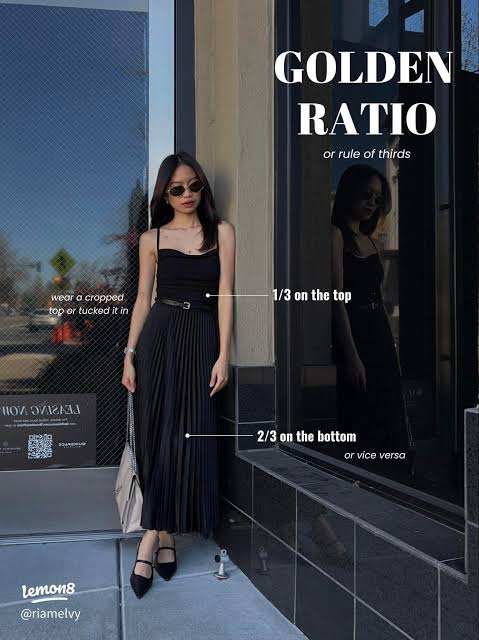
1. What Does the “Golden Ratio” Mean in Fashion?
The golden ratio is commonly represented by approximately 1:1.618.
In fashion styling, however, you do not need to measure your outfit with a ruler.
Instead, use the golden ratio as a visual guideline.
Rather than dividing the body into equal halves, styling often looks more dynamic when the outfit creates an intentional relationship between larger and smaller sections.
For example, imagine two outfit structures:
50% top + 50% bottom
versus
approximately 1/3 top + 2/3 bottom
The second arrangement often creates a stronger sense of verticality.
This is why techniques such as:
- High-waisted pants
- Cropped jackets
- Long coats
- Tucked-in shirts
- Shorter tops with longer bottoms
- Long vertical layers
can dramatically change how an outfit looks.
The same principle applies to accessories.
A small face may become visually overwhelmed by oversized glasses. A large structured bag may look disconnected from delicate clothing. A tiny bag may disappear beside a voluminous coat.
The secret is to create relationships between scales.
You are not styling glasses, clothes, and a bag independently.
You are styling them as a single visual system.
2. The Three Main Visual Anchors: Face, Body, and Bag
For this styling method, think of three major zones:
Zone 1: The Face
Glasses are one of the most noticeable accessories because they sit directly around your eyes and eyebrows.
They influence:
- Face width
- Face length
- Facial contrast
- Overall style personality
- Visual sharpness
Zone 2: The Body
Clothing determines the largest part of your silhouette.
It controls:
- Shoulder width
- Waist position
- Leg length
- Body volume
- Vertical lines
- Overall visual weight
Zone 3: The Bag
A bag acts like a movable geometric shape.
Its:
- Size
- Width
- Height
- Structure
- Strap length
- Material
- Color
can either support or disrupt the clothing silhouette.
When these three zones are balanced, the outfit feels cohesive.
3. Start With Your Face: Choosing Glasses in the Right Proportion
Because glasses sit directly on the face, their scale is especially important.
A common mistake is choosing frames based only on whether they are fashionable.
Instead, consider the relationship between the frame and your facial dimensions.
The frame should generally feel intentional rather than randomly oversized or excessively small.
Important factors include:
- Face width
- Brow position
- Eye spacing
- Nose bridge
- Cheekbone width
- Face length
- Frame height
A frame that is too narrow may make the face appear wider.
A frame that is dramatically oversized can dominate facial features.
A frame with moderate width can create a more balanced appearance.
This does not mean everyone should wear medium-sized glasses.
Oversized frames can look incredibly stylish when the rest of the outfit supports their visual weight.
The key is coordination.
4. Oversized Glasses Require Visual Support
Oversized glasses create a strong focal point around the eyes.
If you choose large, bold frames, consider simplifying other elements around your face.
For example:
Oversized glasses + clean hairstyle + simple neckline
can create a sophisticated appearance.
By contrast:
Oversized glasses + oversized earrings + statement necklace + dramatic collar
may create too much competition around the face.
The same principle applies to clothing.
If your glasses are visually dominant, your outfit does not necessarily need another dominant accessory near the neckline.
Let the glasses become the focal point.
This is particularly effective with black, tortoiseshell, dark brown, or other strong-colored frames.
5. Small Frames Need the Right Outfit Scale
Small or delicate glasses create a completely different visual effect.
They tend to feel:
- Refined
- Lightweight
- Intellectual
- Minimal
- Retro
- Understated
Because they have less visual weight, they often work well with tailored clothing and delicate accessories.
For example:
Thin metal glasses + fitted blazer + small leather bag
creates a very different impression from:
Thin metal glasses + oversized puffer jacket + huge tote bag.
The second outfit can still work, but the proportions become more dramatic.
The first creates a controlled, elegant relationship between the accessories and clothing.
6. Match Glasses to Your Clothing’s Visual Weight
One of the easiest styling rules is to compare the weight of your glasses with the weight of your clothing.
Think about visual weight rather than physical weight.
A heavy wool coat has high visual weight.
A thick black frame also has high visual weight.
A lightweight linen shirt has low visual weight.
A thin gold frame has low visual weight.
This gives you several possibilities.
Balanced Styling
Heavy clothing + substantial glasses
or
Light clothing + delicate glasses
Intentional Contrast
Heavy clothing + delicate glasses
or
Light clothing + bold glasses
Both can work.
The difference is that balanced combinations look naturally harmonious, while contrasting combinations create a more fashion-forward effect.
7. The 1/3–2/3 Clothing Rule
One of the most useful styling principles for creating a flattering silhouette is the approximate 1/3–2/3 rule.
Instead of dividing the body visually into two equal sections, create a shorter upper section and a longer lower section.
For example:
- Cropped jacket + high-rise trousers
- Tucked shirt + wide-leg pants
- Short cardigan + long skirt
- Fitted top + high-waisted jeans
This can create a stronger vertical impression.
The technique is especially useful when you want the outfit to look streamlined and elongated.
However, you should not interpret the rule as an absolute requirement.
Fashion is about visual intention.
A deliberately oversized long top can look sophisticated when the silhouette is designed around it.
The important thing is to avoid accidentally creating awkward divisions.
8. High-Waisted Bottoms: The Simplest Proportion Trick
High-rise trousers, jeans, and skirts can visually raise the waistline.
This creates the impression that the lower body occupies more of the overall silhouette.
Pairing a high-waisted bottom with a shorter or tucked top can therefore create a visually elongated effect.
For example:
High-waisted straight-leg trousers + tucked white shirt + structured shoulder bag
is a classic proportion-friendly combination.
The outfit has:
- Clear waist definition
- Strong vertical lines
- Controlled accessory scale
- Minimal visual clutter
This is one reason classic tailoring continues to look sophisticated across different fashion eras.
9. The Role of Jackets in Body Proportion
Jackets are extremely powerful because they establish the upper-body silhouette.
A cropped jacket can visually shorten the torso and lengthen the appearance of the legs.
A long blazer can create a more elongated vertical line.
A boxy jacket adds width.
A fitted jacket emphasizes the waist.
An oversized jacket increases visual volume.
Therefore, the bag you choose should respond to the jacket.
For example, an oversized blazer paired with a tiny handbag creates deliberate contrast.
An oversized blazer paired with a large structured tote creates a more consistent visual scale.
Neither is inherently better.
The question is:
What visual message do you want to create?
10. Matching Bag Size to Your Body and Outfit
The bag is one of the most important accessories for overall proportion.
A bag is essentially a three-dimensional shape attached to your body.
Its scale affects how your body appears.
A very large bag can make a petite silhouette appear smaller by comparison.
A very tiny bag can look lost next to oversized clothing.
This does not mean petite people should never carry large bags.
Fashion is not a set of restrictions.
Instead, use bag size to control visual balance.
Small Bags
Best for creating:
- Lightness
- Elegance
- Minimalism
- Delicacy
- Evening sophistication
Medium Bags
Often provide the most versatile balance.
They work well with:
- Blazers
- Dresses
- Jeans
- Trousers
- Casual outfits
- Business-casual clothing
Large Bags
Create:
- Strong visual weight
- Casual confidence
- Utility
- Modern proportions
- Relaxed styling
The larger the bag, the more important it becomes to consider the volume of the clothing.
11. The Golden Relationship Between Glasses and Bags
This is where the styling concept becomes especially interesting.
Your glasses and bag are visually separated by the entire body, but they still influence one another.
Imagine:
Bold black glasses + black structured handbag
The repeated visual weight creates cohesion.
Or:
Thin gold glasses + small beige handbag
The delicate materials create a consistent aesthetic language.
You can also deliberately create contrast:
Bold tortoiseshell glasses + minimalist black leather bag
Here, the glasses provide personality while the bag provides structure.
The two accessories do not need to match exactly.
They simply need to belong to the same visual story
12. Matching Colors Without Looking Too Coordinated
One of the biggest mistakes in accessory styling is trying to match everything perfectly.
Black glasses do not require a black bag.
Brown glasses do not require a brown handbag.
Instead, think in terms of color repetition and color relationships.
For example:
- Tortoiseshell glasses + camel coat + dark brown bag
- Black glasses + gray blazer + black leather bag
- Burgundy frames + neutral clothing + burgundy shoes
- Cream frames + beige coat + tan bag
The colors do not have to be identical.
They simply need to communicate with one another.
A subtle repeated color can make an outfit look intentional.
13. The Three-Color Principle
A simple way to control outfit complexity is to work with approximately three major colors.
For example:
Black + white + camel
or
Navy + cream + brown
or
Gray + black + burgundy
Your glasses and bag can serve as two of those color anchors.
This is particularly effective for minimalist fashion.
Instead of introducing six different colors, use a limited palette and allow differences in texture and shape to create interest.
A simple outfit can look luxurious when the color relationships are carefully controlled.
14. Neutral Clothing Creates a Perfect Background for Statement Glasses
Neutral clothing provides an excellent canvas for distinctive eyewear.
Consider:
- Black
- White
- Cream
- Gray
- Beige
- Navy
- Camel
- Chocolate brown
These colors allow glasses to become a controlled focal point.
For example:
Cream knit + black trousers + burgundy glasses + burgundy bag
creates a refined visual connection without appearing overly coordinated.
The glasses and bag create two points of color, while the clothing remains understated.
15. The Power of Repetition
One of the most sophisticated styling techniques is repetition.
You can repeat:
- Color
- Shape
- Material
- Texture
- Hardware
- Visual weight
For example, if your glasses have a rectangular shape, you might choose a structured rectangular bag.
If your glasses have rounded frames, a softly curved handbag can echo that shape.
This creates subtle visual harmony.
The viewer may not consciously notice the repetition, but the outfit can feel more cohesive.
16. Shape Matching: Round Glasses and Soft Bags
Round glasses have a softer visual language.
They can pair beautifully with:
- Rounded handbags
- Soft leather
- Curved necklines
- Flowing skirts
- Knitwear
- Relaxed silhouettes
This creates a gentle aesthetic.
However, round glasses can also look striking with structured clothing.
For example:
Round metal glasses + sharp blazer + structured handbag
creates contrast between softness and structure.
That contrast can make the outfit feel more contemporary.
17. Angular Glasses and Structured Bags
Square and rectangular frames naturally create stronger lines.
They pair particularly well with:
- Tailored blazers
- Straight-leg trousers
- Crisp shirts
- Structured handbags
- Geometric jewelry
The result is often polished and professional.
A black rectangular frame with a structured black leather bag can create a strong minimalist look.
The clothing does not need to be complicated.
The geometry itself provides visual interest.
18. Matching Material Rather Than Color
Sometimes texture is more powerful than color matching.
Consider:
Black acetate glasses + black leather bag
The colors match, but the materials differ.
Or:
Metal-frame glasses + metallic bag hardware
The connection is subtle.
You can create harmony through:
- Leather
- Metal
- Suede
- Canvas
- Acetate
- Knit
- Wool
The goal is to prevent accessories from feeling as though they were selected randomly.
19. The Importance of Hardware
Bag hardware can influence the relationship between your accessories.
Gold hardware can echo:
- Gold glasses
- Gold earrings
- Gold watch
- Gold necklace
Silver hardware can work with:
- Silver metal frames
- Stainless steel watches
- Silver jewelry
You do not have to match every metal perfectly.
But repeating a metallic tone two or three times can make an outfit look more deliberate.
This is a small detail with a surprisingly large effect.
20. Oversized Clothing + Oversized Bag: How to Avoid Being Overwhelmed
Oversized fashion remains popular because it offers comfort and a relaxed modern silhouette.
But combining oversized clothing with a large bag can create excessive visual volume.
The solution is not necessarily to choose a tiny bag.
Instead, introduce structure.
For example:
Oversized blazer + straight trousers + medium structured handbag
The structured bag creates a visual anchor.
Another option:
Oversized sweater + slim pants + medium shoulder bag
The fitted lower section balances the upper volume.
Think of the outfit as a visual equation:
Volume + structure = balance.
21. Fitted Clothing + Large Bag
A fitted outfit can often support a larger bag.
For example:
Fitted knit dress + oversized leather tote
creates a strong contrast.
The clothing establishes the body's shape while the bag introduces volume.
This is a sophisticated way to use contrast without creating visual chaos.
The key is to make the large bag look intentional.
22. Petite Proportions and Bag Selection
For petite frames, bag placement can be particularly important.
A large bag that extends far below the hip can visually interrupt the body's vertical line.
A medium-sized bag positioned closer to the waist or upper hip may create a cleaner silhouette.
Crossbody bags can also affect the body visually because the strap creates a diagonal line.
Shorter straps tend to keep the bag higher.
Longer straps create a longer diagonal.
Neither is universally correct.
Choose the strap length based on the silhouette you want.
23. Tall Frames and Larger Accessories
Taller individuals can often carry larger accessories naturally because their body provides more visual scale.
Large sunglasses, oversized bags, long coats, and wide-leg trousers can work beautifully together.
But the same principle still applies:
One oversized element can be a statement. Several oversized elements require deliberate coordination.
For example:
Oversized sunglasses + long coat + medium structured bag
may look sophisticated.
While:
Oversized sunglasses + oversized coat + oversized sweater + oversized trousers + huge tote
can become visually heavy unless carefully styled.
24. Using Vertical Lines to Create Elegance
Vertical lines are powerful because they guide the eye up and down the body.
You can create vertical continuity through:
- Long coats
- Open blazers
- Straight-leg trousers
- Long scarves
- Long necklaces
- Vertical bag straps
- Monochromatic outfits
Glasses sit at the top of this visual structure.
Therefore, a simple pair of frames can act as the first anchor point of a long vertical composition.
For example:
Black rectangular glasses + black open blazer + black straight trousers + black shoulder bag
creates strong vertical continuity.
25. Monochromatic Styling and the Golden Ratio
Monochromatic outfits are particularly effective for creating a polished appearance because they reduce visual interruption.
A monochromatic outfit does not require every item to be exactly the same color.
You can use different shades:
Ivory + cream + beige
or
Charcoal + gray + black
or
Camel + tan + chocolate
This creates depth while maintaining visual unity.
Your glasses or bag can either remain within the same palette or become a controlled contrasting accent.
26. Black, White, and Gray: The Ultimate Proportion Playground
A black, white, and gray wardrobe provides enormous flexibility.
For example:
Look One
Black rectangular glasses
White button-down
Black high-waisted trousers
Black structured bag
Look Two
Thin metal glasses
Gray knit sweater
Black wide-leg trousers
Gray shoulder bag
Look Three
Oversized black glasses
White T-shirt
Gray blazer
Black leather tote
The limited palette allows proportion and texture to become the primary styling tools.
This is why neutral wardrobes can feel sophisticated without being boring.
27. The “One Hero, Two Supporting Players” Rule
A useful practical strategy is to choose one dominant element.
Your hero item could be:
- Bold glasses
- Statement bag
- Dramatic coat
- Colorful trousers
- Eye-catching shoes
Then let the other two major elements support it.
For example:
Hero: Bold glasses
Supporting pieces:
- Simple neutral clothing
- Medium structured bag
Or:
Hero: Oversized leather bag
Supporting pieces:
- Minimal glasses
- Clean tailored clothing
This prevents the outfit from becoming a competition between multiple statement pieces.
28. When Your Bag Should Match Your Glasses
Matching glasses and bag can work particularly well when you want a polished, coordinated appearance.
Examples include:
- Black frames + black bag
- Brown tortoiseshell frames + brown leather bag
- Cream frames + cream handbag
- Burgundy frames + burgundy bag
The clothing can remain neutral.
This is an easy formula for creating intentional everyday outfits.
29. When Your Bag Should Contrast With Your Glasses
Contrast can create more fashion-forward styling.
For example:
Black glasses + tan bag
creates warmth.
Brown glasses + black bag
creates sharper contrast.
Metal glasses + colorful bag
creates a modern focal point.
The key is to maintain at least one connection elsewhere in the outfit.
For example, a tan bag can connect with tan shoes.
This creates a triangle of color rather than two isolated accessories.
30. The Three-Point Styling Triangle
One of the easiest ways to make an outfit look cohesive is to repeat a visual element in three locations.
For example:
Black glasses → black belt → black bag
or
Brown glasses → brown shoes → brown bag
or
Gold glasses → gold earrings → gold bag hardware
This creates a visual triangle.
The eye naturally moves between these points, making the outfit feel connected.
You do not need dozens of accessories.
Three intentional points are often enough.
31. Dress for the Occasion, Not Just the Body
Proportion also needs to match context.
A large structured tote may be perfect for work.
A small shoulder bag may be better for dinner.
A compact crossbody may work for travel.
A minimalist clutch may suit formal occasions.
Similarly, glasses should reflect the setting.
A bold fashion frame may be perfect for creative environments, while a classic rectangular frame may create a more traditional professional appearance.
Style is not just about physical proportion.
It is also about social proportion—how appropriate the visual language feels for the situation.
32. Building a Polished Work Outfit
A professional outfit can use a simple proportion formula:
Structured glasses + tailored top + high-rise trousers + medium structured bag
For example:
- Dark rectangular frames
- Crisp white shirt
- Navy trousers
- Medium brown leather bag
- Simple loafers
The result is clean and sophisticated without appearing overly styled.
The key is consistency.
Each piece has enough structure to support the others.
33. Creating a Minimalist Weekend Outfit
Weekend styling can be more relaxed.
Try:
Simple glasses + oversized knit + straight-leg jeans + medium crossbody bag
The clothing provides comfort.
The glasses add personality.
The bag keeps the outfit functional.
You can create additional sophistication through color.
For example:
Cream + denim + chocolate brown
is casual but polished.
34. Building a Quiet-Luxury Inspired Look
A refined, understated aesthetic often depends heavily on proportion and material quality.
Try:
- Thin or classic acetate glasses
- Cashmere or fine knitwear
- Tailored trousers
- Structured leather handbag
- Minimal jewelry
- Neutral colors
Instead of relying on large logos or dramatic trends, focus on:
- Clean silhouettes
- Consistent proportions
- High-quality textures
- Restrained color combinations
The result can feel luxurious without being loud.
35. The Importance of Negative Space
A sophisticated outfit needs visual breathing room.
Negative space can exist around:
- The face
- Neckline
- Wrists
- Ankles
- Between clothing layers
- Between accessories
For example, if you wear bold glasses, a simple neckline can provide breathing room around the face.
If you wear a statement necklace, you may not need oversized glasses.
If your bag is large and structured, minimal jewelry may create better balance.
Not every area needs decoration.
Sometimes elegance comes from what you leave out.
36. Avoiding the “Everything Is a Statement” Problem
One of the most common styling mistakes is making every item compete for attention.
Imagine:
- Oversized glasses
- Bright printed blouse
- Statement necklace
- Giant handbag
- Chunky shoes
- Large earrings
Every element is shouting.
Instead, choose hierarchy.
For example:
Statement glasses
then:
- Simple shirt
- Clean trousers
- Medium bag
- Minimal jewelry
Or:
Statement bag
then:
- Simple glasses
- Neutral clothing
- Clean shoes
The outfit becomes much easier to understand visually.
37. The Power of Tailoring
Even inexpensive clothing can look more polished when the proportions are correct.
Pay attention to:
- Shoulder seams
- Sleeve length
- Trouser length
- Waist placement
- Jacket length
- Hem width
A well-tailored garment can make accessories appear more sophisticated because the entire silhouette feels intentional.
Your glasses and bag should complement the garment's structure rather than compensate for poor fit.
38. How Shoes Complete the Proportion System
Although this guide focuses on glasses, clothing, and bags, shoes complete the lower end of the composition.
Your outfit can be thought of as a vertical sequence:
Glasses → clothing → bag → shoes
Shoes can repeat the bag color or introduce another controlled accent.
For example:
Brown glasses + cream outfit + brown bag + brown loafers
creates a continuous color pathway.
Alternatively:
Black glasses + neutral outfit + black bag + white sneakers
creates a sharper contrast.
39. Seasonal Proportion Changes
Your styling formula should change with the season.
Spring
Lightweight glasses, cropped jackets, medium bags, and lighter colors create visual freshness.
Summer
Thin frames, lightweight shirts, dresses, and compact bags reduce visual weight.
Fall
Tortoiseshell glasses, structured coats, leather bags, and layered clothing create richer visual depth.
Winter
Oversized coats and heavier bags require more attention to proportion because the overall visual weight is greater.
Seasonal fabrics naturally change the scale of an outfit.
Your accessories should respond accordingly.
40. Common Proportion Mistakes to Avoid
Mistake 1: Choosing Accessories Independently
A beautiful bag may not work with a particular outfit.
A beautiful pair of glasses may clash with the clothing.
Think about the complete composition.
Mistake 2: Ignoring Visual Weight
Heavy glasses, heavy clothing, and a heavy bag can overwhelm the appearance.
Mistake 3: Dividing the Body in Half
A 50/50 silhouette can sometimes look less dynamic than a carefully created 1/3–2/3 relationship.
Mistake 4: Matching Everything Exactly
Perfectly matching glasses, bag, shoes, belt, and clothing can feel overly deliberate.
Mistake 5: Too Many Focal Points
Choose one main hero element.
Mistake 6: Ignoring Bag Placement
The same bag can create different visual effects depending on where it sits.
Mistake 7: Forgetting the Face
Glasses are not an afterthought.
They can determine the entire visual character of an outfit.
41. A Simple Formula for Everyday Styling
When you are unsure what to wear, use this five-step method.
Step 1: Choose the Clothing Silhouette
Decide whether the outfit will be:
- Fitted
- Relaxed
- Oversized
- Tailored
- Layered
Step 2: Choose the Glasses
Match their visual weight to the clothing or deliberately create contrast.
Step 3: Choose the Bag
Select a size that balances the body's overall volume.
Step 4: Establish a Color Connection
Repeat at least one color or material between accessories.
Step 5: Remove One Unnecessary Element
Before leaving the house, look in the mirror and ask:
“Is there anything competing for attention?”
If yes, remove it.
This final step often makes the biggest difference.
42. The Golden Ratio Is a Guideline, Not a Rule
Fashion should never become a mathematical exercise.
The golden ratio provides a useful framework for understanding why certain outfits look balanced, but personal style depends on much more than numerical proportions.
Your personality matters.
Your lifestyle matters.
Your cultural environment matters.
Your comfort matters.
Your preferred aesthetic matters.
Some of the most memorable fashion looks intentionally break conventional proportion rules.
Oversized glasses, exaggerated bags, long coats, extremely wide trousers, and unconventional silhouettes can all be stylish precisely because they challenge traditional balance.
The difference between a fashion mistake and a fashion statement is often intentionality.
If you understand the rules, you can break them with confidence.
43. Your Personal Styling Formula
Instead of copying someone else's outfit exactly, create your own formula.
For example:
Classic glasses + high-waisted trousers + medium leather bag
could become your everyday signature.
Or:
Bold glasses + monochromatic clothing + compact shoulder bag
could become your fashion identity.
Or:
Minimal metal frames + oversized blazer + structured tote
could define your professional style.
The goal is not to own more.
The goal is to understand what works.
Once you understand your proportions, you can shop more efficiently and build more outfits from fewer pieces.
44. Final Checklist for a Polished Head-to-Toe Look
Before leaving the house, consider these questions:
- Do my glasses suit the visual weight of my face?
- Do my glasses support or compete with my clothing?
- Does my clothing create an intentional silhouette?
- Is my waist placement helping the overall proportion?
- Is my bag too large or too small for the outfit?
- Does the bag's shape complement the clothing?
- Do the glasses and bag share a color, material, shape, or visual theme?
- Is there a clear focal point?
- Are there too many statement elements?
- Do my shoes complete the color or proportion story?
- Does the outfit have enough negative space?
- Does everything look intentional rather than accidental?
If the answer to most of these questions is yes, your outfit is probably already working.
Conclusion: Elegance Comes From Relationships, Not Individual Pieces
The most sophisticated outfits are rarely built around one perfect item.
They are built around relationships.
The relationship between your face and your glasses.
The relationship between your torso and your waistline.
The relationship between your clothing volume and your bag size.
The relationship between color and texture.
The relationship between visual weight and negative space.
This is the real meaning behind the golden ratio approach to styling.
You do not need to calculate exact measurements every morning.
Instead, train your eye to recognize balance.
If your glasses are bold, consider simplifying the neckline.
If your coat is oversized, consider a more structured bag.
If your bag is dramatic, let the glasses remain understated.
If your clothing is minimalist, use accessories to introduce personality.
If your entire outfit is neutral, repeat one accent color across two or three points.
Most importantly, remember that good proportions do not mean boring proportions.
Contrast can be beautiful.
Oversized can be elegant.
Minimalist can be expressive.
Colorful can be sophisticated.
The secret is making every element feel as though it belongs to the same visual composition.
From the first glance at your glasses to the final impression created by your bag and shoes, every detail contributes to the overall image.
When glasses, clothing, and bags are chosen with proportion, scale, color, and visual hierarchy in mind, even a simple outfit can look remarkably refined.
Great style is not about wearing more—it is about making every piece work better together.
Share this post
Best Glasses for Your Face Shape: Round, Square, Oval & More
Introduction: The Right Glasses Can Transform Your Entire AppearanceChoosing a pair of glasses is about much more than simply correcting your vision....
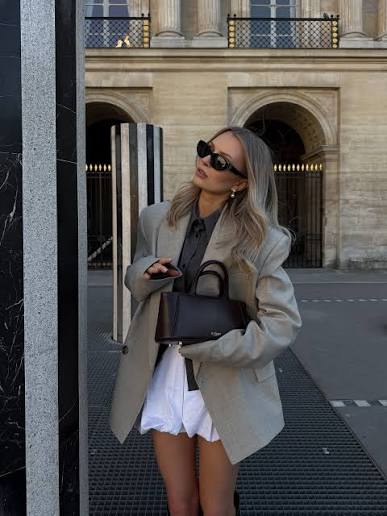
Minimalist Style: How Glasses and Bags Add the Perfect Finishing Touch to Black, White, and Gray Outfits
Minimalist fashion is often described as simple, effortless, and timeless. But creating a truly polished minimalist outfit is not as easy as...
Effortless Style: The Perfect Chemistry of Oversized Sweatshirts, Crossbody Bags, and Vintage Metal-Frame Glasses
Introduction: Why Relaxed Style Feels So RightFashion does not always have to look carefully calculated.Sometimes, the most appealing outfit is the one...
The Symphony of Metallic Elements: The Art of Layering Belt Buckles, Chain Bags, and Metal Frames
Introduction: When Metal Becomes a Fashion LanguageFashion has always been a conversation between materials, shapes, and personal expression. Among all design elements,...
Eyeglasses as the Finishing Touch: How to Make Your Frames Blend Perfectly Into Your Everyday Outfits
Eyeglasses are more than a tool for clearer vision. Today, they are one of the most powerful accessories in a modern wardrobe....
Old Money Style Guide: How Cashmere Coats, Premium Leather Bags, and Classic Black Frame Glasses Create Timeless Elegance
Introduction: Understanding the True Meaning of Old Money FashionFashion trends come and go, but true elegance has always been about something deeper...
The Ultimate Style Rescue for Round-Faced Women: How Necklines, Bag Placement, and Geometric Glasses Create a Slimmer Look
Introduction: Redefining Beauty Beyond Face ShapeFor many women with round faces, getting dressed can sometimes feel like a constant battle. The cheeks...
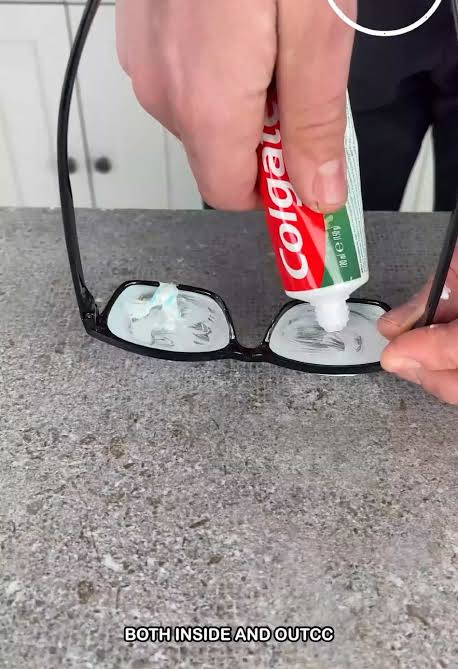
One Swipe, Crystal Clear: The Ultimate Guide to Efficient Eyeglass Cleaning
Introduction: Clear Vision Starts With Proper Lens CareFor millions of people around the world, eyeglasses are an essential part of daily life....
Eyeglasses as the Finishing Touch to Your Outfit: How Frame Shapes Can Elevate Your Style
Introduction: Eyeglasses as the Ultimate Fashion AccessoryWhen people think about fashion accessories, they often consider watches, jewelry, handbags, shoes, or clothing details....
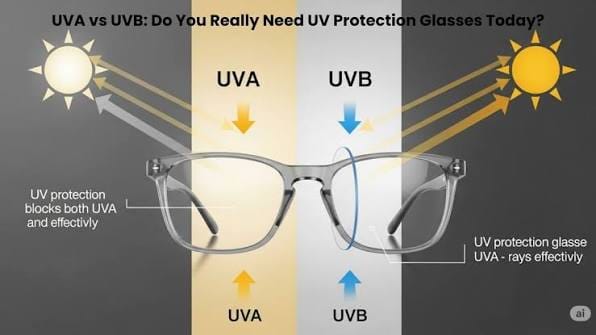
Blue Light Protection or UV Protection? Common Mistakes When Choosing Eye Protection Glasses
Introduction: Choosing the Right Eye Protection Is More Complicated Than It LooksEyeglasses have evolved far beyond simple vision correction tools. Today, consumers...
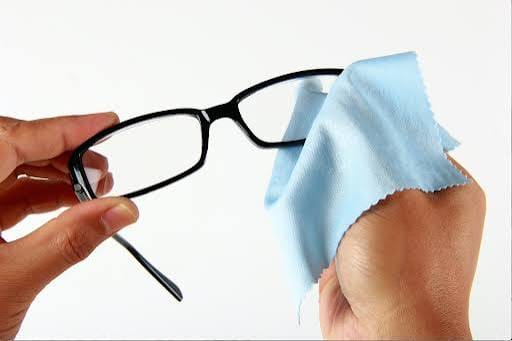
Care for Your Glasses Like You Care for Your Skin: The Complete Guide to Eyewear Maintenance
Introduction: Your Glasses Deserve More Than Just a Quick WipeMany people spend time and money caring for their skin every day.They choose...
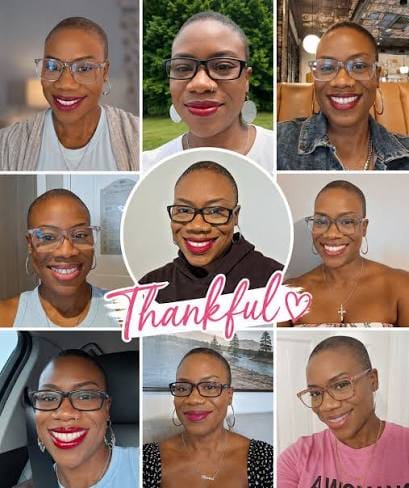
From Office Professional to Street Style: How One Pair of Glasses Can Transform Multiple Social Looks
Introduction: The Power of Eyewear Beyond Vision CorrectionGlasses have always been more than a tool for improving vision. In modern fashion and...