
Temple Arms Keep Loosening? Five Reasons to Switch to Custom Glasses with Mechanical Clip-Lock Temples
If you wear glasses every day, you probably know the frustration: your temple arms slowly loosen over time. One day your frames sit perfectly; a few weeks later they start sliding down your nose. You tighten the screws, adjust them again, and maybe visit an optical shop—but the problem keeps coming back.
For many people, loose temple arms are simply considered part of owning glasses. However, modern eyewear engineering offers a better alternative: mechanical clip-lock temple systems. These innovative designs replace traditional screw hinges with precision mechanical locks that allow the temples to attach securely to the frame while also being removable.
Even more interesting, many brands now offer custom glasses with clip-lock temples, allowing users to swap temple styles or replace worn parts without tools or repairs.
If your glasses constantly feel unstable, switching to a mechanical clip-lock system might completely change your experience. In this in-depth guide, we’ll explore five compelling reasons to upgrade to custom mechanical clip-lock eyewear and why this design is gaining attention among modern eyewear enthusiasts.
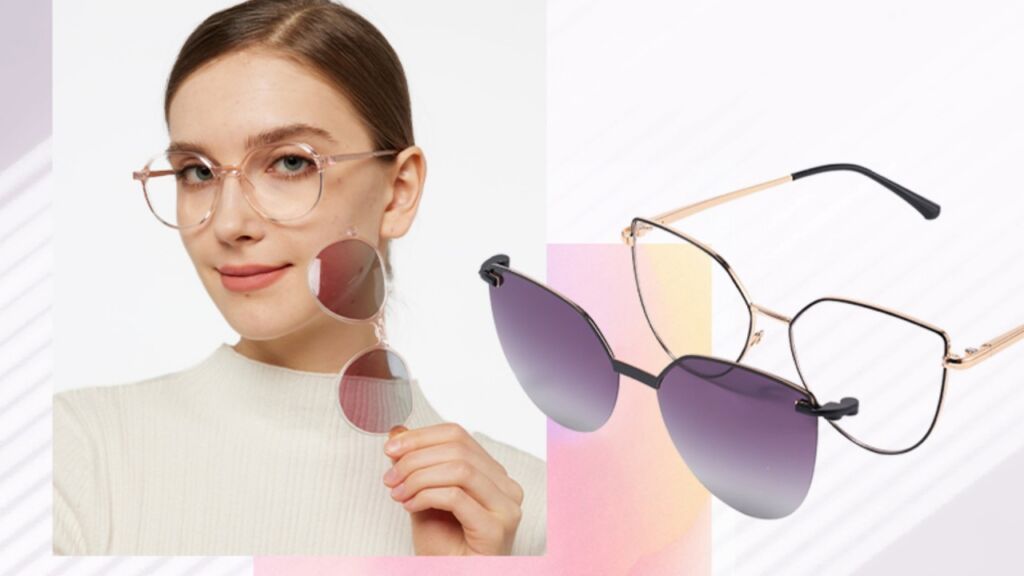
Understanding Why Traditional Temple Arms Become Loose
Before exploring the advantages of clip-lock systems, it helps to understand why temple arms loosen in the first place.
Most traditional glasses use tiny metal screws and hinges to connect the temple arms to the frame front. While this design has been used for decades, it has several structural limitations.
1. Micro-vibration from daily wear
Every time you open and close your glasses, small vibrations occur within the hinge. Over thousands of cycles, these vibrations slowly cause screws to back out.
2. Material fatigue
Thin hinge components experience repeated stress. Eventually, the metal becomes slightly deformed or worn.
3. Environmental factors
Sweat, humidity, and skin oils can gradually corrode hinge components.
4. Frequent adjustments
When users repeatedly tighten screws or bend temples, structural alignment slowly shifts.
The result is familiar: temples loosen, frames wobble, and comfort declines.
Mechanical clip-lock systems were designed specifically to eliminate many of these weaknesses.
Reason 1: Mechanical Locks Provide Superior Structural Stability
The first and most obvious advantage of clip-lock temple systems is enhanced stability.
Instead of relying on a tiny screw to hold everything together, these systems use precision-engineered mechanical connectors that snap or lock into place.
How the system works
Most clip-lock glasses use a structure that includes:
- A locking slot embedded in the frame front
- A precision-shaped connector on the temple arm
- A spring or latch mechanism that secures the connection
When the temple arm is inserted, the lock engages automatically, creating a tight mechanical fit.
Benefits of this design
No screws to loosen
Traditional hinges depend on screws that inevitably loosen over time. Clip-lock systems eliminate that failure point entirely.
Reduced wear
The locking interface distributes stress across a larger contact area rather than concentrating it on a tiny screw thread.
Consistent alignment
Because the temples fit into a precisely machined slot, the alignment between frame and temples remains consistent.
Over time, this results in glasses that stay stable and balanced, even with frequent use.
Reason 2: Easy Temple Replacement Extends the Life of Your Frames
Another major benefit of mechanical clip-lock systems is modularity.
With traditional glasses, replacing a broken or bent temple arm can be difficult. Many optical shops need special tools, and sometimes the entire frame must be replaced.
Clip-lock systems simplify the process dramatically.
Tool-free replacement
Most clip-lock temples can be removed and installed in seconds:
- Press a small release point or slide the locking tab
- Pull the temple arm out of the frame
- Insert a new temple arm until it clicks into place
No screwdrivers. No hinge alignment. No complicated repairs.
Cost efficiency
If one temple becomes damaged, you don’t need to buy an entirely new frame. Instead, you can replace only the component that failed.
Sustainable eyewear
This modular design also reduces waste. Instead of discarding a frame because of a minor issue, users can keep their eyewear functioning for years.
As sustainability becomes a larger priority in product design, modular eyewear systems are becoming increasingly attractive.
```Share this post
How Should Your Glasses Fit for Comfort and Style?
Choosing the right pair of eyeglasses is about more than finding a frame design you like. A properly fitted pair of glasses...
Say Goodbye to an Awkward Look: How to Choose the Right Eyeglasses Based on Your Body Proportions and Bag Size
Eyeglasses are more than a vision-correction tool. They are also an important fashion accessory that can influence the balance, proportion, and overall...
Say Goodbye to Awkward Proportions: How to Choose the Right Glasses for Your Body Shape and Bag Size
Accessories can transform an ordinary outfit into a polished, thoughtfully coordinated look. A beautiful handbag adds personality, while the right pair of...

2026 Spring/Summer Fashion Trends: When Retro Small-Frame Glasses Meet the Underarm Bag
Fashion has always had a talent for bringing the past back in unexpected ways.A silhouette that once belonged to another decade can...

Soft Aesthetics for Girls with Square Faces: How Rounded Handbags and Gentle Eyeglass Frames Soften Facial Lines
A square face can be striking, elegant, and full of character. Defined by a broader forehead, a relatively straight jawline, and noticeable...
How to Buy Prescription Glasses Online on XCombo
Looking to buy glasses online? XCombo makes it easy to get stylish, high-quality glasses tailored to your prescription. Follow this simple step-by-step...
The Executive Style Code: A Career Guide to Suits, Briefcases, and Sophisticated Eyewear
In the modern workplace, professional style is about much more than wearing expensive clothes.The strongest business wardrobe communicates something before you say...

Street-Cool Style: How to Make Motorcycle Jackets, Belt Bags, and Futuristic Sunglasses Stand Out
Street fashion has never been about following every rule.It is about knowing which rules to break.A motorcycle jacket, a compact belt bag,...

The Art of Color Coordination: How to Match Your Bag With Your Eyeglass Frames for an Effortlessly Sophisticated Look
Fashion is often about the little details.A beautifully tailored outfit can look polished, yet something may still feel incomplete. The reason is...
Dating Night Style Secrets: The Perfect Collision of an Elegant Cocktail Dress, a Chain Evening Bag, and Sophisticated Semi-Rimless Glasses
Dating night is about more than choosing an outfit. It is about creating an impression without looking like you tried too hard....

Effortless French Elegance: The Perfect Pairing of Knitwear, Tote Bags, and Cat-Eye Glasses
There is something undeniably captivating about French style.It is polished without looking overly polished, feminine without being overly delicate, and comfortable without...
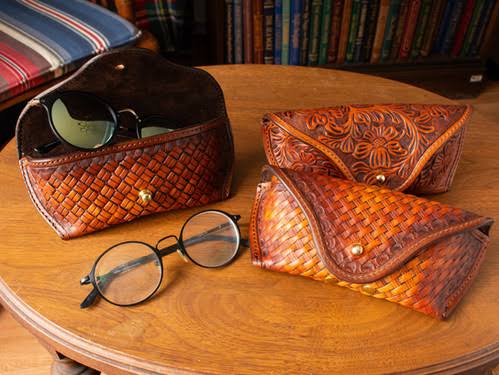
A Cross-Textural Conversation: The Tactile Collision of Leather Bags, Tweed Clothing, and Wood-Frame Eyewear
Introduction: When Materials Become the Main CharacterFashion is often discussed in terms of color, silhouette, trend, and season. Yet some of the...