
No Detours: The Right Way to Care for Your Glasses (A Complete Maintenance Guide)
Glasses are more than a vision aid—they are precision optical instruments that you rely on every waking hour. Whether you wear them for reading, driving, work, or daily use, your eyewear is constantly exposed to fingerprints, dust, temperature changes, accidental drops, and micro-scratches that gradually affect performance.
Yet most people treat glasses as indestructible accessories until something goes wrong: a scratched lens, a loose hinge, a bent frame, or blurred vision that slowly worsens without obvious cause.
The truth is simple: proper eyewear care is not complicated, but it must be consistent and correct.
This guide breaks down the complete, professional approach to glasses maintenance so you can extend their lifespan, protect optical clarity, and avoid unnecessary replacements.
1. Why Glasses Maintenance Matters More Than You Think
Glasses are precision-engineered optical systems. Even minor damage can affect:
- Visual clarity
- Eye strain levels
- Frame comfort
- Lens coating performance
- Long-term durability
Unlike clothing or accessories, eyewear directly affects how your brain processes visual information.
Neglecting maintenance can lead to:
- Headaches
- Blurry vision
- Uneven lens wear
- Expensive premature replacements
Proper care ensures your glasses perform exactly as designed.
2. The Most Common Mistakes People Make
Before learning the correct methods, it’s important to understand what NOT to do.
2.1 Using Clothing to Clean Lenses
One of the most damaging habits is wiping lenses with:
- Shirt sleeves
- Paper towels
- Tissues
These materials contain fibers that can create micro-scratches over time.
2.2 Dry Wiping Dirty Lenses
Dust particles act like sandpaper when rubbed against dry lenses.
2.3 Leaving Glasses Face Down
Placing glasses on a surface with lenses facing down leads to:
- Coating damage
- Deep scratches
- Uneven wear
2.4 Using Household Cleaners
Products like:
- Glass cleaners
- Alcohol sprays
- Bleach-based cleaners
can damage anti-reflective and UV coatings.
2.5 Ignoring Frame Alignment
A slightly bent frame can:
- Misalign optical centers
- Cause uneven lens pressure
- Create long-term discomfort
3. The Correct Way to Clean Your Glasses
Cleaning is the foundation of eyewear maintenance.
3.1 The Proper Water Rinse Method
The safest cleaning routine:
- Rinse glasses under lukewarm water
- Apply a small drop of mild dish soap
- Gently rub lenses and frame
- Rinse thoroughly
- Dry with microfiber cloth
This removes:
- Dust
- Oils
- Environmental residue
without damaging coatings.
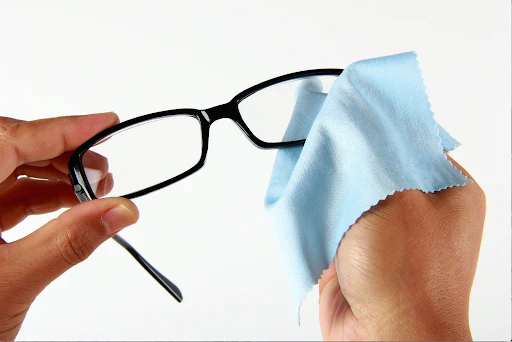
3.2 Why Microfiber Cloth Matters
Microfiber is designed to:
- Trap dirt particles
- Prevent scratching
- Absorb oils effectively
Always keep a clean microfiber cloth dedicated only to your glasses.
3.3 Cleaning Frequency Recommendations
- Daily wear: once per day cleaning
- Outdoor-heavy use: twice per day
- Office-only use: every 1–2 days
3.4 Deep Cleaning Routine (Weekly)
Once a week:
- Remove nose pad buildup
- Clean hinge areas
- Inspect lens edges
This prevents long-term residue accumulation.
4. Proper Storage: Protecting Your Glasses When Not in Use
How you store your glasses is just as important as how you clean them.
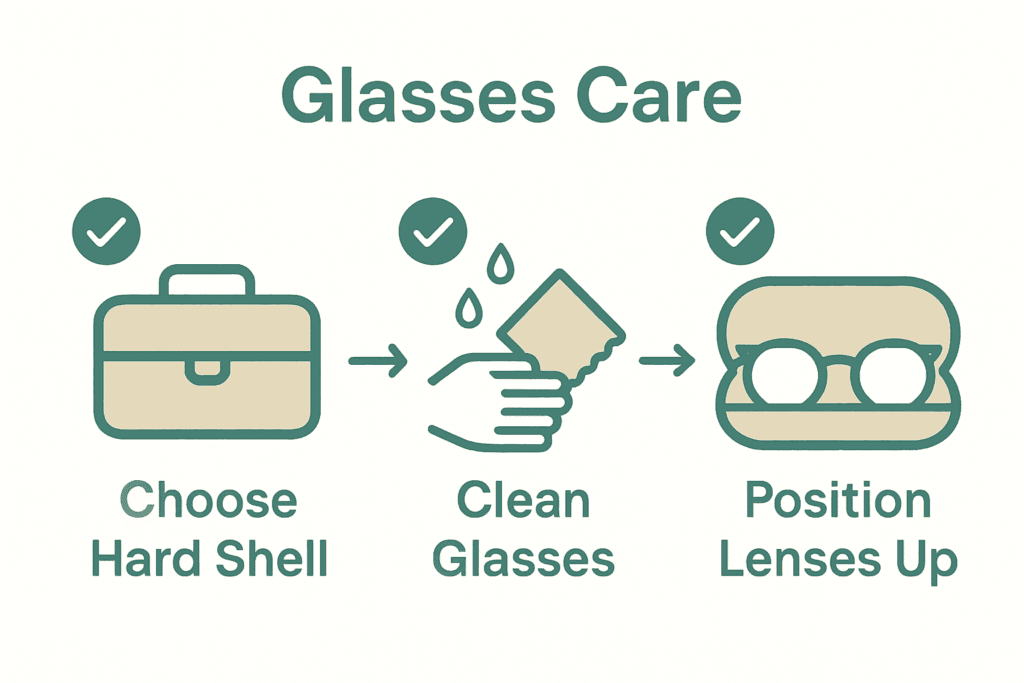
4.1 Always Use a Hard Case
A protective case prevents:
- Crushing damage
- Accidental drops
- Scratch exposure
Soft pouches are only for short-term protection.
4.2 The Correct Way to Place Glasses
Inside the case:
- Lenses facing upward
- Arms folded gently
- No pressure on frame bridge
4.3 Avoid These Storage Habits
- Leaving glasses in hot cars
- Placing them in bags without protection
- Storing near sharp objects
5. Heat, Cold, and Environmental Protection
Temperature extremes are silent enemies of eyewear.
5.1 Heat Damage Risks
High temperatures can:
- Warp plastic frames
- Damage lens coatings
- Loosen adhesive components
Never leave glasses:
- On car dashboards
- Near ovens or heaters
5.2 Cold Weather Effects
Extreme cold may:
- Make frames brittle
- Reduce flexibility
- Increase risk of snapping
5.3 Humidity and Moisture
High humidity can:
- Affect metal corrosion
- Loosen screws
- Promote lens fogging
6. Frame Care: Keeping Structure Strong and Stable
Frames carry the entire weight of your eyewear system.
6.1 Screw Tightening and Maintenance
Over time, screws naturally loosen.
Signs include:
- Wobbly arms
- Uneven frame alignment
- Clicking sounds
Use:
- A precision eyewear screwdriver
- Or visit an optical shop for adjustment
6.2 Nose Pad Maintenance
Nose pads collect:
- Oil
- Dirt
- Skin residue
Clean regularly to prevent:
- Slipping
- Skin irritation
- Uneven fit
6.3 Hinge Care
Hinges should move smoothly without stiffness.
Avoid forcing them open or closed.
6.4 Frame Alignment Checks
A misaligned frame can cause:
- Uneven lens distance from eyes
- Headaches
- Distorted vision perception
7. Lens Protection: Preserving Optical Performance
Lenses are the most sensitive part of your glasses.
7.1 Scratch Prevention Strategy
- Always use microfiber cloth
- Avoid abrasive contact
- Store properly
Once scratched, most coatings cannot be restored.
7.2 Anti-Reflective Coating Care
Anti-reflective layers are delicate.
Avoid:
- Alcohol wipes
- Strong detergents
- Rough cleaning motions
7.3 UV Protection Maintenance
UV protection is embedded in lens material or coating.
Damage usually comes from:
- Heat exposure
- Chemical cleaners
7.4 Blue Light Coating Care
Blue light filters require:
- Gentle cleaning
- Avoidance of harsh solvents
8. Travel and On-the-Go Protection
Glasses are most vulnerable during travel.
8.1 Use a Hard Case Always
Even short trips can lead to damage if glasses are loose in bags.
8.2 Avoid Wearing Glasses on Head
Placing glasses on your head:
- Stretches frames
- Weakens temple arms
- Misaligns structure
8.3 Handling During Activities
Remove glasses during:
- Sports
- Heavy physical work
- High-impact environments
9. Seasonal Maintenance Guide
Different seasons require different care strategies.
9.1 Summer Care
- Protect from heat exposure
- Clean sweat buildup daily
- Avoid leaving in cars
9.2 Winter Care
- Prevent condensation buildup
- Avoid sudden temperature changes
- Handle with care in cold air
9.3 Rainy or Humid Seasons
- Dry lenses frequently
- Store in moisture-resistant case
- Check for corrosion
10. Professional Maintenance: When to Visit an Optician
Even with good care, professional adjustment is essential.
10.1 Recommended Frequency
- Every 3–6 months for regular users
- Immediately after accidents or drops
10.2 Services Provided
- Frame realignment
- Screw tightening
- Nose pad replacement
- Lens inspection
10.3 Signs You Should Go Immediately
- Persistent slipping
- Uneven vision clarity
- Visible frame damage
- Loose hinges
11. Long-Term Care Strategy for Maximum Lifespan
A well-maintained pair of glasses can last significantly longer.
11.1 Daily Habits
- Clean properly once per day
- Store in case when not used
- Handle with both hands
11.2 Weekly Habits
- Deep cleaning
- Frame inspection
- Nose pad cleaning
11.3 Monthly Habits
- Professional check or self-adjustment
- Screw tightening
- Lens condition evaluation
12. Advanced Tips for Eyewear Longevity
12.1 Keep a Backup Pair
This reduces pressure on a single pair and extends lifespan.
12.2 Rotate Between Pairs
If you own multiple glasses:
- Rotate usage
- Reduce daily wear stress
12.3 Invest in Quality Accessories
- High-quality microfiber cloths
- Durable hard cases
- Cleaning spray designed for optics
13. Signs Your Glasses Are Wearing Out
Even with good maintenance, glasses eventually degrade.
Watch for:
- Persistent scratches
- Loose structural integrity
- Coating peeling
- Reduced clarity
14. Why Proper Maintenance Saves Money
Neglect leads to:
- Frequent replacements
- Lens reorders
- Frame repairs
Proper care:
- Extends product lifespan
- Reduces long-term costs
- Maintains visual comfort
15. Final Thoughts: Small Habits, Big Difference
Glasses care is not about complicated routines—it is about consistent, correct habits.
Most damage happens not from rare accidents, but from everyday misuse:
- Wiping incorrectly
- Storing improperly
- Ignoring small alignment issues
When you treat your glasses as precision optical instruments rather than simple accessories, they reward you with:
- Clearer vision
- Longer lifespan
- Better comfort
- Fewer replacements
The “right way” to care for glasses is ultimately about discipline in small actions. And over time, those small actions make a significant difference in how well your eyewear performs and how long it lasts.
Share this post
How Should Your Glasses Fit for Comfort and Style?
Choosing the right pair of eyeglasses is about more than finding a frame design you like. A properly fitted pair of glasses...
How to Install and Remove the Top Frame
How to Install Your XCombo TopperCheck Left & RightMake sure each topper is on the correct side.Attach at the Nose BridgeAlign the...
Say Goodbye to an Awkward Look: How to Choose the Right Eyeglasses Based on Your Body Proportions and Bag Size
Eyeglasses are more than a vision-correction tool. They are also an important fashion accessory that can influence the balance, proportion, and overall...
Say Goodbye to Awkward Proportions: How to Choose the Right Glasses for Your Body Shape and Bag Size
Accessories can transform an ordinary outfit into a polished, thoughtfully coordinated look. A beautiful handbag adds personality, while the right pair of...

2026 Spring/Summer Fashion Trends: When Retro Small-Frame Glasses Meet the Underarm Bag
Fashion has always had a talent for bringing the past back in unexpected ways.A silhouette that once belonged to another decade can...
Soft Aesthetics for Girls with Square Faces: How Rounded Handbags and Gentle Eyeglass Frames Soften Facial Lines
A square face can be striking, elegant, and full of character. Defined by a broader forehead, a relatively straight jawline, and noticeable...
How to Buy Prescription Glasses Online on XCombo
Looking to buy glasses online? XCombo makes it easy to get stylish, high-quality glasses tailored to your prescription. Follow this simple step-by-step...
The Executive Style Code: A Career Guide to Suits, Briefcases, and Sophisticated Eyewear
In the modern workplace, professional style is about much more than wearing expensive clothes.The strongest business wardrobe communicates something before you say...

Street-Cool Style: How to Make Motorcycle Jackets, Belt Bags, and Futuristic Sunglasses Stand Out
Street fashion has never been about following every rule.It is about knowing which rules to break.A motorcycle jacket, a compact belt bag,...

The Art of Color Coordination: How to Match Your Bag With Your Eyeglass Frames for an Effortlessly Sophisticated Look
Fashion is often about the little details.A beautifully tailored outfit can look polished, yet something may still feel incomplete. The reason is...
Dating Night Style Secrets: The Perfect Collision of an Elegant Cocktail Dress, a Chain Evening Bag, and Sophisticated Semi-Rimless Glasses
Dating night is about more than choosing an outfit. It is about creating an impression without looking like you tried too hard....
Effortless French Elegance: The Perfect Pairing of Knitwear, Tote Bags, and Cat-Eye Glasses
There is something undeniably captivating about French style.It is polished without looking overly polished, feminine without being overly delicate, and comfortable without...