
Eyeglass Troubleshooting Guide: The Complete DIY Repair and Maintenance Checklist
A good pair of eyeglasses is more than just a vision correction tool. For many people, glasses are part of daily comfort, productivity, style, and even personal identity. Whether you wear prescription glasses, blue light lenses, reading glasses, sunglasses, or specialized work eyewear, your frames go through constant daily stress.
They get dropped, bent, smudged, scratched, sat on, exposed to heat, tossed into bags, and cleaned improperly more often than most people realize.
Eventually, problems appear.
Loose screws. Crooked frames. Foggy lenses. Nose pad discomfort. Squeaky hinges. Slipping glasses. Minor scratches. Bent temples.
The good news is that many common eyeglass issues can be solved at home with simple DIY repairs and proper maintenance habits.
Understanding how to troubleshoot and care for your glasses not only saves money, but also helps extend frame lifespan, improve comfort, maintain lens clarity, and reduce the need for emergency optical visits.
This complete guide explains the most common eyeglass problems, how to fix them safely at home, what tools every glasses wearer should own, and how to maintain eyewear properly for long-term performance.
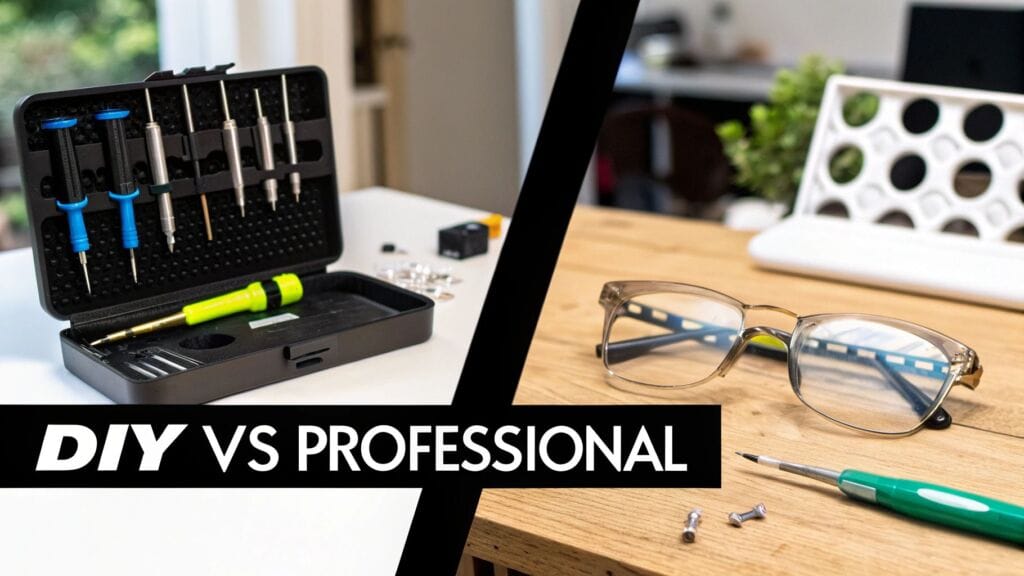
Why Eyeglasses Fail Over Time
Even high-quality glasses experience gradual wear.
Daily usage exposes eyewear to:
- Skin oils
- Sweat
- Heat
- Dust
- Friction
- UV exposure
- Repeated bending stress
Over time, these factors weaken components and affect alignment.
The Most Common Causes of Eyeglass Damage
Most eyewear problems fall into a few major categories:
- Mechanical wear
- Improper cleaning
- Accidental pressure
- Environmental exposure
- Poor storage habits
- Aging materials
Understanding the root cause helps prevent repeated issues.
Essential DIY Eyeglass Repair Tools
Before attempting repairs, it helps to build a basic eyewear maintenance kit.
Recommended Eyeglass Repair Essentials
A useful repair kit may include:
- Precision screwdriver set
- Microfiber cleaning cloths
- Lens cleaning spray
- Replacement screws
- Nose pads
- Tweezers
- Soft pliers
- Magnifying glass
- Silicone ear grips
- Cleaning brush
- Lens-safe wipes
These inexpensive tools solve many common problems quickly.
Problem #1: Loose Eyeglass Screws
Loose screws are one of the most frequent eyeglass problems.
Symptoms include:
- Wobbly temples
- Loose hinges
- Uneven fit
- Arms falling off
Why Screws Loosen
Glasses constantly open and close throughout the day.
This repeated movement gradually loosens hinge screws over time.
Temperature changes and vibrations also contribute.
DIY Fix for Loose Screws
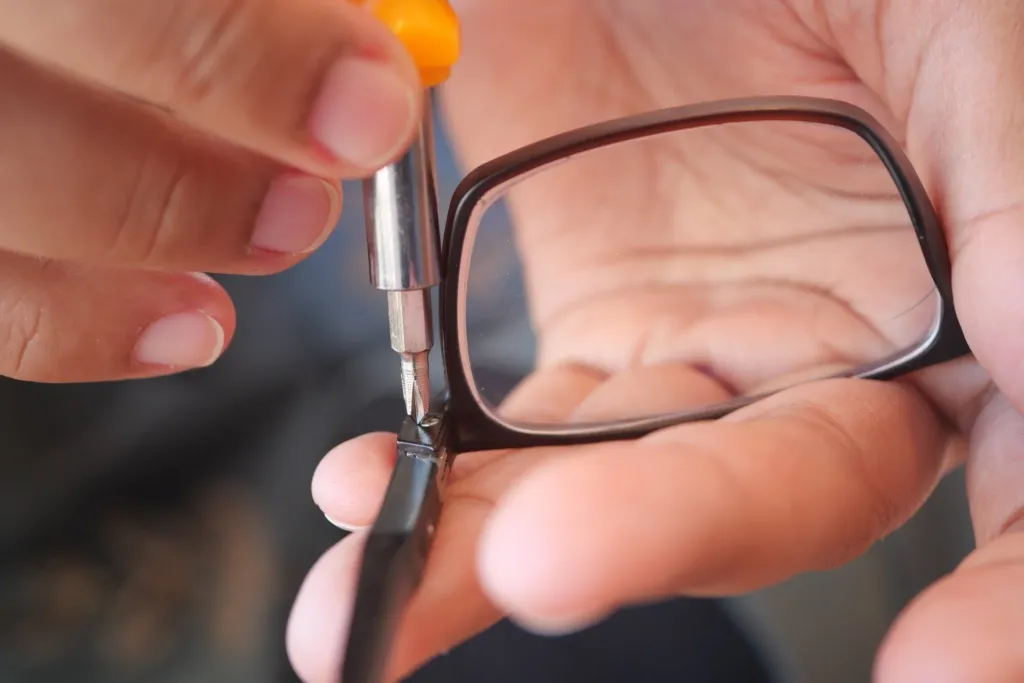
Use a precision eyeglass screwdriver to tighten screws gently.
Important tips:
- Turn slowly
- Avoid overtightening
- Stabilize the frame during repair
- Work on a flat surface
Emergency Screw Replacement Tricks
If a screw falls out unexpectedly and no replacement is available, temporary emergency solutions may include:
- A toothpick fragment
- Thin wire
- Fishing line
These are short-term fixes only.
Why Overtightening Is Dangerous
Too much pressure may strip screw threads or crack plastic frames.
Gentle tightening is safer.
Problem #2: Crooked or Uneven Glasses
If your glasses sit unevenly on your face, several issues may be responsible.
Common Signs of Misalignment
- One lens sits higher
- Frames tilt sideways
- Uneven pressure on ears
- Constant slipping
Why Glasses Become Crooked
Common causes include:
- Sitting on frames
- Accidental bending
- One-handed removal
- Uneven temple stress
DIY Fix for Metal Frames
Metal frames can often be adjusted carefully by hand.
Small, gradual adjustments work best.
Avoid sudden force.
DIY Fix for Plastic Frames
Plastic frames are less flexible and more delicate.
Warm water or gentle heat may slightly soften frames before adjustment.
Important Heat Warning
Never use boiling water or high heat sources like hair dryers excessively.
Too much heat may warp frames permanently or damage lens coatings.
How to Check Alignment Properly
Place glasses upside down on a flat table.
Both temples should touch evenly.
Uneven contact often indicates frame distortion.
Problem #3: Glasses Constantly Slip Down Your Nose
Slipping glasses are frustrating and extremely common.
Why Glasses Slide
Possible causes include:
- Loose temples
- Oily skin
- Improper fit
- Worn nose pads
- Heavy lenses
- Frame imbalance
DIY Solutions for Slipping Glasses
Tighten the Temples
Slightly tightening temple curvature behind the ears improves grip.
Replace Nose Pads
Worn or flattened nose pads reduce stability.
Replacing them often improves comfort dramatically.
Clean Skin Oils Regularly
Oil buildup reduces friction and increases slipping.
Frequent cleaning helps.
Use Silicone Ear Hooks
Inexpensive silicone grips add extra stability during sports or active movement.
Problem #4: Nose Pad Discomfort
Nose pads significantly affect wearing comfort.
Common Nose Pad Problems
- Red marks
- Pinching
- Sliding
- Uneven pressure
- Skin irritation
Why Nose Pads Wear Out
Nose pads degrade because of:
- Sweat
- Skin oils
- UV exposure
- Mechanical compression
DIY Nose Pad Replacement
Many nose pads can be replaced at home using:
- Small screwdrivers
- Push-in replacement pads
Choose soft silicone pads for greater comfort.
Why Proper Nose Pad Positioning Matters
Incorrect nose pad angle affects:
- Weight distribution
- Lens position
- Visual alignment
- Facial pressure
Problem #5: Scratched Lenses
Lens scratches are among the most frustrating eyewear issues.
What Causes Lens Scratches?
Common causes include:
- Paper towel cleaning
- Shirt cleaning
- Sand particles
- Improper storage
- Dropping glasses
- Abrasive dust
Can Scratches Be Removed Completely?
Deep scratches usually cannot be fully repaired safely at home.
Many internet “scratch removal hacks” may worsen lens coatings.
Dangerous DIY Scratch Methods to Avoid
Avoid using:
- Toothpaste
- Baking soda
- Abrasive polish
- Household cleaners
These often damage coatings permanently.
What Helps Minimize Scratch Visibility
Mild surface imperfections may appear less noticeable after careful cleaning, but true repair is limited.
Prevention matters far more than correction.
Problem #6: Foggy Lenses
Lens fogging became especially common during mask use and temperature changes.
Why Lenses Fog Up
Fog forms when warm moisture condenses on cooler lens surfaces.
Common Fog Triggers
- Face masks
- Cooking steam
- Cold weather
- Humid environments
- Exercise
DIY Anti-Fog Solutions
Possible strategies include:
- Anti-fog sprays
- Anti-fog cloths
- Better mask fit
- Improved ventilation
Cleaning Mistakes That Worsen Fogging
Residue buildup from improper cleaning products may increase fog accumulation.
Problem #7: Squeaky Hinges
Squeaky hinges are annoying but usually fixable.
Why Hinges Squeak
Friction, dryness, dirt, or slight corrosion often causes hinge noise.
DIY Hinge Maintenance
Carefully cleaning hinge areas and applying minimal lubricant may help.
Avoid excessive oil.
Why Excess Lubricant Is Problematic
Too much lubricant attracts dust and debris, which may worsen wear.
Problem #8: Broken Temples
Temple arms experience significant stress daily.
Why Temple Arms Break
Common causes include:
- Sitting on glasses
- Excessive bending
- Material fatigue
- Accidental drops
Temporary DIY Repairs
Short-term emergency fixes may include:
- Tape stabilization
- Heat-shrink tubing
- Temporary adhesive
When Professional Repair Is Better
Structural breaks near hinges often require professional repair or replacement.
Problem #9: Loose or Falling-Out Lenses
Lenses occasionally loosen from frames.
Causes of Loose Lenses
- Frame warping
- Screw loosening
- Impact damage
- Nylon line wear
DIY Lens Reinsertion
Some full-rim frames allow careful reinsertion by tightening surrounding screws.
Avoid excessive pressure.
Rimless and Semi-Rimless Frames Require Extra Caution
These designs use more delicate mounting systems and may break easily during DIY attempts.
Problem #10: Dirty or Cloudy Lenses
Many people believe their lenses are scratched when they are actually coated with residue buildup.
Common Sources of Lens Film
- Skin oil
- Sunscreen
- Hair products
- Dust
- Hard water residue
Proper Lens Cleaning Method
Step 1: Rinse First
Always rinse lenses before wiping.
This removes abrasive particles.
Step 2: Use Lens-Safe Cleaner
Avoid household glass cleaners containing ammonia.
Step 3: Use Microfiber Only
Paper products may scratch lenses.
Step 4: Clean Nose Pads and Temples
Oil buildup spreads back onto lenses quickly.
Why Microfiber Cloths Need Cleaning Too
Dirty microfiber cloths may redistribute oil and debris instead of cleaning effectively.
Wash them regularly.
The Biggest Eyeglass Cleaning Mistakes
Many people unknowingly damage lenses daily.
Avoid Cleaning Glasses With:
- T-shirts
- Paper towels
- Napkins
- Tissue paper
- Household cleaners
These materials often contain abrasive fibers or chemicals.
Heat Damage and Eyeglasses
Heat is extremely harmful to eyewear.
High Heat May Cause:
- Lens warping
- Coating cracks
- Frame distortion
- Glue weakening
Common Heat Exposure Risks
Never leave glasses:
- Inside hot cars
- Near ovens
- On dashboards
- In direct intense sunlight for long periods
Why One-Handed Removal Damages Frames
Many people remove glasses using one hand.
This creates uneven stress that gradually bends frames.
Always use both hands.
Proper Eyeglass Storage Habits
Storage habits dramatically affect eyewear lifespan.
Best Storage Practices
Always store glasses:
- In a hard case
- Lenses facing upward
- Away from loose objects
- In dry environments
Why Tossing Glasses Into Bags Is Risky
Keys, coins, and electronics easily scratch lenses and damage frames.
Travel Eyewear Maintenance Tips
Travel increases risk because glasses face:
- Frequent handling
- Environmental changes
- Packing pressure
- Temperature fluctuations
Smart Travel Practices
Bring:
- Backup glasses
- Repair kits
- Extra cleaning cloths
- Hard cases
especially during long trips.
Blue Light Glasses and Maintenance
Blue light lenses require similar care to prescription eyewear.
However, some coatings may scratch more easily.
Gentle cleaning remains important.
Sports Glasses Need Different Maintenance
Sports eyewear experiences:
- Sweat
- Impact
- UV exposure
- Frequent movement
These conditions increase wear rates.
Regular inspection is important.
Kids’ Glasses Require Extra Attention
Children’s eyewear experiences heavier stress because of:
- Active movement
- Frequent drops
- Rough handling
Flexible frames may improve durability.
When DIY Repair Is NOT Safe
Some repairs should not be attempted at home.
Seek Professional Help If You Notice:
- Cracked lenses
- Broken hinges
- Severe frame warping
- Detached nose bridges
- Major structural damage
Improper repair may worsen the problem.
How Often Should You Replace Eyeglasses?
Even well-maintained glasses eventually wear out.
Replacement timing depends on:
- Prescription changes
- Lens condition
- Frame integrity
- Coating wear
- Comfort
Signs It May Be Time for New Glasses
- Persistent discomfort
- Poor vision clarity
- Excessive scratches
- Loose structural components
- Repeated repairs
Preventive Maintenance Is Better Than Emergency Repair
Most major eyewear problems begin as small issues.
Routine inspection helps prevent expensive damage.
A Simple Weekly Eyeglass Maintenance Checklist
Daily
- Wipe lenses properly
- Store glasses safely
- Avoid heat exposure
Weekly
- Check screw tightness
- Clean nose pads
- Inspect alignment
- Wash microfiber cloths
Monthly
- Deep-clean hinges
- Inspect coatings
- Evaluate frame fit
Why Proper Eyewear Care Saves Money
Good maintenance extends:
- Lens lifespan
- Frame durability
- Wearing comfort
- Visual quality
while reducing replacement frequency.
The Future of Smart Eyewear Maintenance
Modern eyewear technology continues evolving.
Future developments may include:
- Self-cleaning coatings
- Anti-fog nanotechnology
- Flexible memory materials
- Smart durability sensors
- Improved scratch resistance
But even advanced eyewear still requires proper handling.
Final Thoughts
Eyeglasses are among the most frequently used personal items in daily life, yet many people overlook how much stress their frames and lenses endure over time. Small problems such as loose screws, crooked frames, slipping temples, dirty lenses, and worn nose pads may seem minor at first, but they can gradually reduce comfort, vision quality, and frame lifespan if ignored.
The good news is that many common eyeglass issues can be prevented or resolved through simple DIY maintenance and better daily habits. Understanding how to clean lenses properly, adjust frames safely, tighten hardware carefully, and store glasses responsibly can dramatically extend the life of your eyewear.
At the same time, knowing the limits of home repair is equally important. Some structural problems require professional optical repair to avoid worsening the damage.
With the right tools, regular inspection, and consistent care, your glasses can remain comfortable, clear, functional, and reliable for years — helping you protect both your vision and your investment in quality eyewear.
Share this post
The Romance of Earth Tones in Fall: The Color Aesthetics of Trench Coats, Saddle Bags, and Tea-Tinted Sunglasses
Introduction: Falling in Love With the Colors of AutumnThere is something irresistibly romantic about autumn fashion.As summer fades, bright colors gradually give...
Best Glasses for Your Face Shape: Round, Square, Oval & More
Introduction: The Right Glasses Can Transform Your Entire AppearanceChoosing a pair of glasses is about much more than simply correcting your vision....

From Head to Toe: The Golden Ratio for Styling Glasses, Clothing, and Bags
Introduction: The Secret to Looking Polished From Head to ToeGreat style is rarely about wearing the most expensive clothes, following every trend,...

Minimalist Style: How Glasses and Bags Add the Perfect Finishing Touch to Black, White, and Gray Outfits
Minimalist fashion is often described as simple, effortless, and timeless. But creating a truly polished minimalist outfit is not as easy as...
Effortless Style: The Perfect Chemistry of Oversized Sweatshirts, Crossbody Bags, and Vintage Metal-Frame Glasses
Introduction: Why Relaxed Style Feels So RightFashion does not always have to look carefully calculated.Sometimes, the most appealing outfit is the one...

The Symphony of Metallic Elements: The Art of Layering Belt Buckles, Chain Bags, and Metal Frames
Introduction: When Metal Becomes a Fashion LanguageFashion has always been a conversation between materials, shapes, and personal expression. Among all design elements,...
Eyeglasses as the Finishing Touch: How to Make Your Frames Blend Perfectly Into Your Everyday Outfits
Eyeglasses are more than a tool for clearer vision. Today, they are one of the most powerful accessories in a modern wardrobe....

Old Money Style Guide: How Cashmere Coats, Premium Leather Bags, and Classic Black Frame Glasses Create Timeless Elegance
Introduction: Understanding the True Meaning of Old Money FashionFashion trends come and go, but true elegance has always been about something deeper...
The Ultimate Style Rescue for Round-Faced Women: How Necklines, Bag Placement, and Geometric Glasses Create a Slimmer Look
Introduction: Redefining Beauty Beyond Face ShapeFor many women with round faces, getting dressed can sometimes feel like a constant battle. The cheeks...
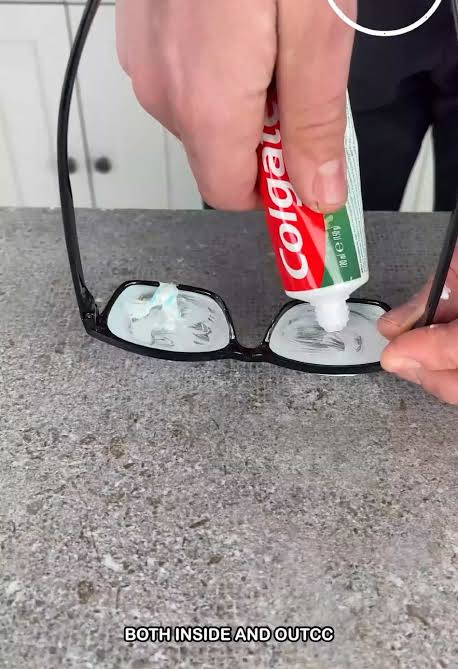
One Swipe, Crystal Clear: The Ultimate Guide to Efficient Eyeglass Cleaning
Introduction: Clear Vision Starts With Proper Lens CareFor millions of people around the world, eyeglasses are an essential part of daily life....

Eyeglasses as the Finishing Touch to Your Outfit: How Frame Shapes Can Elevate Your Style
Introduction: Eyeglasses as the Ultimate Fashion AccessoryWhen people think about fashion accessories, they often consider watches, jewelry, handbags, shoes, or clothing details....
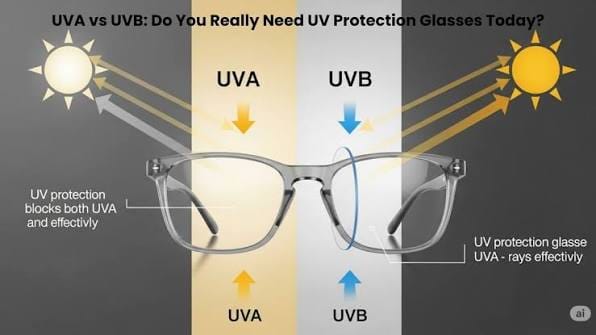
Blue Light Protection or UV Protection? Common Mistakes When Choosing Eye Protection Glasses
Introduction: Choosing the Right Eye Protection Is More Complicated Than It LooksEyeglasses have evolved far beyond simple vision correction tools. Today, consumers...