
How Should Your Glasses Fit for Comfort and Style?
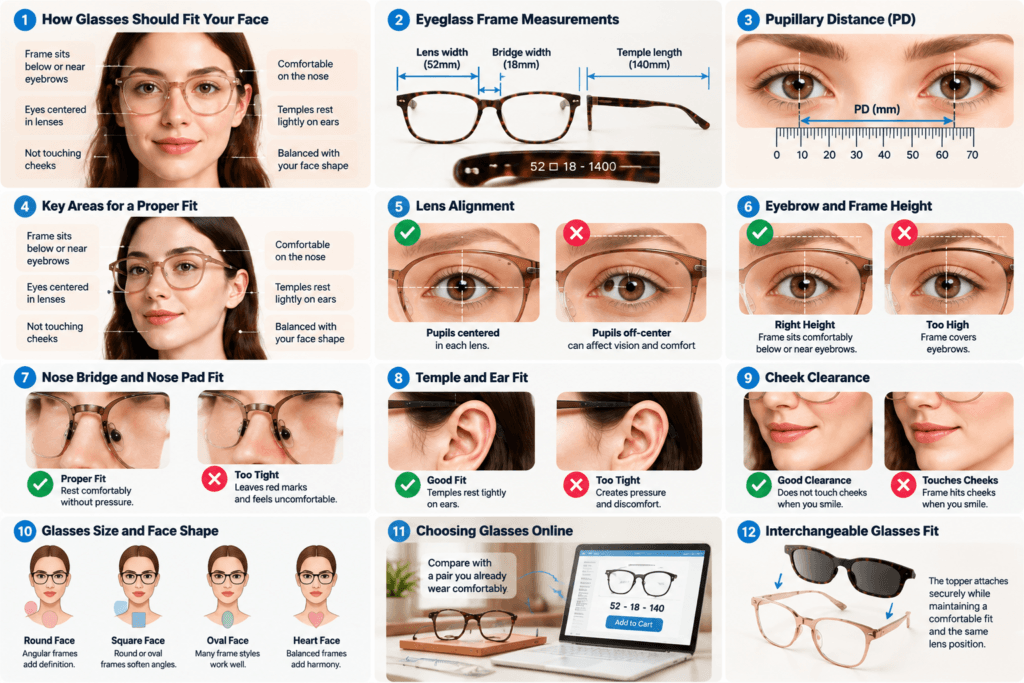
Choosing the right pair of eyeglasses is about more than finding a frame design you like. A properly fitted pair of glasses should feel comfortable throughout the day, keep your lenses correctly positioned, and complement your face shape.
Whether you are buying glasses online or selecting a new frame in-store, understanding how eyeglasses should fit can help you choose a frame that looks better, feels better, and provides a clearer visual experience.
A good glasses fit should feel:
- Comfortable without pressure
- Secure without slipping
- Properly aligned with your eyes
- Balanced with your facial features
This guide explains how glasses should fit your face, how to choose the right frame size, and what measurements to consider before buying your next pair of eyeglasses.
Why Proper Glasses Fit Matters
A proper glasses fit affects both comfort and visual performance.
Glasses that are too loose may slide down your nose, require frequent adjustment, and affect how your eyes align with the lenses.
Glasses that are too tight may create pressure around your temples, nose, or ears, making them uncomfortable during extended wear.
A well-fitted pair of glasses should:
- Keep the lenses positioned correctly in front of your eyes
- Stay secure during daily activities
- Feel comfortable for long periods
- Match your face proportions naturally
The goal is not only to find glasses that look good, but also glasses that feel natural and comfortable when you wear them.
Understanding Eyeglass Frame Measurements
Before choosing a pair of glasses, it is important to understand the basic measurements that determine frame fit.
Most eyeglass frames include three primary measurements:
- Lens width
- Bridge width
- Temple length
These measurements help determine whether a frame is suitable for your face size and wearing habits.
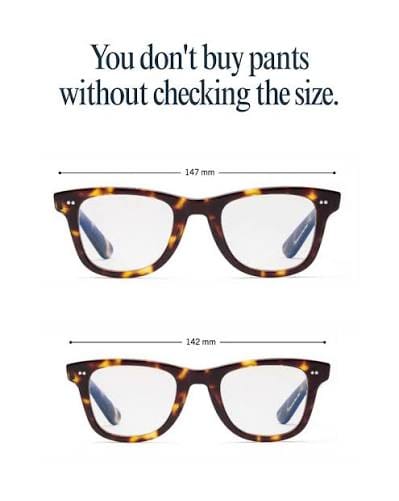
Frame Width
The overall frame width should generally match the width of your face.
A properly sized frame should:
- Sit comfortably at your temples
- Avoid extending too far beyond the sides of your face
- Avoid creating pressure on the sides of your head
Frames that are too wide may feel unstable and slide down more easily.
Frames that are too narrow may feel tight and uncomfortable.
The ideal frame width allows the glasses to sit naturally while maintaining a secure fit.
Lens Width, Bridge Width and Temple Length
Eyeglass measurements are often displayed in a format such as:
52-18-140
This represents:
- 52 mm: lens width
- 18 mm: bridge width
- 140 mm: temple length
Lens Width
Lens width affects the size and position of the lenses on your face.
A suitable lens width helps keep your eyes positioned near the center of each lens, which supports proper vision alignment.
Bridge Width
The bridge connects the two lenses and rests across your nose.
A properly sized bridge should:
- Rest comfortably
- Avoid excessive pressure
- Help prevent the glasses from sliding down
Temple Length
The temples should extend comfortably over your ears.
If temples are too short, they may create pressure.
If temples are too long, the glasses may feel loose and less stable.
Pupillary Distance (PD)
Pupillary distance (PD) is the distance between the centers of your pupils, measured in millimeters.
PD is an important measurement when ordering prescription glasses because the optical center of each lens needs to align correctly with your eyes.
An accurate PD measurement helps support:
- Proper lens alignment
- Clearer vision
- Improved wearing comfort
When buying prescription glasses online, providing accurate PD information helps ensure your lenses are positioned correctly.
How Should Glasses Fit Your Face?
A properly fitted pair of glasses should feel balanced and natural.
Several areas of the frame affect comfort and appearance.
Eye Position and Lens Alignment
Your pupils should generally align near the center of each lens.
If the frame is too large or too small, your eyes may sit too close to the edges of the lenses, which can affect comfort and appearance.
Proper lens alignment helps maintain a comfortable visual experience.
Eyebrow and Frame Height
The top of your glasses frame should sit comfortably around the eyebrow area.
A suitable frame height should:
- Maintain balanced facial proportions
- Avoid covering too much of your eyebrows
- Avoid sitting too low on your face
The ideal position depends on the frame shape and your facial features.
Nose Bridge and Nose Pad Fit
The bridge or nose pads should support the glasses comfortably without creating pressure.
A good nose fit means:
- The glasses stay in place
- The frame does not constantly slide down
- The nose does not feel uncomfortable after long wear
If your glasses frequently slide down, the frame size or bridge design may not match your face shape.
Temple and Ear Fit
The temples should rest comfortably along the sides of your head and over your ears.
A good temple fit should:
- Hold the glasses securely
- Avoid squeezing your head
- Avoid leaving excessive space behind your ears
Your glasses should stay stable when you move your head without creating uncomfortable pressure.
Cheek Clearance
Your glasses should not touch your cheeks when you smile or move your face.
The bottom edge of the frame should sit comfortably above your cheeks.
If your glasses touch your cheeks, possible reasons include:
- The frame is too large
- The lens height is not suitable
- The bridge position is incorrect
How to Choose the Right Glasses Size
Choosing the right glasses size requires considering both measurements and personal preferences.
A stylish frame is only a good choice if it also fits properly.
Glasses Size and Face Shape
Different frame shapes can complement different facial features.
For example:
- Round faces often look balanced with angular frames
- Square faces may pair well with softer rounded shapes
- Oval faces can work well with many different frame styles
However, face shape is only one factor.
The most important consideration is choosing a frame size that feels comfortable and keeps the lenses correctly positioned.
Signs Your Glasses Are Too Large
Your glasses may be too large if:
- They slide down frequently
- The temples feel loose
- The frame extends noticeably beyond your face
- Your eyes appear too close to the inner edges of the lenses
Signs Your Glasses Are Too Small
Your glasses may be too small if:
- The temples feel tight
- You feel pressure around your head
- The frame sits too close to your eyes
- The glasses become uncomfortable after short periods of wear
Choosing Glasses Online
When buying glasses online, checking frame measurements is one of the most important steps.
A good method is to compare the measurements of a pair of glasses you already wear comfortably.
Pay attention to:
- Lens width
- Bridge width
- Temple length
- Overall frame width
Many online shoppers focus only on frame style, but the correct size is equally important for comfort, appearance, and proper lens positioning.
Tips for Long-Term Glasses Comfort
Even a well-sized frame may need small adjustments over time.
To maintain comfort:
- Clean your glasses regularly
- Check whether screws or hinges become loose
- Adjust nose pads when necessary
- Visit an optician for professional adjustments if needed
Small adjustments can improve comfort and help maintain the correct position of your glasses throughout the day.
Choosing the Right Fit for Interchangeable Glasses
Interchangeable glasses follow the same basic fitting principles as traditional eyewear.
The frame still needs to have:
- Correct width
- Proper lens alignment
- Comfortable bridge support
- Suitable temple fit
However, interchangeable eyewear includes one additional consideration: the relationship between the base frame and the removable topper.
A well-designed interchangeable eyewear system should allow the topper to attach securely while maintaining the balance, comfort, and overall appearance of the frame.
For XCombo, the snap-fit interchangeable frame system is designed around a compatible base frame and topper structure. This allows users to change the style of their eyewear while keeping the same underlying optical frame fit.
Frequently Asked Questions
How should glasses fit on your face?
Glasses should feel secure but comfortable. They should stay in place without sliding, avoid creating pressure on your nose or temples, and keep your eyes properly aligned with the lenses.
What size glasses should I get?
The right glasses size depends on your face width, frame measurements, and how the frame sits on your nose and ears. Checking the lens width, bridge width, and temple length of glasses that already fit comfortably is a helpful way to find a similar size.
Should glasses touch your cheeks?
No. Ideally, the frame should not touch your cheeks when you smile or move your face.
How tight should glasses feel?
Glasses should feel snug but not tight. They should remain stable without creating uncomfortable pressure around your temples, nose, or ears.
What are the most important eyeglass measurements?
The most important measurements include:
- Lens width
- Bridge width
- Temple length
- Pupillary distance (PD)
These measurements help determine whether a frame fits correctly.
Can glasses be adjusted for a better fit?
Yes. Many glasses can be adjusted by changing the nose pads, temples, or frame alignment. Professional adjustments can improve comfort and stability.
Do interchangeable glasses need a different fit?
Interchangeable glasses require the same basic fitting principles as traditional eyewear. However, the connection between the base frame and topper must also be designed correctly to maintain comfort, stability, and a consistent appearance.
Conclusion
The right glasses fit should balance comfort, vision, and style.
A properly fitted frame keeps your lenses correctly positioned, feels comfortable throughout the day, and enhances your natural features.
By understanding frame measurements, PD, face shape, and proper adjustments, you can choose eyeglasses that look great and feel comfortable.
Whether you prefer traditional eyewear or interchangeable glasses with customizable toppers, the perfect fit starts with choosing the right frame size for your face.
Share this post
How to Install and Remove the Top Frame
How to Install Your XCombo TopperCheck Left & RightMake sure each topper is on the correct side.Attach at the Nose BridgeAlign the...

Say Goodbye to an Awkward Look: How to Choose the Right Eyeglasses Based on Your Body Proportions and Bag Size
Eyeglasses are more than a vision-correction tool. They are also an important fashion accessory that can influence the balance, proportion, and overall...
Say Goodbye to Awkward Proportions: How to Choose the Right Glasses for Your Body Shape and Bag Size
Accessories can transform an ordinary outfit into a polished, thoughtfully coordinated look. A beautiful handbag adds personality, while the right pair of...

2026 Spring/Summer Fashion Trends: When Retro Small-Frame Glasses Meet the Underarm Bag
Fashion has always had a talent for bringing the past back in unexpected ways.A silhouette that once belonged to another decade can...
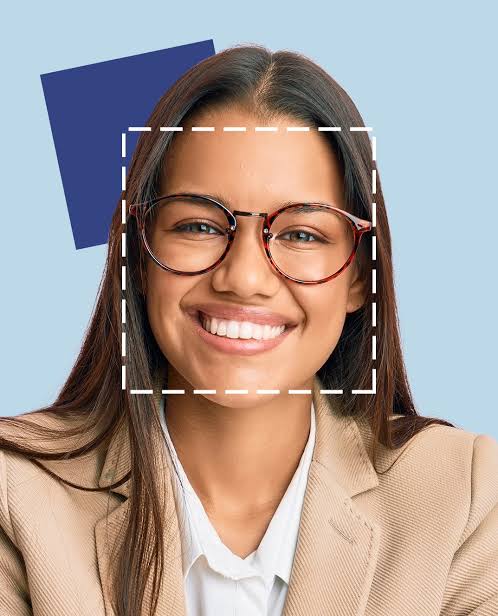
Soft Aesthetics for Girls with Square Faces: How Rounded Handbags and Gentle Eyeglass Frames Soften Facial Lines
A square face can be striking, elegant, and full of character. Defined by a broader forehead, a relatively straight jawline, and noticeable...
How to Buy Prescription Glasses Online on XCombo
Looking to buy glasses online? XCombo makes it easy to get stylish, high-quality glasses tailored to your prescription. Follow this simple step-by-step...

The Executive Style Code: A Career Guide to Suits, Briefcases, and Sophisticated Eyewear
In the modern workplace, professional style is about much more than wearing expensive clothes.The strongest business wardrobe communicates something before you say...
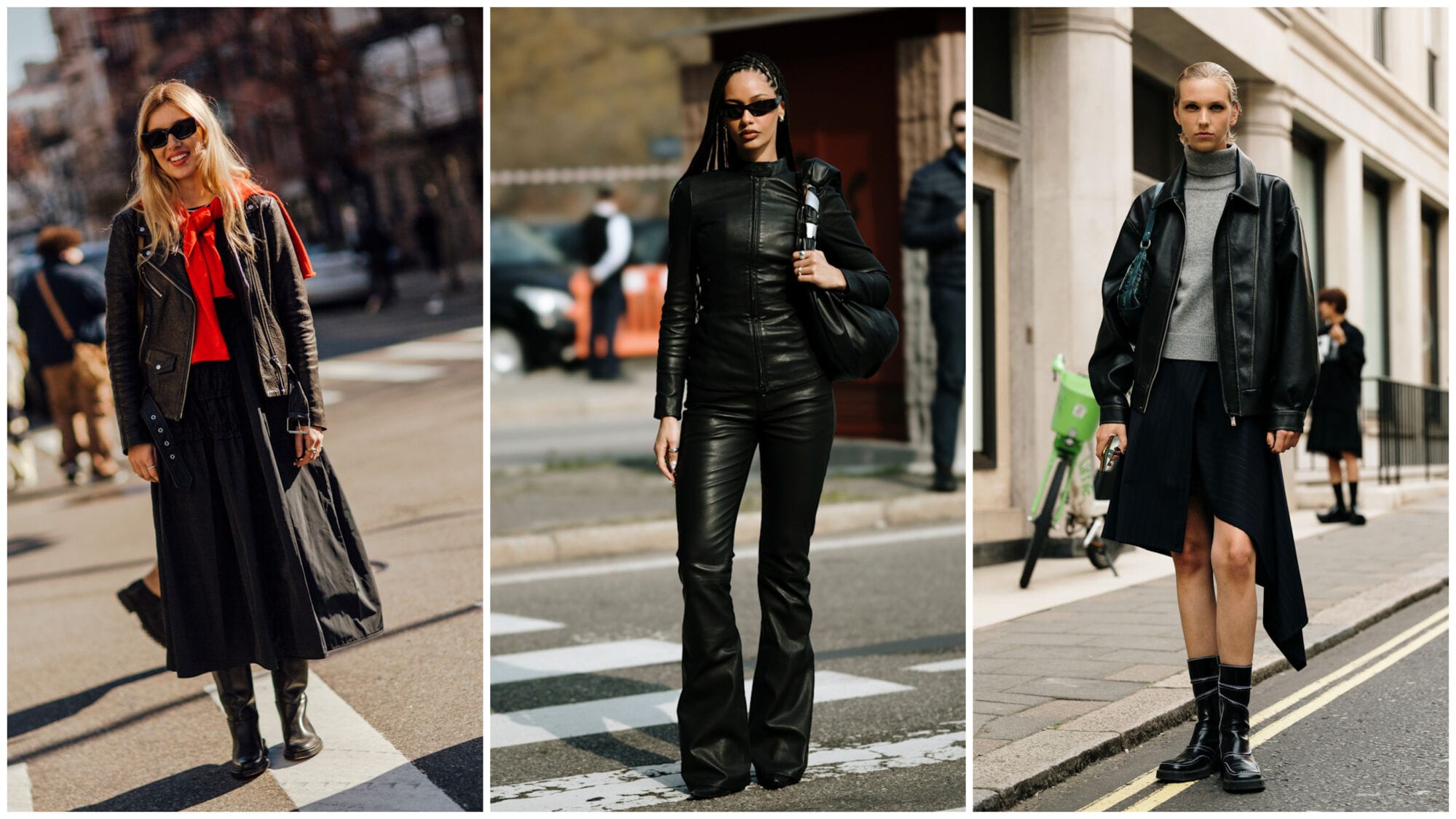
Street-Cool Style: How to Make Motorcycle Jackets, Belt Bags, and Futuristic Sunglasses Stand Out
Street fashion has never been about following every rule.It is about knowing which rules to break.A motorcycle jacket, a compact belt bag,...

The Art of Color Coordination: How to Match Your Bag With Your Eyeglass Frames for an Effortlessly Sophisticated Look
Fashion is often about the little details.A beautifully tailored outfit can look polished, yet something may still feel incomplete. The reason is...
Dating Night Style Secrets: The Perfect Collision of an Elegant Cocktail Dress, a Chain Evening Bag, and Sophisticated Semi-Rimless Glasses
Dating night is about more than choosing an outfit. It is about creating an impression without looking like you tried too hard....
Effortless French Elegance: The Perfect Pairing of Knitwear, Tote Bags, and Cat-Eye Glasses
There is something undeniably captivating about French style.It is polished without looking overly polished, feminine without being overly delicate, and comfortable without...
A Cross-Textural Conversation: The Tactile Collision of Leather Bags, Tweed Clothing, and Wood-Frame Eyewear
Introduction: When Materials Become the Main CharacterFashion is often discussed in terms of color, silhouette, trend, and season. Yet some of the...