
Stop Using Your Shirt to Clean Your Glasses: What a Microscope Reveals About the Damage to Custom Lens Coatings
If you wear glasses every day, chances are you’ve done it countless times: your lenses get smudged, you grab the corner of your shirt, and you wipe them quickly. It’s fast, convenient, and seems harmless.
But what if that simple habit is slowly destroying your lenses?
Modern custom eyewear is much more advanced than it used to be. Today’s prescription lenses often include multiple precision coatings designed to improve vision clarity, reduce glare, repel water, and resist scratches. These coatings are incredibly thin—often measured in nanometers—and while they’re engineered to be durable, they are not invincible.
Under normal lighting, wiping your glasses with your shirt might appear harmless. However, when scientists examine the surface of lenses under a microscope, a very different story emerges.
Microscopic scratches, coating wear, and fiber damage become clearly visible. Over time, these small imperfections accumulate and permanently affect the performance of your lenses.
In this article, we’ll explore what really happens when you wipe your glasses with clothing, why custom lens coatings are more vulnerable than many people realize, and how simple cleaning habits can dramatically extend the life of your eyewear.
Why Modern Eyeglass Lenses Are More Advanced Than Ever
To understand why improper cleaning causes damage, it helps to first understand how modern lenses are built.
Most prescription lenses today are not just pieces of plastic or glass. Instead, they are layered optical systems designed to enhance performance in multiple ways.
A typical high-quality lens may include several coating layers, such as:
- anti-reflective coating
- scratch-resistant coating
- hydrophobic coating that repels water
- oleophobic coating that repels oils and fingerprints
- blue-light filtering layers
- UV protection layers
Each layer performs a specific function, and together they improve both vision and comfort.
However, these layers are extremely thin. Some coatings are only a few hundred nanometers thick—thinner than a human hair by thousands of times.
That’s why improper cleaning methods can gradually wear them down.
What Happens When You Wipe Lenses with Clothing
At first glance, fabric seems soft and harmless. But clothing materials are not designed for cleaning optical surfaces.
Several factors make clothing surprisingly abrasive for lenses.
Fabric Fibers Are Rougher Than They Appear
Clothing fabrics contain woven fibers that can have microscopic rough edges. When dragged across a lens surface, these fibers can act like very fine sandpaper.
Under magnification, even cotton fibers may appear coarse and irregular.
Dust Particles Become Tiny Abrasives
The real danger isn’t the fabric itself—it’s the dust trapped inside it.
Your clothing collects particles throughout the day, including:
- dust from indoor environments
- sand or mineral particles from outdoors
- pollen and environmental debris
- microscopic dirt from daily activities
When these particles become trapped between fabric and lens surface, wiping creates friction that scratches coatings.
Under a microscope, these scratches often appear as thin lines across the lens.
Pressure Increases Damage
People often wipe lenses quickly and firmly to remove smudges. This added pressure increases friction, making microscopic scratches more likely.
Even if each scratch is tiny, repeated wiping over months or years gradually degrades the lens surface.
What a Microscope Reveals About Lens Damage
Scientists and optical technicians often use microscopes to inspect lenses during quality control and repair.
When lenses that have been cleaned improperly are examined at high magnification, several types of damage appear.
Micro-Scratches
The most common type of damage is micro-scratching.
These scratches are too small to notice individually, but they accumulate over time.
Under magnification, the lens surface may show:
- fine parallel lines
- irregular scratch patterns
- clusters of tiny abrasions
These imperfections scatter light as it passes through the lens.
Coating Wear
Repeated abrasion gradually removes protective layers.
Under a microscope, worn areas may appear:
- duller than surrounding surfaces
- slightly cloudy
- uneven in reflectivity
Coating wear can reduce the effectiveness of anti-reflective treatments.
Surface Cloudiness
When many micro-scratches accumulate, the lens may begin to appear hazy under bright light.
This haze reduces visual clarity and contrast.
Edge Damage
Cleaning with clothing often focuses pressure near the center of the lens but may also drag debris toward the edges.
Edge areas sometimes show heavier wear because coatings can be thinner there.
Why Custom-Coated Lenses Are Especially Vulnerable
Basic lenses are already sensitive to scratching, but custom coatings make them even more complex.
High-performance lenses often include multiple stacked coatings, each serving a different optical purpose.
Because these coatings are layered structures, damage to the outermost layer can affect the entire system.
For example:
- damaging the oleophobic layer makes lenses harder to clean
- damaging the anti-reflective layer increases glare
- damaging hydrophobic coatings allows water spots to form more easily
Once these coatings are worn away, they cannot be repaired. The only solution is replacing the lenses.
The Long-Term Effects of Improper Lens Cleaning
Many people do not notice immediate problems from wiping lenses with clothing. However, damage builds gradually.
After months or years, several changes may occur.
Increased Glare
Anti-reflective coatings reduce glare from screens, headlights, and indoor lighting.
If these coatings become scratched or worn, glare can increase significantly.
Reduced Clarity
Light scattering caused by microscopic scratches can make vision feel less sharp, even if your prescription hasn’t changed.
More Frequent Smudging
When the oleophobic layer wears away, oils and fingerprints cling to the lens surface more easily.
This makes lenses feel dirty more often.
Shorter Lens Lifespan
High-quality prescription lenses are designed to last several years. Improper cleaning can reduce their lifespan dramatically.
The Right Way to Clean Eyeglass Lenses
Fortunately, protecting your lenses is easy once you develop better habits.
Optical professionals recommend a simple cleaning process.
Step 1: Rinse with Water
Before wiping your lenses, rinse them with lukewarm water.
This removes dust and particles that could cause scratches.
Step 2: Use Lens-Safe Cleaning Solution
Apply a small amount of lens cleaner or mild soap.
Avoid harsh chemicals such as ammonia or window cleaner.
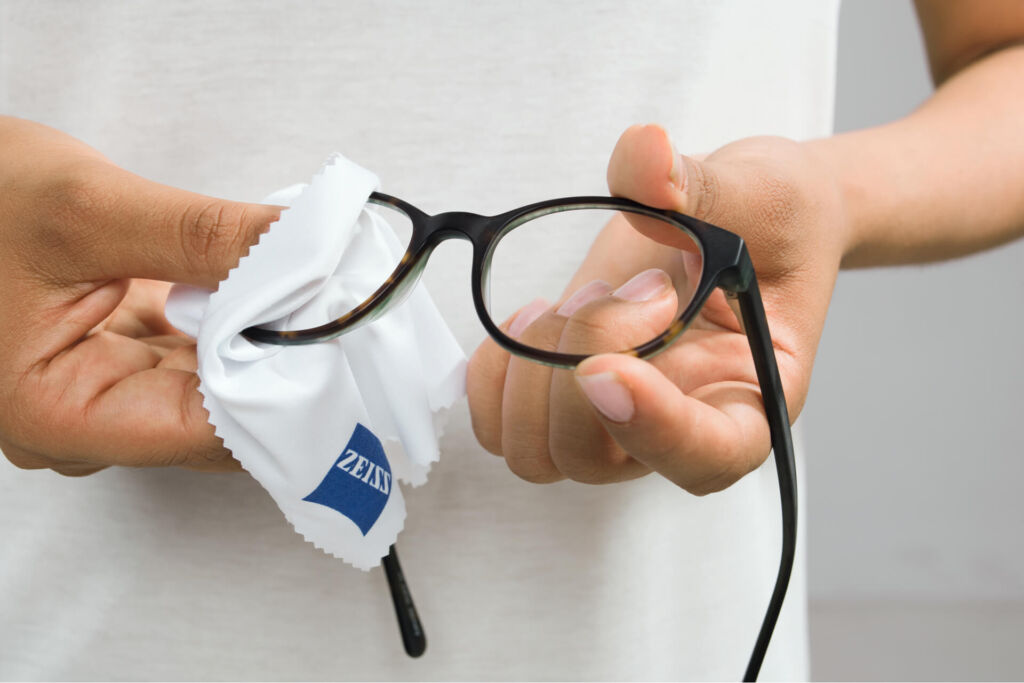
Step 3: Use a Microfiber Cloth
Microfiber cloths are specifically designed for optical surfaces.
Their ultra-fine fibers lift oils and dirt without scratching coatings.
Step 4: Dry Gently
Use light pressure and avoid aggressive rubbing.
Let the cloth do the work.
Why Microfiber Cloths Are So Effective
Microfiber cloths differ dramatically from regular fabrics.
They are made from extremely fine synthetic fibers that are much thinner than cotton threads.
These fibers:
- trap dirt particles inside the cloth structure
- reduce friction against lens surfaces
- prevent abrasive particles from dragging across coatings
This makes microfiber ideal for delicate optical surfaces.
Common Cleaning Mistakes to Avoid
Even people who try to clean their lenses carefully sometimes make mistakes.
Here are a few habits to avoid.
Using Paper Towels
Paper fibers are surprisingly rough and may scratch coatings.
Using Tissue Paper
Many tissues contain wood fibers that can be abrasive.
Cleaning Dry Lenses
Wiping lenses without rinsing first traps dust between cloth and lens surface.
Using Household Cleaners
Products like glass cleaner may damage lens coatings over time.
How Often Should You Clean Your Glasses?
Frequency depends on lifestyle.
People who work in dusty environments or use screens frequently may clean lenses multiple times per day.
However, proper cleaning methods are more important than frequency.
As long as lenses are rinsed and wiped with microfiber cloths, regular cleaning will not harm coatings.
Protecting Your Glasses Beyond Cleaning
In addition to proper cleaning, several habits help protect your lenses.
Store Glasses in a Case
When not in use, keeping glasses in a case prevents dust accumulation and accidental scratches.
Avoid Placing Lenses Face Down
Hard surfaces can damage coatings if lenses are placed directly against them.
Wash Microfiber Cloths Regularly
Dirty cloths may accumulate dust and oils that could damage lenses.
Replace Worn Cleaning Cloths
Old microfiber cloths eventually lose effectiveness and should be replaced periodically.
Why Optical Professionals Emphasize Proper Care
Opticians frequently see lens damage caused by improper cleaning habits.
Many customers assume coating defects are manufacturing issues, when in reality they result from everyday wear.
Simple cleaning mistakes repeated hundreds of times can gradually degrade lens performance.
Because custom lenses are a significant investment, proper care protects both visual quality and long-term value.
Final Thoughts: A Small Habit with Big Consequences
Cleaning your glasses with the corner of your shirt may feel harmless, but microscopic evidence tells a different story.
Under magnification, that quick wipe reveals a network of scratches and coating wear slowly accumulating over time.
Modern custom lenses are technological products designed with multiple precision layers. Treating them like ordinary plastic surfaces can shorten their lifespan and reduce their performance.
Fortunately, protecting your lenses doesn’t require complicated tools or expensive equipment. A simple combination of water, proper cleaning solution, and a microfiber cloth can keep your eyewear clear and damage-free.
Breaking the shirt-wiping habit may seem small—but over the life of your glasses, it can make a huge difference.
Your lenses will stay clearer, your coatings will last longer, and your vision will remain as sharp as the day you first put them on.
Share this post









The 3 “Hidden Costs” of Custom Eyewear: Accessories, Maintenance, and Prescription Accuracy — Are Online Custom Glasses Really Worth It?
When shopping for custom eyewear, most people focus on the sticker price. Whether it’s $150 from an online retailer or $1,200 from...

Your Vision's Best Shield: A Professional Guide to the Lifespan of Eyeglasses
For millions of people, eyeglasses are more than a vision correction tool—they are an everyday essential. From the moment you wake up...
Value & Pitfalls in Custom Eyewear: Why Prescription Glasses Cost Anywhere from $200 to $2,000
Walk into any eyewear store—or browse online—and you’ll quickly notice something confusing: prescription glasses can cost as little as $200 or soar...
Not Just Prescription Power: Why Facial Measurement Data Is the Real Key to Perfect Eyewear
When most people think about buying glasses, they focus on one thing: prescription strength. Whether it’s nearsightedness, farsightedness, or astigmatism, the assumption...
How to Adjust Your EyeGlasses at Home: A Complete Guide
Glasses are essential for vision correction, but they also serve as a stylish accessory. However, even the best frames can feel uncomfortable...
In-Store Try-On vs. Cloud-Based Measurement: A Deep Dive Into the Experience Gap
The eyewear industry is undergoing a quiet but profound transformation. For decades, purchasing glasses meant visiting a physical store, trying on multiple...
Plastic vs. Polycarbonate Lenses: Which One is Right for You?
Choosing the right lenses for your eyeglasses is just as important as selecting the perfect frames. While your eye doctor determines the...
The Mystery of Electronic Interference: Why Snap-Fit Eyeglass Frames Are a Better Choice for Heavy Tech Users
Modern life is surrounded by invisible signals. Smartphones, wireless headphones, laptops, smartwatches, VR headsets, and countless connected devices continuously emit electromagnetic energy....
How One-Second Color Switch Glasses Transform Your Daily Style
How to Match Your Glasses Frame to Today’s Outfit—EffortlesslyLet’s be honest.You don’t wear the same outfit every day.Some days it’s clean and...
No Detours: The Right Way to Care for Your Glasses (A Complete Maintenance Guide)
Glasses are more than a vision aid—they are precision optical instruments that you rely on every waking hour. Whether you wear them...
How Custom Frame Colors Shape Your Professional Presence: The Psychology and Strategy Behind Eyewear Material Choices
In modern workplaces, personal presentation extends far beyond clothing. Accessories once considered purely functional now carry powerful visual signals that influence perception,...
Eye Care Diary: Giving Your Lenses a “Mini Makeover”
For many people, eyeglasses are more than a vision correction tool. They are part of daily life, personal style, work performance, digital...