

Can Dish Soap Really Clean Your Glasses? An Expert Guide to Safe Lens Care
Clean lenses can make the difference between crisp, comfortable vision and a day full of eye strain, glare, and frustration. Yet despite how essential eyewear is, many people still rely on guesswork—or quick habits picked up over time—when it comes to cleaning their glasses.
One of the most common questions is surprisingly simple: Can dish soap safely clean your glasses?
Some people swear by it. Others warn against it. The truth sits somewhere in the middle—and understanding it can help you avoid costly damage while keeping your lenses crystal clear.
In this comprehensive guide, we’ll break down what really happens when you use dish soap on your glasses, what experts recommend, and how to build a cleaning routine that protects both your vision and your investment.
Why Proper Lens Cleaning Matters More Than You Think
At first glance, cleaning glasses seems like a basic task. Wipe, rinse, done—right?
Not quite.
Modern lenses are far more advanced than they used to be. Most eyeglasses today include multiple functional coatings, such as:
- Anti-reflective (AR) coating
- Scratch-resistant layers
- Blue light filtering coatings
- UV protection layers
- Hydrophobic (water-repelling) coatings
These coatings are incredibly thin and precisely engineered. While they enhance performance, they also require careful handling. Improper cleaning can gradually wear them down, leading to:
- Reduced clarity
- Increased glare
- Smudging that won’t go away
- Visible scratches or haze
In other words, how you clean your glasses directly affects how well you see.
So, Can Dish Soap Clean Glasses?
Yes—but with important conditions.
Mild, lotion-free dish soap is generally safe for cleaning glasses, and in many cases, it’s one of the most effective ways to remove oils, dirt, and debris.
However, not all dish soaps are created equal.
Safe to Use:
- Basic, fragrance-free formulas
- Soap without added moisturizers
- Products labeled as “gentle” or “clear”
Avoid:
- Soaps with lotions or conditioners
- Strong degreasers
- Heavily scented or dyed formulas
The difference matters because additives can leave residue or interact with lens coatings over time.
Why Dish Soap Works
Dish soap is designed to break down grease—and that’s exactly what makes it effective for glasses.
Your lenses collect:
- Skin oils
- Sweat
- Environmental pollutants
- Makeup residue
Water alone can’t remove these effectively. A small amount of mild soap helps lift and rinse them away without excessive friction.
The Right Way to Use Dish Soap on Glasses
Using dish soap correctly is just as important as choosing the right type.
Here’s a step-by-step method recommended by many eye care professionals:
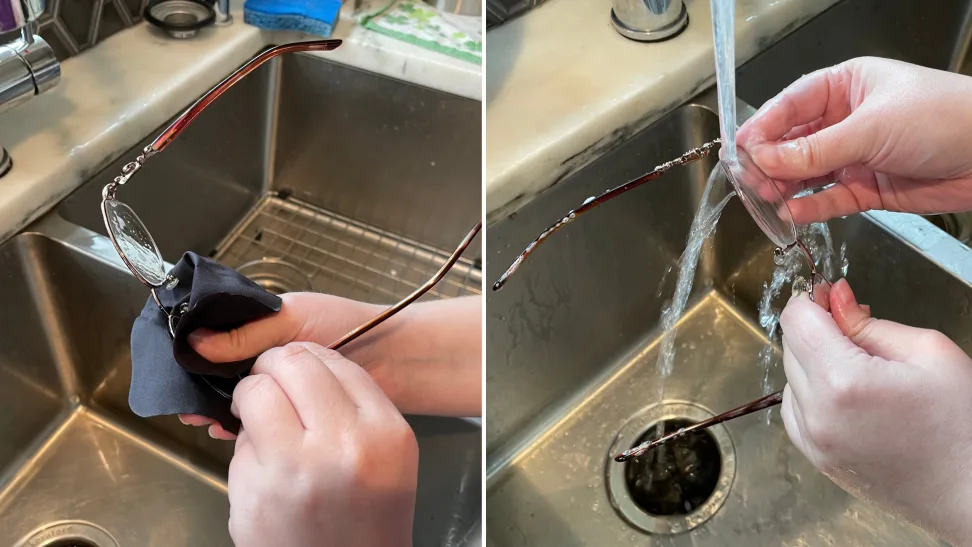
Step 1: Rinse First
Hold your glasses under lukewarm running water.
This removes dust and debris that could scratch the lenses during cleaning.
Step 2: Apply a Tiny Amount of Soap
Use a drop about the size of a pinhead.
Gently rub it across both sides of the lenses using your fingertips.
Step 3: Clean the Entire Frame
Don’t forget:
- Nose pads
- Hinges
- Frame edges
These areas collect oils and dirt that can transfer back to your lenses.
Step 4: Rinse Thoroughly
Make sure all soap is completely washed away.
Leftover residue can cause streaks or film.
Step 5: Dry with a Microfiber Cloth
Use a clean, lint-free microfiber cloth.
Avoid air-drying, as it can leave water spots.
Common Mistakes That Damage Lenses
Even if you’re using dish soap, certain habits can still harm your glasses.
1. Using Paper Towels or Tissues
These materials may feel soft but often contain wood fibers that can scratch lenses.
2. Cleaning Dry Lenses
Wiping lenses without rinsing first grinds dust into the surface.
3. Using Hot Water
High temperatures can weaken coatings and cause warping in frames.
4. Overusing Soap
Too much soap increases the chance of residue buildup.
5. Using Household Cleaners
Products like window cleaner, vinegar, or alcohol-based sprays can damage coatings.
When Dish Soap Is Not the Best Option
While dish soap is safe in many situations, there are cases where specialized cleaners are better.
High-End Coatings
Premium lenses with advanced coatings may benefit from:
- Optical-grade cleaning sprays
- Manufacturer-recommended solutions
Frequent Cleaning Needs
If you clean your glasses multiple times a day, using a dedicated lens cleaner can be more convenient and consistent.
Travel and On-the-Go Use
Pre-moistened lens wipes designed for eyewear are more practical when you’re away from a sink.
How Often Should You Clean Your Glasses?
There’s no one-size-fits-all answer, but general guidelines include:
- Light use: Once a day
- Heavy use: 2–3 times a day
- As needed: Whenever smudges affect vision
The key is to clean them before buildup becomes excessive.
Building a Long-Term Lens Care Routine
Cleaning is just one part of proper eyewear maintenance.
To extend the life of your lenses:
Store Them Properly
Always use a protective case when not wearing your glasses.
Avoid Extreme Conditions
Keep glasses away from:
- Hot cars
- Direct sunlight for long periods
- High humidity environments
Handle with Care
Use both hands when putting on or removing your glasses to prevent frame stress.
Keep Cloths Clean
Wash microfiber cloths regularly without fabric softener.
A dirty cloth can reintroduce oils and debris.
The Science Behind Clean Vision
Clear lenses don’t just look better—they improve how your eyes function.
Smudges and residue scatter light, which can lead to:
- Eye strain
- Headaches
- Reduced visual sharpness
Keeping lenses clean ensures that light passes through accurately, reducing unnecessary effort for your eyes.
Are DIY Cleaning Methods Worth It?
Many people experiment with homemade cleaning solutions.
While some methods may seem effective, they often carry risks.
For example:
- Vinegar can be too acidic
- Alcohol can damage coatings
- Random mixtures lack consistency
Compared to these, mild dish soap is actually one of the safer DIY options—provided it’s used correctly.
Expert Perspective: Why Simplicity Wins
Eye care professionals often emphasize a simple principle:
Gentle, consistent care is better than aggressive or complicated methods.
You don’t need expensive tools or elaborate routines. What matters most is:
- Using safe materials
- Avoiding harmful habits
- Staying consistent
Final Thoughts
So, can dish soap really clean your glasses?
Yes—when it’s mild, used sparingly, and combined with proper technique, it can be one of the most effective and accessible cleaning methods available.
But like many everyday habits, the details matter. The wrong soap, excessive force, or improper drying can do more harm than good.
By understanding how your lenses are made and adopting a careful cleaning routine, you can keep your glasses in excellent condition—clear, comfortable, and long-lasting.
In the end, taking a few extra seconds to clean your glasses the right way isn’t just about appearance. It’s about protecting your vision and ensuring that every glance through your lenses is as sharp and effortless as it should be.
Share this post


- Burgundy – Crystal (C01)
- Red – Crystal(C02)
- Burnt Orange – Crystal(C03)
- Marmalade – Crystal(C04)
- Sunshine Yellow – Crystal(C05)
- Lime Green – Crystal(C06)
- Sage – Crystal(C08)
- Green Forest – Crystal(C07)
- Army Green – Crystal(C09)
- Spruce – Crystal(C10)
- Turquiise – Crystal(C11)
- Cornflower– Crystal(C12)
- Navy – Crystal(C13)
- Indigo – Crystal(C14)
- Blue Orchid – Crystal(C15)
- Mauve – Crystal(C16)
- Lavender – Crystal(C21)
- Purple – Crystal(C17)
- Grape – Crystal(C18)
- Coral – Crystal(C19)
- Hot Pink – Crystal(C20)
- Chocolate – Crystal(C22)




From Crowdfunded Sensation to Mainstream Market: A Brief History of the Custom Eyewear Industry
Over the past fifteen years, the custom eyewear industry has transformed from a niche concept backed by passionate early adopters into a...
Gravity’s Grudge: Why Your Glasses Keep Sliding Down (And How Your Frames Are Trying to Tell You Something)
We’ve all been there. You’re in the middle of a high-stakes board meeting, leaning over a delicious plate of pasta, or simply...
How Mechanical Snap-Fit Custom Eyeglasses End the Frustration of Losing Tiny Screws
For decades, the structure of eyeglasses has remained largely unchanged. Two lenses, a frame, hinges, and a pair of microscopic screws holding...
Long-Term Ownership Guide: How to Choose a Timeless Custom Eyewear Frame That Never Goes Out of Style and Is Easy to Refresh
Eyewear has evolved far beyond vision correction. Today, glasses function as personal identity, fashion statement, daily tool, and long-term investment all at...
Do Titanium Eyeglass Frames Experience “Fatigue”? Three Key Ways to Extend the Lifespan of High-Strength Metal Frames
Titanium eyeglass frames have earned a reputation for being nearly indestructible. Lightweight yet strong, corrosion-resistant yet flexible, they are often marketed as...
From Matte to Glossy Again: Professional Restoration Solutions for Worn Custom Eyewear Frames
Introduction: When Premium Frames Start Losing Their Original FinishCustom eyewear frames are more than vision tools—they are personal style statements, daily companions,...
The Mystery of the “Red Mark”: Why Your Nose Bridge Deserves a Custom Curvature Design
For millions of people who wear glasses every day, there is a familiar experience that often goes unnoticed until it becomes uncomfortable:...
Protecting Your Cards and Devices: Avoiding the Hidden Risks of Strong Magnets in Everyday Life
Magnets are everywhere in modern life. From refrigerator doors and wireless chargers to phone accessories and smart home gadgets, magnetic technology has...
The Zero-Gravity Vision: How Material Science Makes Custom Frames Lighter Than a Sheet of Paper
In the world of high-end optics, there is a "Sound Barrier" that designers have been trying to break for decades. It is...
The Hidden Calling Card of High Performers: How Custom Eyewear Instantly Elevates Your Executive Presence
In today’s competitive professional landscape, success is rarely defined by skills alone. Expertise, intelligence, and experience matter—but so does perception. Before you...

The Active Athlete’s Eyewear Survival Guide: How to Prevent Impact Damage and Sweat Wear
For athletes and fitness enthusiasts, eyewear isn’t just an accessory—it’s essential gear. Whether you’re sprinting under the sun, grinding through a high-intensity...
Hardcore Player’s First Choice: How Cool Are Mechanically Inspired Custom Eyewear Designs?
In a world flooded with minimalist acetate frames and safe, predictable silhouettes, a new category of eyewear is commanding attention:Mechanically inspired custom...