
Care for Your Glasses Like You Care for Your Skin: The Complete Guide to Eyewear Maintenance
Introduction: Your Glasses Deserve More Than Just a Quick Wipe
Many people spend time and money caring for their skin every day.
They choose the right cleanser, apply moisturizer, protect against sunlight, and follow carefully designed routines to maintain a healthy and youthful appearance.
But when it comes to glasses—the accessory that sits on your face for hours every day—many people take a completely different approach.
A quick wipe on a shirt sleeve.
A careless drop on the table.
Leaving them exposed to heat or dust.
These small habits may seem harmless, but over time they can damage lenses, weaken frames, and reduce the comfort and performance of your eyewear.
Your glasses are more than a tool for clearer vision. They are also part of your personal style, your daily comfort, and your overall appearance.
Just like your skin, glasses need regular care, protection, and attention.
A well-maintained pair of glasses can:
- Stay clearer for longer
- Maintain its original appearance
- Provide better visual comfort
- Extend its usable lifespan
- Preserve the quality of expensive lenses and frames
Whether you wear prescription glasses, sunglasses, blue-light glasses, or fashion eyewear, proper maintenance makes a significant difference.
Caring for your glasses is not about complicated routines. It is about understanding what your eyewear needs and developing simple habits that protect it every day.
1. Why Your Glasses Need Daily Care Like Your Skin
Your skin faces environmental challenges every day:
- Dust
- Oil
- Sweat
- Sun exposure
- Temperature changes
Your glasses experience many of the same conditions.
Throughout the day, eyewear collects:
- Facial oils from the nose and temples
- Sweat from physical activity
- Dust particles from the environment
- Makeup residue
- Hair products
- Fingerprints
These contaminants may seem minor, but they gradually affect both appearance and performance.
The Hidden Damage Behind Dirty Lenses
Many people clean their glasses only when they notice visible fingerprints.
However, lens contamination often begins long before it becomes obvious.
A thin layer of oil or dust can affect:
- Light transmission
- Lens clarity
- Visual comfort
- Coating durability
For people who wear glasses for many hours each day, even small reductions in clarity can create unnecessary eye strain.
Clean lenses are not just about looking polished. They help maintain a better viewing experience.
2. Understanding Your Glasses: Every Component Needs Protection
A pair of glasses is a carefully engineered product made of multiple components.
Each part requires proper care.
Lens Care: Protecting the Most Important Surface
The lenses are the core of your eyewear.
Modern lenses often include advanced coatings such as:
- Anti-reflective coatings
- Scratch-resistant layers
- UV protection coatings
- Blue-light filtering treatments
- Water-repellent surfaces
These coatings improve performance, but they also require proper maintenance.
Incorrect cleaning methods can gradually damage these protective layers.
Frame Care: Maintaining Structure and Comfort
Frames are responsible for:
- Supporting the lenses
- Maintaining proper alignment
- Providing comfort during wear
Different materials have different care requirements.
Common frame materials include:
- Acetate
- Metal alloys
- Stainless steel
- Titanium
- Flexible polymers
Each material responds differently to:
- Heat
- Pressure
- Chemicals
- Moisture
Understanding your frame material helps prevent unnecessary damage.
Nose Pads and Hinges: The Small Details That Matter
Many people overlook small components of their glasses.
However, nose pads and hinges directly affect comfort.
Dirty nose pads can cause:
- Skin irritation
- Slipping
- Uncomfortable pressure
Damaged hinges can lead to:
- Loose temples
- Uneven fitting
- Frame deformation
Small maintenance steps can prevent bigger problems.
3. The Correct Way to Clean Your Glasses
Cleaning your glasses may seem simple, but many common habits actually cause damage.
The goal is not just removing dirt. The goal is protecting the lens surface.
Step 1: Wash Your Hands First
Before touching your glasses, clean your hands.
Hands naturally carry:
- Oils
- Dust
- Moisturizers
- Food residue
These substances transfer easily onto lenses.
Clean hands create a cleaner starting point.
Step 2: Rinse Before Wiping
One of the most common mistakes is wiping dry lenses.
Tiny dust particles may act like sandpaper when rubbed against the surface.
This can create microscopic scratches over time.
A safer approach is:
- Rinse lenses gently with clean water
- Remove loose particles
- Apply suitable cleaning solution if needed
- Dry with a microfiber cloth
This protects both lenses and coatings.
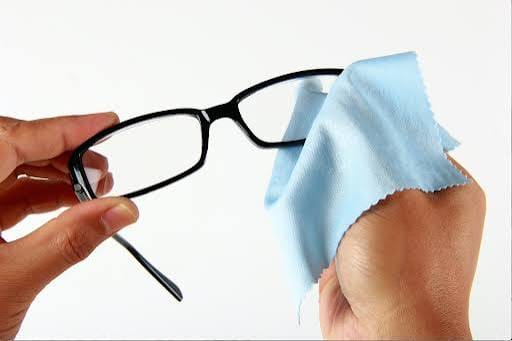
Step 3: Use a Proper Microfiber Cloth
Not all fabrics are suitable for glasses.
Avoid cleaning lenses with:
- Clothing
- Paper towels
- Tissues
- Rough fabrics
These materials may contain fibers or particles that damage lens surfaces.
A high-quality microfiber cloth is designed to:
- Capture dust
- Remove oils
- Protect coatings
- Reduce scratching risks
Keep your microfiber cloth clean because a dirty cloth can transfer contaminants back onto the lenses.
4. Cleaning Products: What Works and What Can Cause Damage
Choosing the right cleaning products is just as important as choosing the right cleaning method.
Many household products are not designed for eyewear.
Avoid Harsh Chemicals
Some cleaners contain ingredients that may damage lens coatings.
Avoid using:
- Household glass cleaners
- Strong detergents
- Alcohol-based products not designed for lenses
- Bleach-based cleaners
These substances may gradually weaken protective layers.
Choose Products Designed for Eyewear
Professional lens cleaners are formulated to remove:
- Oil
- Dust
- Fingerprints
- Everyday buildup
while protecting delicate coatings.
The right cleaner helps preserve both clarity and durability.
5. The Importance of Proper Storage
How you store your glasses when you are not wearing them has a major impact on lifespan.
Many scratches and frame problems happen during storage.
Always Use a Protective Case
Leaving glasses directly on tables, counters, or inside bags exposes them to unnecessary risks.
Common dangers include:
- Scratches from keys
- Pressure from other objects
- Dust accumulation
- Accidental bending
A hard protective case provides a simple but effective layer of protection.
Place Glasses Correctly
When temporarily placing glasses down, avoid putting lenses directly against surfaces.
The safest position is usually:
- Fold the temples carefully
- Place lenses facing upward
- Keep them away from sharp objects
Small habits prevent long-term damage.
Protect Glasses From Extreme Temperatures
Heat is one of the biggest enemies of modern eyewear.
Avoid leaving glasses:
- Inside a hot car
- Near heaters
- Under direct sunlight for long periods
High temperatures can affect:
- Frame shape
- Lens coatings
- Adhesive components
Just as skin needs protection from excessive heat, glasses need environmental protection too.
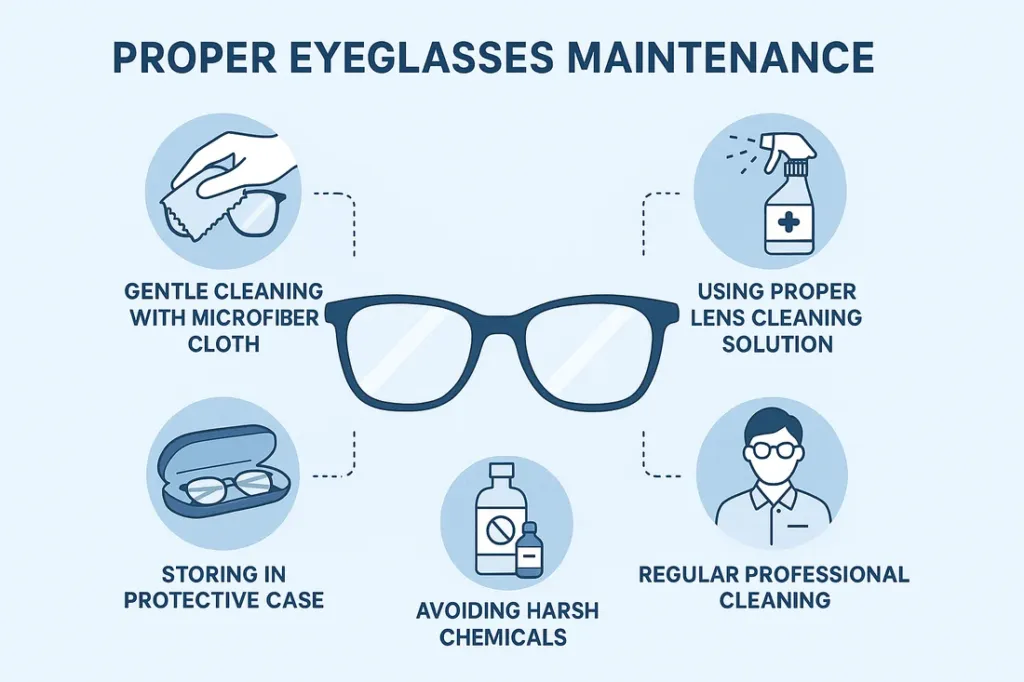
6. Daily Wearing Habits: Small Actions That Protect Your Glasses
Many glasses become damaged not because of major accidents, but because of repeated small mistakes.
Just like skincare depends on daily consistency, eyewear care depends on everyday habits.
The way you put on, remove, and handle your glasses directly affects their condition.
Use Both Hands When Removing Glasses
One of the most common habits that damages frames is removing glasses with only one hand.
Many people grab one temple and pull their glasses away from their face.
Although this seems convenient, repeated one-handed removal creates uneven pressure.
Over time, this may cause:
- Loose hinges
- Crooked frames
- Uneven lens alignment
- Reduced wearing comfort
Using both hands keeps pressure balanced and helps maintain the original shape of the frame.
This simple adjustment can significantly extend the life of your eyewear.
Avoid Placing Glasses on Your Head
Many people temporarily place glasses on top of their head when they do not need them.
Although convenient, this habit can create several problems.
The frame may experience:
- Unnecessary stretching
- Temple deformation
- Hinge stress
In addition, hair products, oils, and sweat can transfer onto the frame.
If you need to remove your glasses temporarily, placing them in a case or a safe location is a better choice.
Do Not Adjust Glasses Constantly
Frequent touching is another overlooked cause of wear.
Repeated adjustments may introduce:
- Finger oils
- Dust particles
- Pressure on hinges
If your glasses frequently slide down or feel uncomfortable, the problem may not be your habit—it may indicate that your frame needs professional adjustment.
A properly fitted pair of glasses should sit comfortably without constant correction.
7. Protecting Different Types of Eyewear Materials
Different glasses require different care approaches.
Understanding the material of your eyewear helps prevent accidental damage.
Caring for Acetate Frames
Acetate frames are popular because they offer:
- Rich colors
- Premium appearance
- Comfortable wearing experience
- Design flexibility
However, acetate requires proper care.
Avoid:
- Excessive heat
- Long exposure to sunlight
- Strong chemical cleaners
High temperatures can soften acetate and affect frame shape.
Regular cleaning with a soft cloth helps maintain the frame’s appearance.
Caring for Metal Frames
Metal frames are known for:
- Lightweight construction
- Elegant appearance
- Structural strength
However, they may be affected by:
- Moisture
- Sweat
- Chemical exposure
To maintain metal frames:
- Wipe away sweat regularly
- Keep hinges clean
- Avoid prolonged exposure to saltwater
This helps prevent corrosion and maintains smooth operation.
Caring for Titanium Frames
Titanium frames are valued for:
- Lightweight comfort
- Strength
- Corrosion resistance
Although titanium is highly durable, it still benefits from regular care.
Avoid unnecessary bending or adjustment.
If the frame becomes misaligned, professional adjustment is usually safer than attempting repairs at home.
Caring for Plastic and Flexible Frames
Flexible frames are popular for active lifestyles because they are comfortable and resistant to impact.
However, they can still experience:
- Surface scratches
- Heat-related deformation
- Color changes
Avoid exposing them to extreme environments.
Proper storage remains essential.
8. Lens Coatings: The Invisible Layer You Need to Protect
Many modern lenses include advanced coatings that improve comfort and performance.
These coatings are often invisible, but they play an important role.
Anti-Reflective Coating Care
Anti-reflective coatings reduce unwanted reflections and improve visual clarity.
They are especially useful for:
- Night driving
- Computer use
- Indoor lighting environments
To protect these coatings:
- Use proper cleaning methods
- Avoid abrasive materials
- Prevent chemical exposure
A damaged coating can affect both appearance and visual comfort.
Scratch-Resistant Coatings Are Not Scratch-Proof
Many people misunderstand scratch-resistant lenses.
Scratch-resistant does not mean impossible to scratch.
It means the lens surface has improved resistance compared with untreated materials.
Damage can still occur from:
- Rough cleaning
- Contact with hard objects
- Poor storage habits
Careful handling remains important.
UV Protection and Lens Performance
For sunglasses and outdoor eyewear, UV protection is a major feature.
Maintaining lens condition helps preserve:
- Optical clarity
- Protective performance
- Overall comfort
Damaged or heavily worn lenses may not provide the same experience as properly maintained eyewear.
9. Caring for Glasses During Travel
Travel creates additional risks for eyewear.
Changes in environment, storage conditions, and handling frequency can increase the chance of damage.
Prepare a Travel Eyewear Kit
A simple travel kit can include:
- Protective case
- Microfiber cloth
- Lens cleaning solution
- Spare nose pads if applicable
- Small repair tool
Being prepared prevents improper cleaning or unsafe handling.
Avoid Packing Glasses Loose in Bags
Many people place glasses directly into backpacks, purses, or luggage.
This exposes them to:
- Keys
- Electronics
- Cosmetic containers
- Other hard objects
A protective case requires little space but provides significant protection.
Protect Glasses During Outdoor Activities
Outdoor activities expose eyewear to:
- Dust
- Sweat
- Rain
- Sunlight
After outdoor use:
- Clean away debris
- Dry moisture
- Store properly
This prevents long-term buildup.
10. Caring for Glasses in Different Seasons
Environmental changes affect eyewear throughout the year.
Seasonal care helps maintain performance.
Summer Glasses Care
Summer conditions often include:
- Higher temperatures
- Increased sweating
- Strong sunlight
Important habits include:
- Cleaning sweat from frames
- Avoiding hot vehicles
- Protecting lenses from direct heat
Sweat contains salt and oils that may affect frames over time.
Winter Glasses Care
Cold weather creates different challenges.
Problems may include:
- Temperature changes
- Condensation
- Dry indoor environments
Avoid rapid temperature changes when possible.
For example, moving quickly from freezing outdoor conditions into a very warm environment may create condensation on lenses.
Rainy Weather Care
Water droplets themselves are usually not harmful, but dirty water can leave mineral deposits.
After exposure to rain:
- Rinse lenses if needed
- Dry with a microfiber cloth
- Avoid rubbing away dried particles
11. Professional Maintenance: When Home Care Is Not Enough
Daily maintenance is essential, but professional service also has value.
Over time, glasses may require:
- Frame adjustments
- Screw tightening
- Nose pad replacement
- Deep cleaning
Why Professional Adjustments Matter
A professional can correct:
- Uneven frame positioning
- Loose temples
- Poor facial fit
Proper adjustment improves:
- Comfort
- Lens alignment
- Wearing experience
A well-fitted pair of glasses also experiences less unnecessary stress.
Deep Cleaning Benefits
Professional cleaning can remove buildup that regular wiping cannot fully address.
It may help eliminate:
- Hidden dirt around hinges
- Oil accumulation
- Residue in small areas
Periodic professional care helps keep glasses looking and feeling new.
12. Signs Your Glasses Need More Attention
Your glasses may need maintenance if you notice:
Frequent Slipping
Possible causes:
- Loose frame
- Worn nose pads
- Incorrect adjustment
Blurry Vision Despite Clean Lenses
Possible causes:
- Lens coating damage
- Scratches
- Frame alignment problems
Uneven Wearing Experience
Possible causes:
- Bent frame
- Loose hinge
- Incorrect fit
Visible Surface Changes
Look for:
- Discoloration
- Peeling coatings
- Deep scratches
Early attention can prevent further problems.
13. Building an Eyewear Care Routine Like a Skincare Routine
Most people understand that healthy skin requires consistency.
You do not expect a single skincare treatment to maintain your appearance forever. Instead, you build small daily habits that protect and improve your skin over time.
The same principle applies to your glasses.
A good eyewear care routine does not require complicated equipment or a large amount of time. It simply requires consistency and attention to detail.
Morning Care: Start the Day With Clean Lenses
Your morning routine is the perfect time to check your glasses.
Before wearing them:
- Inspect the lenses for dust or fingerprints
- Clean them if necessary
- Check whether the frame feels loose
- Make sure the lenses sit correctly
Starting the day with clean glasses improves visual comfort and helps you notice potential problems early.
A few seconds of attention can prevent long-term issues.
Daily Refresh: Remove the Day’s Buildup
Throughout the day, glasses collect environmental residue.
At the end of the day, consider removing:
- Facial oils
- Sweat
- Dust
- Makeup residue
- Outdoor particles
A gentle cleaning routine helps prevent buildup and keeps your glasses looking fresh.
This is similar to removing dirt and impurities from your skin before rest.
Weekly Care: Give Your Glasses Extra Attention
A deeper weekly check can help maintain your eyewear.
Weekly care may include:
- Washing your microfiber cloth
- Cleaning the frame thoroughly
- Checking screws and hinges
- Inspecting nose pads
- Reviewing storage conditions
These small actions reduce the chance of unexpected problems.
Monthly Care: Inspect the Details
Once a month, take a few minutes to evaluate your glasses.
Check:
- Lens clarity
- Frame alignment
- Hinge movement
- Surface condition
If you notice changes, address them early.
Preventive care is always easier than repairing serious damage.
14. Common Eyewear Care Mistakes You Should Avoid
Many glasses become damaged because of habits people repeat every day.
Understanding these mistakes can help you protect your investment.
Mistake 1: Cleaning Glasses With Clothing
Using a shirt corner may seem convenient, but it is one of the most common mistakes.
Clothing fabrics may contain:
- Dust particles
- Rough fibers
- Invisible debris
When rubbed against lenses, these particles can create tiny scratches.
Always use a proper microfiber cloth.
Mistake 2: Leaving Glasses Lens-Down
Placing glasses with the lenses facing downward creates direct contact between the most sensitive surface and the table.
This can lead to:
- Scratches
- Coating damage
- Reduced clarity
Always protect the lens surface when setting glasses down.
Mistake 3: Using Hot Water
Hot water may feel effective for cleaning, but excessive heat can damage certain lens coatings and affect frame materials.
Use moderate-temperature water instead.
Gentle care is better than aggressive cleaning.
Mistake 4: Wearing Glasses During Activities They Were Not Designed For
Different glasses are designed for different purposes.
For example:
- Fashion frames may not be suitable for intense sports
- Regular prescription glasses may not replace protective eyewear
- Certain materials may not handle extreme environments
Using the correct eyewear for the correct situation protects both your vision and your glasses.
Mistake 5: Ignoring Small Damage
A loose screw or slightly bent frame may seem unimportant.
However, small problems often become bigger over time.
Ignoring minor issues may result in:
- Broken hinges
- Permanent frame deformation
- Lens stress
Early adjustment is usually simpler and less expensive.
15. Special Care for Children’s Glasses
Children’s eyewear often requires additional attention because children are more active and less careful.
Common challenges include:
- Frequent drops
- Rough storage
- Outdoor exposure
- Rapid growth changes
Choose Durable Storage Habits
Children should learn early to:
- Use a protective case
- Avoid placing glasses on random surfaces
- Handle frames with both hands
Developing these habits protects eyewear and teaches responsibility.
Check Fit Regularly
Children’s faces change as they grow.
Regular checks help ensure:
- Proper positioning
- Comfortable wearing
- Clear vision
A poorly fitted frame may affect comfort and daily use.
Consider Lifestyle Needs
Active children may benefit from frames designed for durability and flexibility.
The best eyewear is not only visually appealing but also suitable for everyday activities.
16. Caring for Specialty Glasses
Different types of eyewear have unique maintenance requirements.
Sunglasses
Sunglasses often experience:
- Strong sunlight
- Outdoor dust
- Sweat
- Water exposure
After outdoor activities:
- Rinse away particles
- Clean lenses carefully
- Store away from direct sunlight
This helps maintain both appearance and lens performance.
Computer Glasses and Blue-Light Glasses
These glasses are often used for long periods.
Because they are worn frequently:
- Clean them regularly
- Maintain lens clarity
- Check frame comfort
Clear lenses can improve the overall digital viewing experience.
Safety Glasses
Protective eyewear used in industrial environments requires special attention.
Important practices include:
- Inspecting for damage
- Cleaning after use
- Replacing heavily scratched lenses
Safety glasses should always provide reliable protection.
17. The Relationship Between Eyewear Care and Personal Image
Glasses are not only functional tools.
They are also part of personal style.
A clean, well-maintained pair of glasses creates a polished appearance.
Small details influence how others perceive you.
A well-cared-for pair of glasses communicates:
- Attention to detail
- Professionalism
- Personal confidence
- Respect for quality
Just like healthy skin enhances your appearance, well-maintained eyewear completes your overall look.
18. Extending the Life of Your Favorite Glasses
Many people develop emotional connections with their glasses.
A favorite frame may become part of your identity.
Proper care allows you to enjoy your eyewear longer.
The key principles are simple:
Protect Before Damage Happens
Prevention is better than repair.
Use:
- Protective cases
- Proper cleaning methods
- Safe storage habits
Handle With Care
Small daily actions create major long-term results.
Avoid:
- Dropping glasses
- Excessive bending
- Rough cleaning
Maintain Regularly
Consistency matters more than occasional intensive cleaning.
A few minutes of care can preserve your glasses for years.
19. Sustainable Eyewear Care: A Better Choice for the Future
Taking care of your glasses is also a more sustainable lifestyle choice.
When you extend the lifespan of your eyewear, you reduce:
- Material waste
- Frequent replacements
- Resource consumption
Choosing quality products and maintaining them properly creates long-term value.
A durable pair of glasses cared for correctly can remain useful and stylish for much longer.
Conclusion: Treat Your Glasses With the Same Care You Give Yourself
Your glasses accompany you through countless moments every day.
They help you work, learn, explore the world, and express your personal style.
Yet many people overlook the importance of caring for them properly.
Just like your skin needs daily protection and attention, your glasses need thoughtful maintenance to remain clear, comfortable, and beautiful.
The most effective eyewear care habits are simple:
- Clean lenses correctly
- Store glasses safely
- Protect frames from heat and pressure
- Handle them gently
- Perform regular inspections
These small actions create a significant difference over time.
A high-quality pair of glasses is an investment in your vision, comfort, and appearance. When you care for them properly, they reward you with better performance and a longer lifespan.
Your glasses deserve more than occasional cleaning.
They deserve the same level of care you give to yourself.
Take care of your eyewear today, and enjoy clearer vision, greater comfort, and lasting style for years to come.
Share this post
Say Goodbye to Awkward Proportions: How to Choose the Right Glasses for Your Body Shape and Bag Size
Accessories can transform an ordinary outfit into a polished, thoughtfully coordinated look. A beautiful handbag adds personality, while the right pair of...

2026 Spring/Summer Fashion Trends: When Retro Small-Frame Glasses Meet the Underarm Bag
Fashion has always had a talent for bringing the past back in unexpected ways.A silhouette that once belonged to another decade can...
Soft Aesthetics for Girls with Square Faces: How Rounded Handbags and Gentle Eyeglass Frames Soften Facial Lines
A square face can be striking, elegant, and full of character. Defined by a broader forehead, a relatively straight jawline, and noticeable...
How to Buy Prescription Glasses Online on XCombo
Looking to buy glasses online? XCombo makes it easy to get stylish, high-quality glasses tailored to your prescription. Follow this simple step-by-step...

The Executive Style Code: A Career Guide to Suits, Briefcases, and Sophisticated Eyewear
In the modern workplace, professional style is about much more than wearing expensive clothes.The strongest business wardrobe communicates something before you say...

Street-Cool Style: How to Make Motorcycle Jackets, Belt Bags, and Futuristic Sunglasses Stand Out
Street fashion has never been about following every rule.It is about knowing which rules to break.A motorcycle jacket, a compact belt bag,...

The Art of Color Coordination: How to Match Your Bag With Your Eyeglass Frames for an Effortlessly Sophisticated Look
Fashion is often about the little details.A beautifully tailored outfit can look polished, yet something may still feel incomplete. The reason is...
Dating Night Style Secrets: The Perfect Collision of an Elegant Cocktail Dress, a Chain Evening Bag, and Sophisticated Semi-Rimless Glasses
Dating night is about more than choosing an outfit. It is about creating an impression without looking like you tried too hard....

Effortless French Elegance: The Perfect Pairing of Knitwear, Tote Bags, and Cat-Eye Glasses
There is something undeniably captivating about French style.It is polished without looking overly polished, feminine without being overly delicate, and comfortable without...
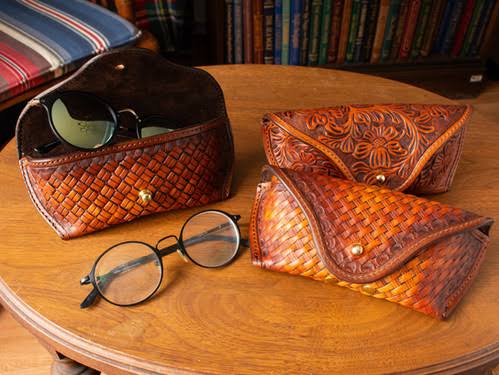
A Cross-Textural Conversation: The Tactile Collision of Leather Bags, Tweed Clothing, and Wood-Frame Eyewear
Introduction: When Materials Become the Main CharacterFashion is often discussed in terms of color, silhouette, trend, and season. Yet some of the...
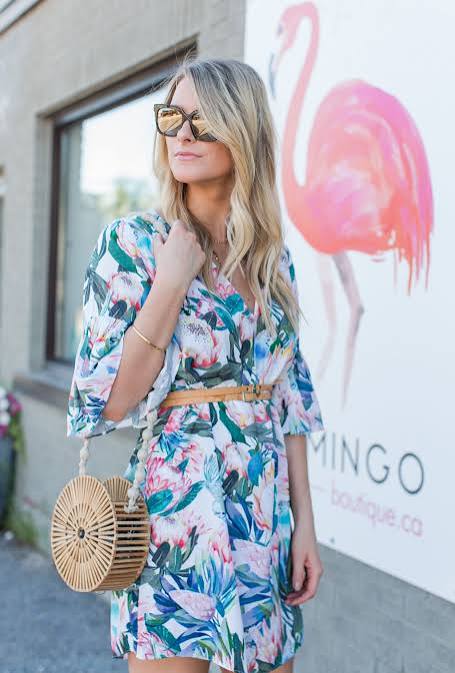
The Ultimate Guide to Vacation-Style Outfits: Floral Dresses, Straw Bags, and Round Sunglasses for Summer
Summer is the season of relaxed mornings, warm afternoons, outdoor dinners, weekend getaways, and long-awaited vacations. It is also the perfect time...
The Romance of Earth Tones in Fall: The Color Aesthetics of Trench Coats, Saddle Bags, and Tea-Tinted Sunglasses
Introduction: Falling in Love With the Colors of AutumnThere is something irresistibly romantic about autumn fashion.As summer fades, bright colors gradually give...