
Micron-Level Locking: How Black-Tech Clip Systems Keep Optical Centers from Ever Shifting
In precision eyewear manufacturing, one truth separates premium performance from mediocre optics:
If the optical center moves—even slightly—the visual experience degrades.
Blur creeps in.
Eye strain increases.
Progressive corridors misalign.
Peripheral distortion becomes noticeable.
Yet most consumers never think about what physically keeps their lenses locked in place.
Behind the scenes, advanced eyewear brands are turning to micron-level locking clip systems—often called “black-tech” fastening structures—to ensure that the optical center of a lens remains permanently aligned, even under thermal stress, impact, vibration, or long-term daily wear.
This article explores:
- Why optical center stability matters
- How lens displacement occurs
- The mechanical limitations of traditional frame systems
- The engineering principles behind micro-lock clip technology
- Real-world durability advantages
- Why this innovation is reshaping high-precision eyewear
If you care about clarity, comfort, and long-term visual performance, this is the engineering story you’ve never heard—but absolutely benefit from.
What Is the Optical Center—and Why Is It So Critical?
The optical center (OC) of a lens is the precise point where light passes without prismatic deviation. In prescription lenses, this point must align exactly with the wearer’s pupillary center.
Even a shift of 0.5 mm can introduce:
- Induced prism
- Headaches
- Distorted depth perception
- Progressive lens corridor misalignment
- Uneven visual zones
In high-prescription or progressive lenses, precision tolerances are often measured in microns.
For reference:
1 millimeter = 1,000 microns.
Modern lens surfacing equipment—such as systems from EssilorLuxottica—operates at micron-level precision. But if the frame fails to hold that lens securely, that precision is compromised.
Manufacturing accuracy means nothing without structural stability.
How Lens Displacement Happens in Traditional Frames
Most people assume lenses are permanently fixed once mounted. In reality, several forces constantly act on eyewear:
1. Thermal Expansion
Plastic frames expand and contract with temperature shifts.
2. Daily Handling
Putting glasses on and off twists the frame front.
3. Impact
Accidental drops cause micro-shifts.
4. Long-Term Stress Fatigue
Repeated flexing gradually loosens lens grooves.
5. Screw Loosening
In full-rim metal frames, rim screws can loosen over time.
In traditional mounting systems:
- Friction holds the lens in the groove
- Pressure compression keeps it seated
- Sometimes adhesives are used
But friction and compression are not permanent locking mechanisms.
Over time, tiny movements occur—often invisible to the eye but measurable in optical deviation.
The Micron-Level Locking Concept
Micron-level locking refers to mechanical fastening structures engineered to prevent any lateral or vertical lens movement beyond micro-scale tolerances.
Instead of relying solely on pressure fit, advanced clip systems use:
- Micro-interlocking ridges
- Precision-milled retention cavities
- Dual-axis compression channels
- Elastic memory materials
- Self-adjusting tension distribution
These systems physically prevent lens shift rather than merely resisting it.
It’s the difference between friction and mechanical interlock.
What Makes It “Black-Tech”?
“Black-tech” in this context refers to:
- Proprietary, high-precision engineering
- Hidden structural elements invisible from the exterior
- Advanced materials science
- Manufacturing techniques borrowed from aerospace and micro-mechanics
The locking structures are often embedded inside the rim channel or hinge architecture.
From the outside, the frame looks clean and minimal.
Inside, it’s engineered like a micro-machine.
Engineering Breakdown: How the Clip System Works
Let’s analyze the mechanics.
1. Micro-Groove Engagement
Traditional frames use a smooth inner groove.
Black-tech systems incorporate micro-etched serrations that align with the lens edge bevel.
This creates:
- Multi-point contact
- Distributed load pressure
- Anti-rotation resistance
The lens doesn’t just sit inside the groove—it locks into it.
2. Dual-Layer Compression Channels
Advanced systems add a secondary tension ring or flexible compression layer.
When the lens is inserted:
- Primary channel grips the lens bevel
- Secondary micro-ring applies outward counterforce
- Stress is evenly distributed
This eliminates single-point pressure stress that causes warping.
3. Self-Adjusting Tension Memory
High-performance polymer blends—similar to materials used by sports eyewear innovators like Oakley—have elastic memory.
When the frame expands:
- It returns to original tension alignment
- The locking structure remains engaged
- Optical center position stays fixed
This prevents gradual loosening over time.
4. Anti-Torsion Stabilization
In metal or hybrid frames, black-tech clip systems integrate micro-bridges that prevent frame twisting from transferring torque to the lens seat.
That means:
Twisting the temples does not disturb lens alignment.
Why Optical Center Drift Is More Common Than You Think
Most wearers adapt to gradual misalignment.
They assume:
- Their prescription changed
- Their eyes are tired
- Screen use is the problem
In reality, micro-displacement of the lens can introduce subtle prism effects.
Especially in:
- Progressive lenses
- High-index lenses
- High astigmatism prescriptions
Even minor shifts alter optical geometry.
Premium surfacing technology from brands like ZEISS focuses on precision to micron levels. A poorly secured frame undermines that investment.
Impact Resistance: The Hidden Benefit
Micron-level locking systems also improve impact durability.
When glasses are dropped:
Traditional frames may allow the lens to shift within the groove.
Micro-lock systems:
- Absorb shock across distributed contact points
- Prevent edge chipping
- Reduce crack propagation
Because force is evenly transferred, structural integrity improves.
Thermal Stability Under Extreme Conditions
Heat is a major threat to lens stability.
Consider:
- Leaving glasses in a hot car
- Outdoor summer use
- Winter-to-indoor transitions
Standard acetate frames expand significantly.
Micro-lock systems account for thermal expansion coefficients.
By integrating flexible tension compensation layers, the lens remains centered despite dimensional changes.
Progressive Lenses Demand Absolute Stability
Progressive lenses contain:
- Distance zone
- Intermediate zone
- Near vision zone
- Transition corridor
These zones are digitally mapped.
If the lens shifts even slightly:
- The corridor no longer aligns with pupil tracking
- Users experience swim distortion
- Head tilting increases
Micron-level locking ensures the progressive corridor remains precisely positioned.
Manufacturing Precision: CNC and Laser Micro-Machining
Black-tech clip systems rely on:
- CNC precision milling
- Laser-guided bevel matching
- Tolerance control within ±10 microns
- Automated assembly calibration
This is a leap beyond traditional manual mounting.
Modern optical labs now integrate AI-driven verification to ensure lens seating accuracy before shipment.
Why This Matters for Custom and High-Index Lenses
High-index lenses are thinner—but also more rigid.
Rigid lenses are less forgiving to uneven compression.
Micron-level locking prevents:
- Edge stress fractures
- Micro-cracking
- Stress birefringence
This extends lens lifespan significantly.
Comparison: Traditional vs Micro-Lock Mounting
| Feature | Traditional Fit | Micron-Level Lock |
|---|---|---|
| Lens retention | Friction-based | Mechanical interlock |
| Optical center stability | Moderate | Permanent |
| Thermal tolerance | Limited | High |
| Impact resistance | Variable | Enhanced |
| Long-term alignment | May drift | Locked |
The difference is structural engineering, not cosmetic design.
Aesthetic Advantage: Invisible Stability
One of the most impressive aspects:
The locking mechanism is invisible.
There are:
- No visible clips
- No bulky retention pieces
- No external screws
Design remains minimalist.
Engineering remains hidden.
Longevity and Sustainability Benefits
Better lens retention means:
- Fewer remakes
- Less material waste
- Reduced warranty claims
- Longer product lifespan
For brands focused on durability and performance, structural stability reduces total lifecycle cost.
Why Cheap Frames Fail This Test
Budget frames often:
- Use shallow grooves
- Skip micro-bevel precision
- Lack thermal compensation design
- Rely on adhesive bonding
Adhesives degrade.
Friction weakens.
Mechanical interlock endures.
The Future: Smart Frames and Sensor Integration
As eyewear evolves to include:
- Blue light sensors
- Augmented overlays
- Health tracking modules
Structural precision becomes even more critical.
Any optical drift disrupts calibration.
Micron-level locking becomes foundational for next-generation smart optics.
What to Look for as a Consumer
While brands may not publicly advertise “micron-level locking,” you can look for:
- CNC precision frame construction
- Premium material blends
- Progressive lens compatibility claims
- High durability certifications
- Transparent manufacturing standards
Ask about structural retention systems—not just lens coatings.
The Bottom Line
Optical precision doesn’t end at the lens surface.
It continues into how that lens is mounted, stabilized, and protected inside the frame.
Micron-level locking clip systems represent a quiet revolution in eyewear engineering.
They ensure:
- The optical center never drifts
- Visual clarity remains consistent
- Progressive corridors stay aligned
- Structural integrity endures daily stress
In high-performance optics, stability is everything.
Because when light passes through a lens, even the smallest shift can change everything.
And in the world of precision vision, microns matter.
Share this post
Best Glasses for Your Face Shape: Round, Square, Oval & More
Introduction: The Right Glasses Can Transform Your Entire AppearanceChoosing a pair of glasses is about much more than simply correcting your vision....
From Head to Toe: The Golden Ratio for Styling Glasses, Clothing, and Bags
Introduction: The Secret to Looking Polished From Head to ToeGreat style is rarely about wearing the most expensive clothes, following every trend,...

Minimalist Style: How Glasses and Bags Add the Perfect Finishing Touch to Black, White, and Gray Outfits
Minimalist fashion is often described as simple, effortless, and timeless. But creating a truly polished minimalist outfit is not as easy as...

Effortless Style: The Perfect Chemistry of Oversized Sweatshirts, Crossbody Bags, and Vintage Metal-Frame Glasses
Introduction: Why Relaxed Style Feels So RightFashion does not always have to look carefully calculated.Sometimes, the most appealing outfit is the one...

The Symphony of Metallic Elements: The Art of Layering Belt Buckles, Chain Bags, and Metal Frames
Introduction: When Metal Becomes a Fashion LanguageFashion has always been a conversation between materials, shapes, and personal expression. Among all design elements,...
Eyeglasses as the Finishing Touch: How to Make Your Frames Blend Perfectly Into Your Everyday Outfits
Eyeglasses are more than a tool for clearer vision. Today, they are one of the most powerful accessories in a modern wardrobe....

Old Money Style Guide: How Cashmere Coats, Premium Leather Bags, and Classic Black Frame Glasses Create Timeless Elegance
Introduction: Understanding the True Meaning of Old Money FashionFashion trends come and go, but true elegance has always been about something deeper...

The Ultimate Style Rescue for Round-Faced Women: How Necklines, Bag Placement, and Geometric Glasses Create a Slimmer Look
Introduction: Redefining Beauty Beyond Face ShapeFor many women with round faces, getting dressed can sometimes feel like a constant battle. The cheeks...
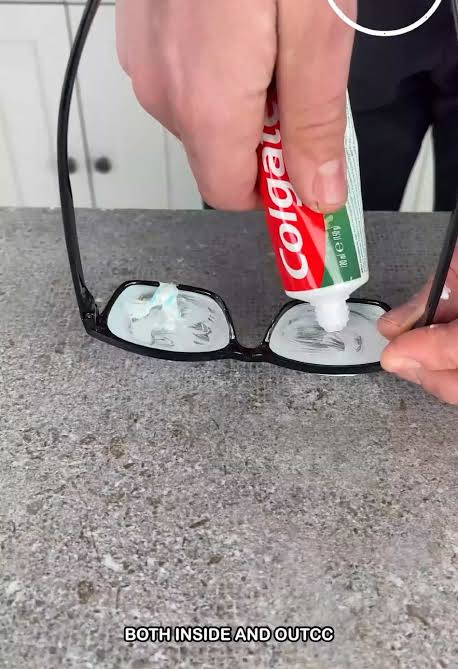
One Swipe, Crystal Clear: The Ultimate Guide to Efficient Eyeglass Cleaning
Introduction: Clear Vision Starts With Proper Lens CareFor millions of people around the world, eyeglasses are an essential part of daily life....

Eyeglasses as the Finishing Touch to Your Outfit: How Frame Shapes Can Elevate Your Style
Introduction: Eyeglasses as the Ultimate Fashion AccessoryWhen people think about fashion accessories, they often consider watches, jewelry, handbags, shoes, or clothing details....
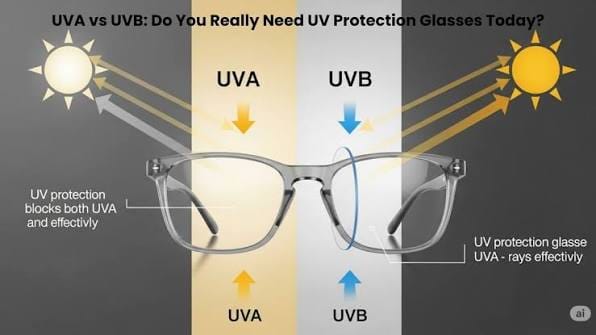
Blue Light Protection or UV Protection? Common Mistakes When Choosing Eye Protection Glasses
Introduction: Choosing the Right Eye Protection Is More Complicated Than It LooksEyeglasses have evolved far beyond simple vision correction tools. Today, consumers...
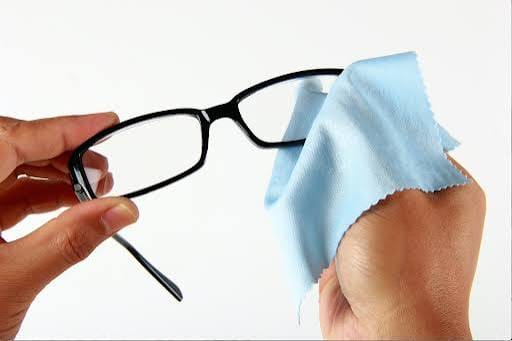
Care for Your Glasses Like You Care for Your Skin: The Complete Guide to Eyewear Maintenance
Introduction: Your Glasses Deserve More Than Just a Quick WipeMany people spend time and money caring for their skin every day.They choose...