
Can You Customize Glasses with High Myopia? The Truth About Lens Thickness and Frame Compatibility
If you have high myopia, you’ve probably heard at least one of these statements:
- “Your prescription is too strong for stylish frames.”
- “You’ll need thick lenses no matter what.”
- “Custom glasses won’t look good at that power.”
- “Stick with small, basic frames.”
For years, people with high prescriptions felt limited—boxed into narrow frame options, thick edges, and heavy lenses.
But here’s the truth:
High myopia does NOT mean you can’t enjoy customized eyewear.
With modern lens technology, high-index materials, precise frame selection, and smart optical design, even strong prescriptions can look sleek, balanced, and beautiful.
In this in-depth guide, we’ll break down:
- What qualifies as high myopia
- Why lenses get thick
- The science behind lens edge thickness
- Frame shapes that work best
- Materials that reduce weight and bulk
- Custom design strategies for high prescriptions
- Common myths (and what’s actually true)
If you’ve ever wondered whether custom glasses are realistic for strong prescriptions, this guide will give you clarity—literally and figuratively.
What Is Considered High Myopia?
Myopia (nearsightedness) occurs when distant objects appear blurry because light focuses in front of the retina.
In prescription terms:
- Mild myopia: -0.50 to -3.00
- Moderate myopia: -3.00 to -6.00
- High myopia: -6.00 and above
- Extreme myopia: -10.00 and beyond
People in the -6.00 to -12.00 range often worry most about lens thickness and frame limitations.
But understanding the physics helps remove unnecessary fear.
Why Do High Myopia Lenses Look Thick?
Myopia lenses are concave lenses.
That means:
- Thinner in the center
- Thicker at the edges
The stronger the prescription, the more curvature required to bend light properly.
More curvature = more edge thickness.
However, thickness depends on more than prescription alone.
Three main factors affect how thick your lenses appear:
- Prescription strength
- Lens material (index)
- Frame size and shape
Prescription is only one piece of the puzzle.
The Biggest Myth: “Strong Prescription = Ugly Glasses”
This myth persists because older lens technology had limitations.
Decades ago:
- Only standard plastic (CR-39) was widely available.
- High prescriptions produced visibly thick, heavy lenses.
- Frame choices were limited.
Today’s reality is completely different.
Modern advancements include:
- High-index 1.67 and 1.74 materials
- Aspheric lens designs
- Digital freeform surfacing
- Custom edge thinning
- Precision frame fitting
High myopia does not automatically mean bulky eyewear anymore.
Understanding Lens Index: The Thickness Game-Changer
Lens index refers to how efficiently the material bends light.
Higher index = bends light more effectively = requires less curvature = thinner lens.
Here’s a simplified comparison:
- Standard plastic (1.50 index): Thickest
- Polycarbonate (1.59 index): Thinner
- High-index 1.67: Significantly thinner
- High-index 1.74: Thinnest commonly available
For prescriptions above -6.00, high-index materials dramatically reduce edge thickness.
Example (approximate visual difference):
- -8.00 in 1.50 plastic: very thick edges
- -8.00 in 1.74 index: noticeably slimmer, lighter
Material choice matters as much as prescription strength.
Aspheric and Digital Lens Designs
Older spherical lenses create exaggerated curvature.
Modern aspheric lenses:
- Flatten the lens profile
- Reduce “bug-eye” magnification
- Improve cosmetic appearance
- Reduce peripheral distortion
Digital freeform technology customizes lens surfaces based on:
- Your prescription
- Frame shape
- Pupillary distance
- Wearing position
This reduces thickness and improves optical performance.
Customization here isn’t about fashion—it’s about precision optics.
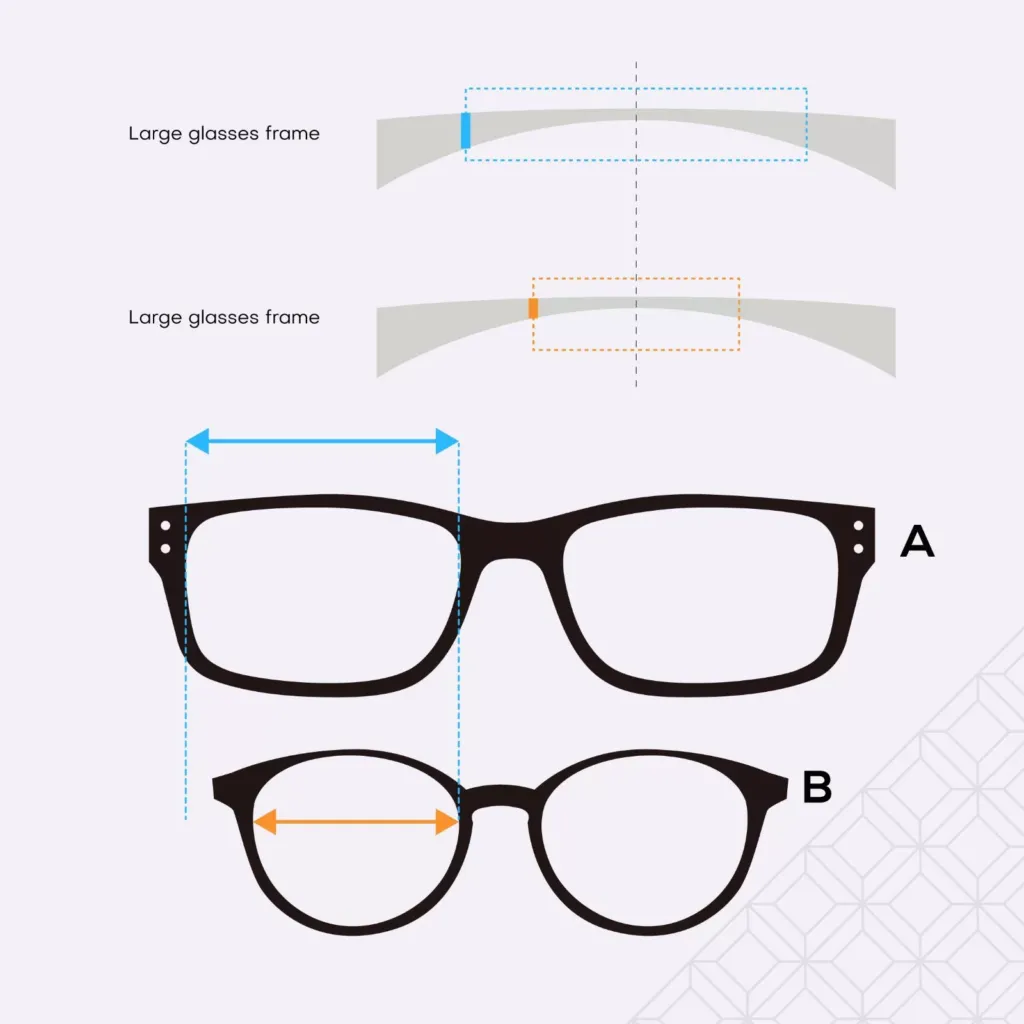
Frame Size: The Hidden Thickness Multiplier
Here’s the most overlooked factor:
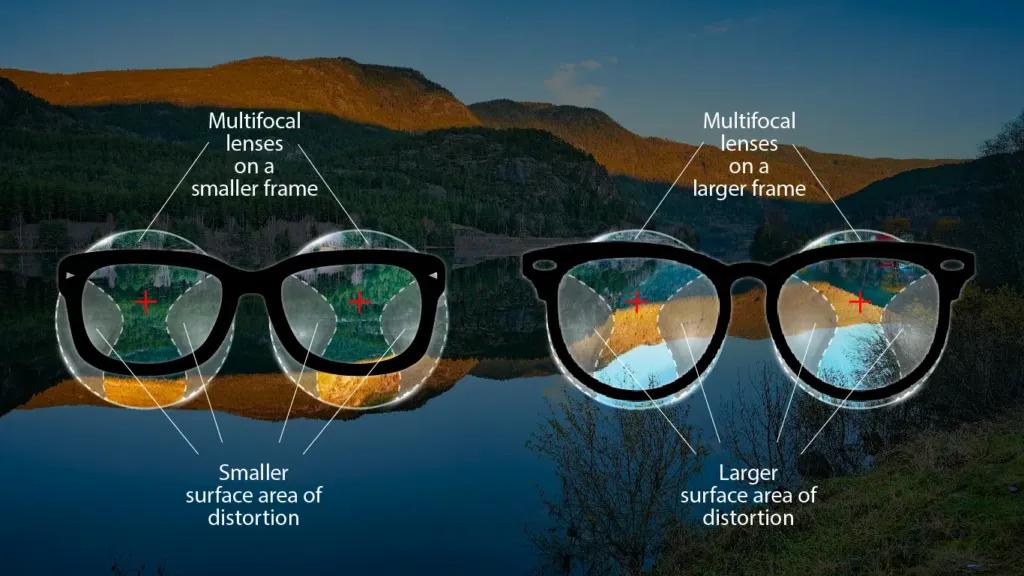
Large frames increase lens thickness.
Why?
Because lens thickness grows as you move away from the optical center.
A larger frame means:
- Larger lens diameter
- More material at the edges
- Thicker outer rim
For high myopia, oversized fashion frames can dramatically increase edge thickness.
That doesn’t mean you can’t wear stylish frames.
It means proportion matters.
The Best Frame Shapes for High Myopia
If you want thinner-looking lenses, choose frames that:
- Are smaller in diameter
- Have rounded or oval shapes
- Fit close to your pupillary distance
- Avoid excessive width
Why rounded shapes work:
A circle has the smallest perimeter for a given area.
Less edge distance = thinner edges.
Square or oversized frames increase corner thickness.
But again—customization allows flexibility.
You don’t have to sacrifice style completely. You just need intelligent design.
Frame Materials Matter Too
Certain frame materials help disguise or support thicker lenses.
Acetate (Thicker Plastic Frames)
Pros:
- Hides lens edge thickness
- Provides strong structure
- Stylish and bold
Best for:
- Higher prescriptions
- Those concerned about lens visibility
Metal Frames
Pros:
- Lightweight
- Minimalistic aesthetic
Cons:
- Exposes lens edges
- May highlight thickness
Hybrid Frames
- Plastic top with metal bottom
- Good balance of concealment and lightness
For high myopia, slightly thicker acetate frames often provide the most visually flattering result.
The “Edge Thickness Illusion” Explained
Even when lenses are physically thicker, visual perception can be managed.
Techniques include:
- Polished edge finishing
- Anti-reflective coating
- Frame color coordination
- Darker lens tints
- High-index clarity improvements
A matte black frame hides edge shadows better than clear frames.
Optical aesthetics is part science, part design.
Weight and Comfort: Another Common Concern
Thicker lenses used to mean heavy glasses.
Today’s high-index materials are lighter.
Additionally:
- Precision frame fitting reduces pressure points.
- Adjustable nose pads distribute weight evenly.
- Custom temple angles improve balance.
Many high-myopia wearers report modern custom glasses feel lighter than older, weaker-prescription pairs.
Customization Is Especially Valuable for High Myopia
Ironically, the stronger your prescription, the more beneficial customization becomes.
Custom options may include:
- Frame resizing
- Custom bridge width
- Personalized lens centering
- High-index selection
- Aspheric design upgrades
- Digital fitting measurements
The stronger the prescription, the more precision matters.
Mass-produced frames don’t account for your specific optical center or facial structure.
Customization reduces distortion and improves aesthetics.
Can You Wear Trendy Frames with High Myopia?
Yes—but intelligently.
If you love:
- Transparent frames
- Oversized styles
- Thin wire frames
You may need to compromise slightly in lens index or design.
Alternatively, choose:
- Moderately oversized styles
- Slightly thicker rims
- Strategic color choices
Modern lens thinning allows far more flexibility than most people realize.
The key is working with knowledgeable optical guidance—not guessing.
What About Ultra-High Prescriptions (-10.00 and Above)?
At very strong prescriptions, additional considerations apply:
- 1.74 index is often recommended.
- Smaller frames become more important.
- Edge polishing and AR coating are essential.
- Proper pupillary distance alignment is critical.
Even at -12.00, well-designed custom eyewear can look refined.
It won’t be identical to a -1.00 lens—but it can still be sleek and wearable.
The Truth About Rimless Frames
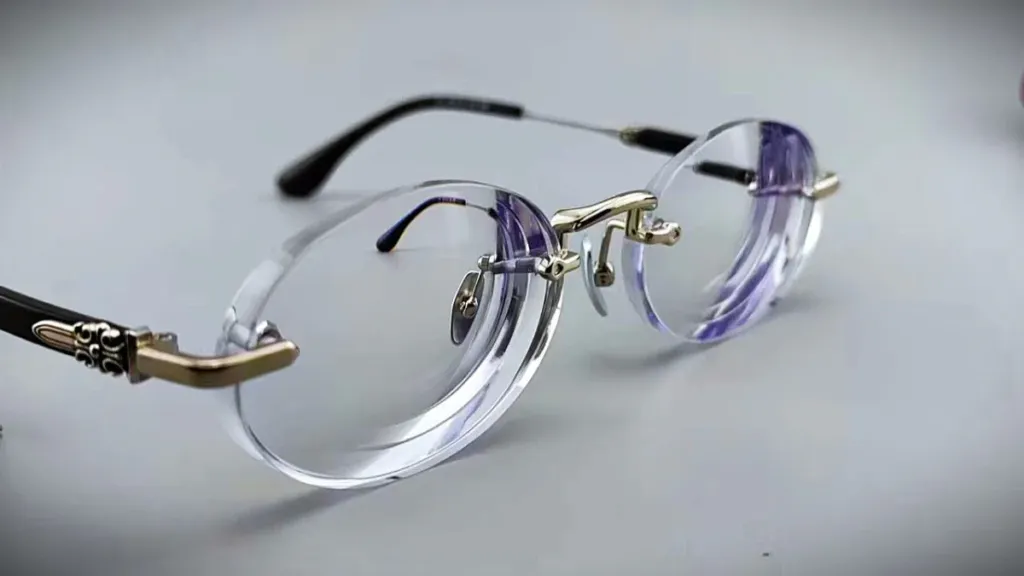
Rimless glasses expose the full lens edge.
For high myopia:
- Edge thickness becomes visible.
- Structural stress increases.
They are not impossible—but generally not ideal for very strong prescriptions.
Semi-rimless designs may offer better compromise.
Reducing “Minification” Effect
High minus lenses can make eyes appear slightly smaller.
Aspheric lens design helps reduce this effect.
Proper frame size also minimizes cosmetic distortion.
Customization improves facial balance.
Common Myths About High Myopia and Custom Glasses
Myth 1: High prescriptions must be heavy.
Modern high-index materials are lightweight.
Myth 2: Only small, boring frames work.
Proportion matters—but style is still flexible.
Myth 3: Customization is pointless.
For high myopia, customization often improves appearance and comfort dramatically.
Myth 4: All high-index lenses look the same.
Lens quality varies widely depending on manufacturing precision.
Psychological Confidence Matters Too
People with high myopia often feel self-conscious about thickness.
But most observers:
- Do not measure lens edge thickness.
- Focus on frame style.
- Notice confidence more than curvature.
Modern optical technology has reduced visible thickness far more than people realize.
The Future of High-Myopia Customization
Emerging innovations include:
- Ultra-thin lens materials beyond 1.74
- AI-driven facial mapping
- 3D-printed custom frame geometry
- Personalized optical simulations
- Sustainable lightweight materials
The gap between strong prescriptions and aesthetic design continues to shrink.
Final Verdict: Can Highly Myopic Wearers Enjoy Custom Glasses?
Absolutely.
High myopia is not a limitation—it’s a design parameter.
When you combine:
- High-index materials
- Aspheric digital lens design
- Smart frame sizing
- Proper material selection
- Personalized fitting
You can achieve:
- Thinner appearance
- Lightweight comfort
- Stylish versatility
- Optical precision
Customization is not just possible for high myopia.
In many cases, it’s the smartest choice.
Because when your prescription is strong, precision matters more—not less.
And with today’s technology, even highly myopic wearers can enjoy glasses that are refined, balanced, and beautifully designed.
Your prescription doesn’t define your style.
Smart customization does.
Share this post




Mira Metallic Silver Cat Eye Base Frame


Soline Classic Gold Base Frame – Wide Rectangle


Living a Multifaceted Life: How Custom Modular Eyewear Defines Your Personal Identity
Yet for years, eyewear has tried to force all these identities into one fixed frame.In a world where people change roles, moods,...
Are Pink Glasses in Style?
Pink glasses are a timeless symbol of charm and personality. They evoke feelings of compassion, love, and hope, making them a popular...
One-Second Color Switch
How to Match Your Glasses Frame to Today’s Outfit—EffortlesslyLet’s be honest.You don’t wear the same outfit every day.Some days it’s clean and...
Nerd Glasses: Choosing the Best Pair to Match Your Style
Nerd glasses have evolved from being a stereotype to a trendy fashion statement. With their unique designs and bold frames, these glasses...
How to Measure Pupillary Distance(PD)?
What Is Pupillary Distance(PD)?Pupillary Distance (PD) is the measurement, in millimeters, between the centers of your two pupils. This measurement is essential...
The Ultimate Value Champion - How One Pair of Modular Glasses Can Handle Work, Workouts, and Dates
Real value is about buying smarter.We expect one smartphone to replace a camera, a GPS, a notebook, and a wallet.We expect one...