



Ultrasonic Cleaners: Savior or Silent Killer for Custom Eyewear? A Professional Guide to Safe Cleaning and Costly Mistakes
Custom eyewear has evolved far beyond simple vision correction. Today’s prescription glasses often feature precision-engineered lenses, specialized coatings, lightweight materials, and carefully adjusted frames tailored to individual facial structure and lifestyle needs. Whether it’s high-index lenses, blue-light filtering coatings, progressive designs, or luxury acetate frames, modern eyewear represents a significant investment.
As eyewear becomes more advanced—and more expensive—people naturally look for better ways to maintain it. One device that has gained enormous popularity in recent years is the ultrasonic cleaner. Marketed as a professional-grade cleaning solution once reserved for optical labs and jewelry stores, ultrasonic cleaning machines are now widely available for home use.
But this raises an important question:
Are ultrasonic cleaners truly the ultimate maintenance tool for custom glasses, or can they quietly damage the very features you paid for?
This comprehensive guide explores how ultrasonic cleaners work, their real benefits, hidden risks, professional usage standards, and expert recommendations to help you avoid costly mistakes.
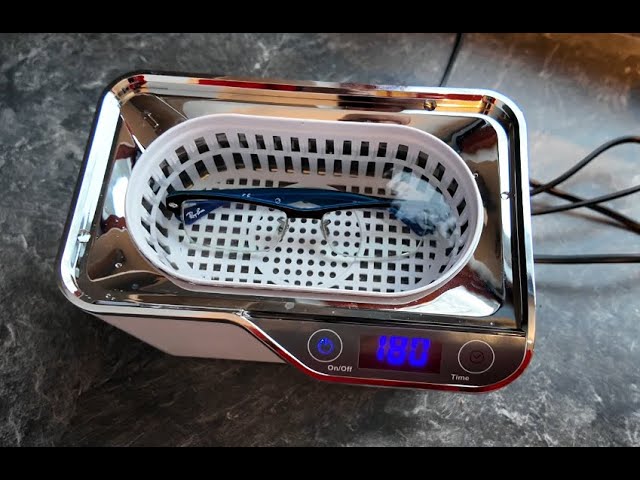
Why Cleaning Custom Eyewear Is More Complicated Than It Looks
At first glance, cleaning glasses seems simple: wipe lenses, remove smudges, and move on. However, modern eyewear construction makes cleaning far more delicate than many people realize.
Today’s custom glasses may include:
- multi-layer anti-reflective coatings
- hydrophobic and oleophobic layers
- blue-light filtering technology
- photochromic treatments
- scratch-resistant coatings
- ultra-thin high-index materials
Each of these layers reacts differently to heat, pressure, and chemicals.
Improper cleaning doesn’t just leave streaks—it can permanently damage coatings or weaken frame components.
Common problems caused by incorrect cleaning include:
- peeling lens coatings
- cloudy lens surfaces
- loosened screws
- warped plastic frames
- reduced lens clarity
This complexity is why professional optical shops rely on specialized cleaning methods, including ultrasonic technology.
What Is an Ultrasonic Cleaner?
An ultrasonic cleaner is a device that uses high-frequency sound waves transmitted through liquid to remove contaminants from objects.
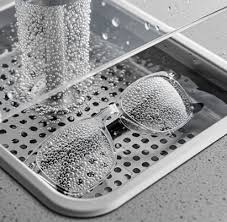
Unlike scrubbing or wiping, ultrasonic cleaning relies on a physical phenomenon called cavitation.
How Cavitation Works
Inside the cleaning tank:
- The machine generates ultrasonic sound waves (typically 35–45 kHz).
- These waves create millions of microscopic bubbles in the liquid.
- The bubbles rapidly form and collapse.
- The collapse releases tiny bursts of energy that dislodge dirt.
This process reaches areas traditional cleaning cannot, such as:
- hinge gaps
- nose pad mounts
- screw threads
- frame grooves
- microscopic lens surface irregularities
Because the bubbles are extremely small, cleaning happens evenly across the entire surface.
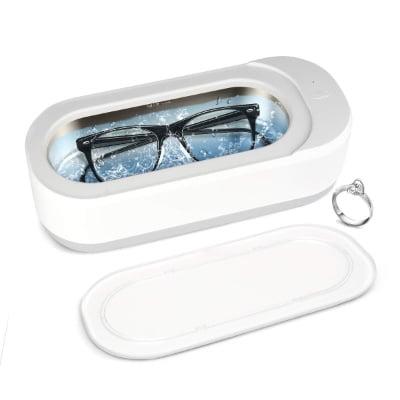
Why Optical Shops Use Ultrasonic Cleaners
Professional opticians frequently use ultrasonic cleaners for several reasons.
Deep Cleaning Precision
Eyewear accumulates oils from skin, cosmetics, sunscreen, and environmental pollution. Ultrasonic cleaning removes buildup that microfiber cloths cannot reach.
Efficiency
A cleaning cycle typically takes only 2–5 minutes, allowing optical stores to clean multiple frames quickly.
Non-Abrasive Cleaning
Unlike brushing or wiping, ultrasonic cleaning does not rely on friction, reducing the risk of scratches when used correctly.
Hygiene Benefits
Ultrasonic cleaning can remove bacteria and debris from areas difficult to sanitize manually.
Because of these advantages, many consumers assume ultrasonic cleaners are universally safe for all glasses—but that assumption can lead to problems.
The Biggest Myth: “If Optical Stores Use It, It Must Be Safe”
Here’s the critical detail most advertisements omit:
Professionals do not use ultrasonic cleaners the same way consumers do.
Optical technicians control several variables carefully:
- cleaning duration
- solution type
- water temperature
- frequency settings
- frame material compatibility
At home, these factors are often overlooked, increasing the risk of damage.
When Ultrasonic Cleaners Help Custom Eyewear
Used correctly, ultrasonic cleaners can be extremely beneficial.
1. Removing Hidden Oil Buildup
Skin oils accumulate near hinges and nose pads. Over time, this buildup causes unpleasant odors and discoloration.
Ultrasonic cleaning removes residue without disassembling the frame.
2. Restoring Frame Appearance
Metal frames and sturdy acetate frames often look noticeably refreshed after cleaning.
Fine debris trapped in crevices disappears quickly.
3. Preparing Glasses for Adjustment
Opticians often clean glasses ultrasonically before tightening screws or reshaping frames, ensuring no debris interferes with adjustments.
4. Cleaning Accessories
Ultrasonic machines work especially well for:
- metal nose pads
- detachable frame parts
- eyeglass chains
- tools and small accessories
When Ultrasonic Cleaning Becomes Dangerous
This is where many users encounter trouble.
Ultrasonic cleaners are powerful—and modern lenses are delicate.
Risk #1: Coating Delamination
Anti-reflective coatings consist of extremely thin bonded layers.
Excessive ultrasonic exposure can weaken adhesion, leading to:
- rainbow-like patches
- cloudy appearance
- peeling edges
Damage may not appear immediately but can develop weeks later.
Risk #2: Heat Amplification
Some machines heat the cleaning solution.
Warm liquid combined with ultrasonic vibration can stress lens coatings and plastic materials.
High-index lenses are particularly sensitive.
Risk #3: Frame Material Damage
Not all frame materials tolerate ultrasonic vibration equally.
Higher-risk materials include:
- horn or wood frames
- glued components
- low-quality acetate
- painted finishes
- mixed-material frames
Adhesives may weaken under repeated vibration.
Risk #4: Loose Stones or Decorative Elements
Fashion eyewear with decorative pieces may lose embedded components during cleaning cycles.
Risk #5: Overcleaning
Many users run multiple cycles assuming cleaner equals better.
In reality, excessive exposure increases long-term wear.
Eyewear Types That Should Avoid Ultrasonic Cleaning
Professionals often avoid ultrasonic cleaning for certain glasses.
Use caution or avoid entirely with:
- rimless or semi-rimless glasses
- lenses with visible coating wear
- vintage frames
- hand-painted frames
- cracked lenses
- recently repaired eyewear
If unsure, manual cleaning is safer.
Safe Ultrasonic Cleaning Guidelines (Professional-Level Advice)
If you decide to use an ultrasonic cleaner at home, following professional practices dramatically reduces risk.
Use Mild Cleaning Solutions Only
Avoid:
- alcohol-based cleaners
- ammonia
- strong detergents
Use optical-safe or neutral pH solutions.
Limit Cleaning Time
Recommended duration:
2–3 minutes maximum per cycle
Longer sessions rarely improve results.
Avoid High Heat
Room-temperature water is safest.
Heated modes should generally remain off for eyewear.
Rinse Immediately After Cleaning
Residual solution can leave film or damage coatings over time.
Rinse glasses with clean water after each cycle.
Air Dry or Use Microfiber Only
Never use paper towels or rough fabrics after cleaning.
Ultrasonic Cleaner vs Traditional Eyeglass Cleaning
Each method has advantages.
Microfiber Cleaning
Best for daily maintenance and smudge removal.
Spray Cleaners
Effective for oils and fingerprints.
Ultrasonic Cleaning
Best for periodic deep cleaning rather than daily use.
Think of ultrasonic cleaning like dental scaling—it’s helpful occasionally, not every day.
How Often Should You Use an Ultrasonic Cleaner?
Professional recommendation:
- heavy users: once every 2–4 weeks
- average users: once every 1–2 months
- sensitive lenses: only when necessary
Frequent ultrasonic cleaning provides diminishing returns.
Warning Signs Your Glasses Are Being Damaged
Stop ultrasonic cleaning immediately if you notice:
- hazy lens appearance
- rainbow reflections
- peeling near edges
- unusual glare
- frame looseness
Consult an optician before further cleaning.
Choosing a Safe Ultrasonic Cleaner for Eyewear
If purchasing a machine, look for features designed for delicate items.
Adjustable Timer
Short cycles prevent accidental overexposure.
Moderate Frequency Range
Around 40 kHz is generally safer for eyewear.
Non-Heated Mode
Temperature control reduces risk.
Stainless Steel Tank with Basket
A basket prevents direct vibration contact with the tank bottom.
Stable Power Output
Consistent vibration reduces uneven stress.
Professional Insight: Why Opticians Still Prefer Manual Inspection
Even though ultrasonic cleaners are widely used, professional opticians still rely heavily on manual cleaning and inspection.
Why?
Because technicians examine glasses before cleaning to identify vulnerabilities—something machines cannot do.
A tiny crack invisible to the owner may determine whether ultrasonic cleaning is safe.
This human judgment is the biggest difference between professional and home use.
The Future of Eyewear Cleaning Technology
Cleaning technology continues evolving alongside eyewear materials.
Emerging innovations include:
- lower-intensity ultrasonic systems
- hybrid UV and ultrasonic sanitation
- coating-safe cleaning solutions
- smart sensors detecting fragile materials
As lens technology advances, cleaning methods will likely become more specialized and automated.
Final Verdict: Savior or Killer?
So, is an ultrasonic cleaner a hero or a hazard for custom eyewear?
The answer lies in how it is used.
It Can Be a Savior When:
- used occasionally
- operated with mild solutions
- applied to compatible frames
- limited to short cleaning cycles
It Can Become a Killer When:
- used too frequently
- combined with heat or harsh chemicals
- applied to delicate coatings or fragile frames
- operated without understanding material limits
Ultrasonic cleaners are powerful tools—not universal solutions.
Key Takeaways
- Ultrasonic cleaning uses microscopic bubbles to remove hidden debris.
- Professional optical shops control cleaning conditions carefully.
- Improper home use can damage coatings and frame materials.
- Short, infrequent cleaning cycles are safest.
- Manual cleaning remains essential for daily maintenance.
Custom eyewear is an investment in comfort, vision, and personal style. Maintaining it properly requires balancing convenience with caution.
An ultrasonic cleaner can absolutely extend the life and cleanliness of your glasses—but only when treated as a precision tool rather than a one-button miracle.
Used wisely, it’s a valuable addition to your care routine. Used carelessly, it may shorten the lifespan of the very eyewear you depend on every day.
Share this post



Living a Multifaceted Life: How Custom Modular Eyewear Defines Your Personal Identity
Yet for years, eyewear has tried to force all these identities into one fixed frame.In a world where people change roles, moods,...
The Secret Weapon for Sculpting Your Face: How to Customize Eyewear Based on Your Cheekbones and Brow Shape
When it comes to elevating your appearance, most people think about hairstyles, makeup, or wardrobe upgrades. But there’s one transformative accessory that...
How Mechanical Clip Systems Make Quick Temple Replacement Possible: The Future of Modular Eyewear Design
Eyewear has evolved far beyond simple vision correction. Today, glasses are fashion statements, performance tools, and everyday essentials that must adapt to...
Are Pink Glasses in Style?
Pink glasses are a timeless symbol of charm and personality. They evoke feelings of compassion, love, and hope, making them a popular...
One-Second Color Switch
How to Match Your Glasses Frame to Today’s Outfit—EffortlesslyLet’s be honest.You don’t wear the same outfit every day.Some days it’s clean and...
“Five O’Clock Headache”: Could Custom Eyewear Be the Cure for Your Daily Fatigue?
Around 4:30 p.m., your focus softens. By 5:00 p.m., there’s a dull pressure behind your eyes. Your temples tighten. The screen feels...