How 3D Printing Technology Is Transforming the Custom Eyewear Experience

The Future of 3D Printed Glasses and Personalized Vision

For decades, buying glasses followed the same routine.

You walked into a store.
You tried on frames from a wall.
You picked the “closest fit.”
You waited.

Even when brands called it “custom,” the truth was simple:

You were choosing from pre-made shapes designed for average faces.

But no face is average.

That’s where 3D printing custom eyewear is quietly rewriting the rules.

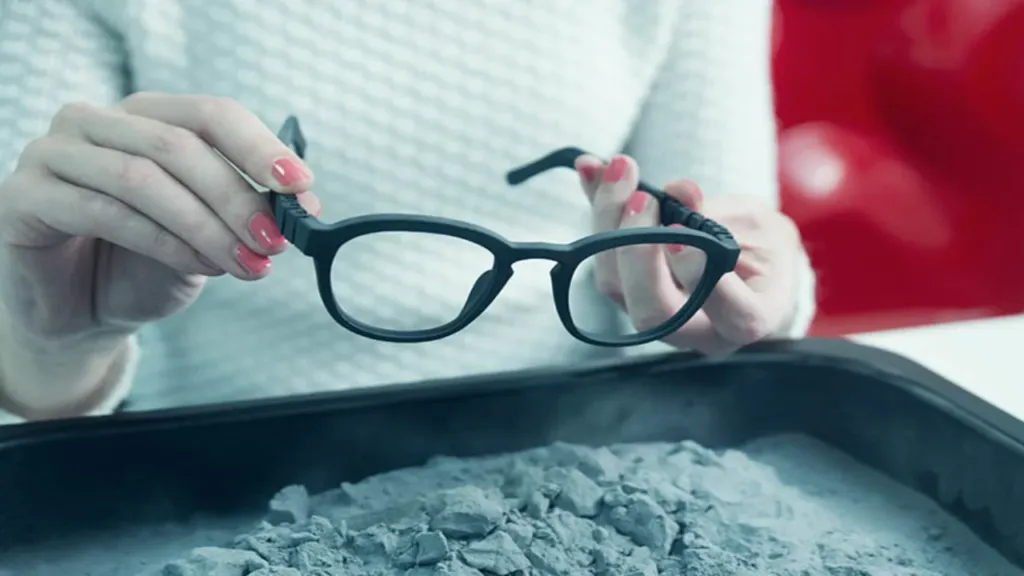
Today, 3D printed glasses are not just a novelty. They represent a fundamental shift in how eyeglass frames are designed, manufactured, and personalized.

This isn’t just about style.

It’s about precision. Comfort. Sustainability. And a completely new definition of what “custom” actually means.

The Problem With Traditional Eyeglass Manufacturing

To understand why 3D printed eyeglass frames matter, we have to understand how glasses have traditionally been made.

Most conventional frames are:

  • Injection-molded plastic
  • Cut from acetate sheets
  • Mass-produced in standard sizes

Even premium brands rely on batch manufacturing.

That creates limitations:

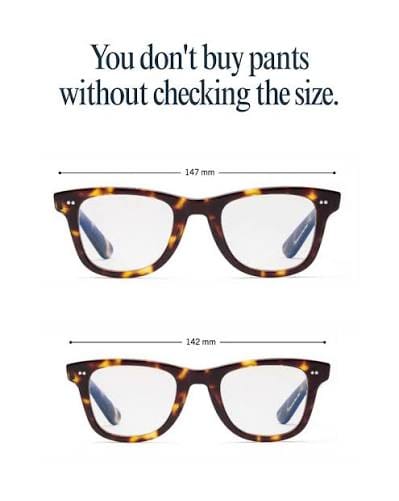
  • Limited size options
  • Standardized nose bridge shapes
  • Fixed temple lengths
  • Minimal structural flexibility

Even when you find a frame you love, you often compromise on:

  • Fit
  • Weight balance
  • Pressure points

Traditional eyewear design assumes one thing:

That customers should adapt to frames.

3D printing flips that idea.

Now, frames adapt to customers.


What Are 3D Printed Glasses?

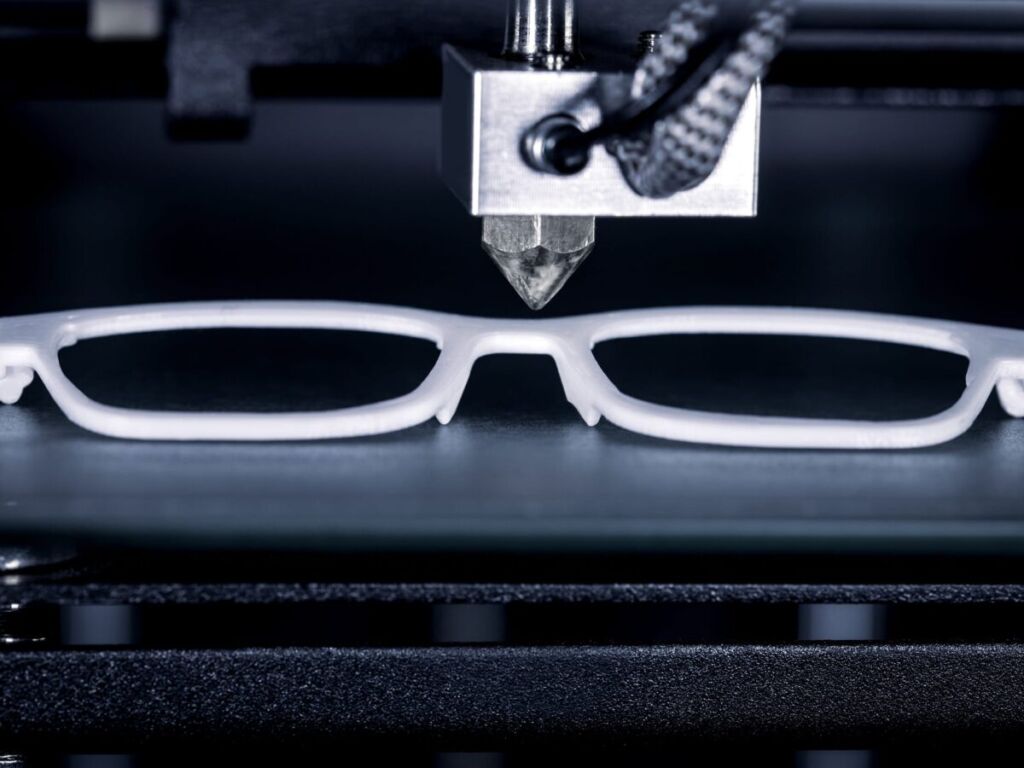
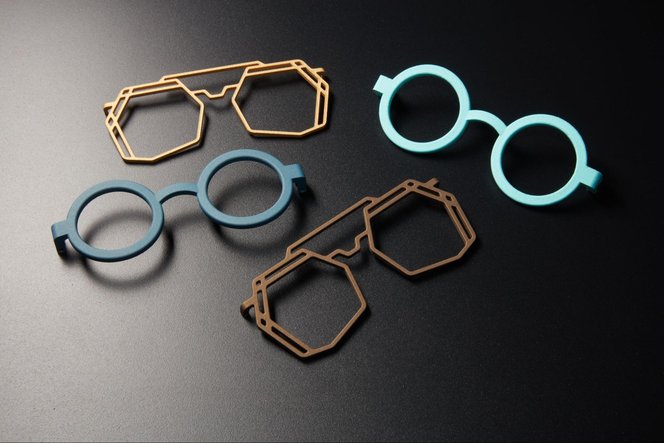
3D printed glasses are frames manufactured layer by layer using additive manufacturing technology.

Instead of carving or molding material into shape, 3D printers build frames from digital designs with extreme precision.

This allows for:

  • Complex geometries
  • Lightweight lattice structures
  • Exact measurement-based customization
  • On-demand production

The result? Custom 3D printed frames that are tailored to the individual, not the mass market.


How 3D Printing Custom Eyewear Works

The process behind 3D printing custom eyewear is surprisingly elegant.

Step 1: Facial Scanning or Measurement

Using 3D scanning technology or precise manual measurements, brands capture:

  • Pupillary distance (PD)
  • Nose bridge width
  • Temple length
  • Face width
  • Ear alignment

Some advanced systems even analyze facial symmetry.

Step 2: Digital Frame Design

Instead of selecting a pre-made size, the frame is digitally adjusted to match your unique facial structure.

Design software modifies:

  • Frame width
  • Bridge angle
  • Lens height
  • Temple curvature

All before printing begins.

Step 3: Additive Manufacturing

Using advanced materials like nylon polyamide or other lightweight polymers, the printer builds the frame layer by layer.

This method ensures:

  • Precision within fractions of a millimeter
  • Structural integrity
  • Consistent quality

Step 4: Finishing & Lens Integration

After printing, frames are:

  • Smoothed
  • Dyed or colored
  • Assembled with prescription lenses

The final product is fully personalized eyewear designed around you.


How 3D Printing Technology Is Transforming the Custom Eyewear Experience
The Future of 3D Printed Glasses and Personalized Vision

The Biggest Benefits of 3D Printed Glasses

Let’s break down why this matters.


1. True Personalization

Traditional “custom” glasses usually mean choosing color or lens type.

With 3D printed eyeglass frames, personalization includes:

  • Exact facial fit
  • Frame thickness adjustments
  • Lightweight optimization
  • Tailored proportions

For people with hard-to-fit features, this is revolutionary.


2. Superior Comfort

Ill-fitting glasses cause:

  • Headaches
  • Pressure marks
  • Sliding down the nose
  • Uneven weight distribution

3D printing eliminates many of these issues by:

  • Matching nose bridge geometry
  • Adjusting temple angle
  • Balancing weight precisely

Comfort improves dramatically when glasses are built for your anatomy.


3. Lightweight Structural Design

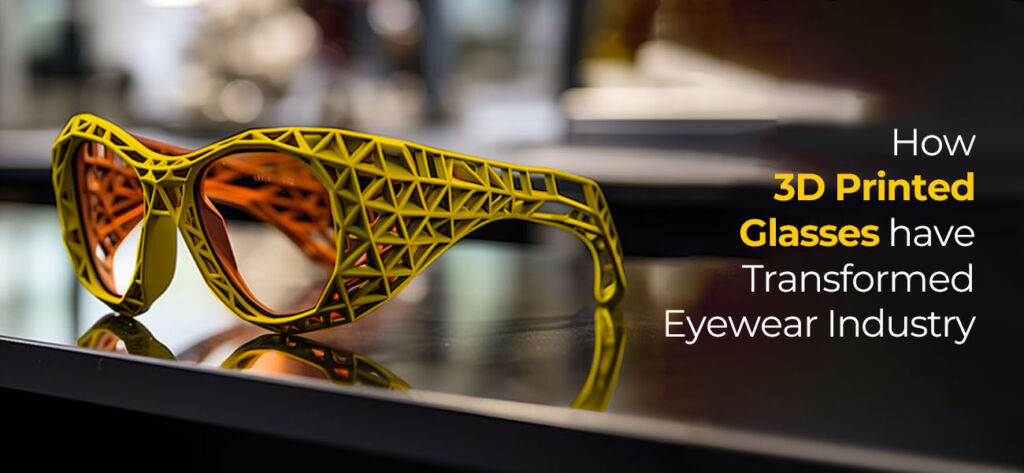
One of the most impressive advantages of 3D printed glasses is internal lattice construction.

This means frames can be:

  • Stronger
  • Lighter
  • More flexible

Without sacrificing durability.

Traditional frames are solid.
3D printed frames can be intelligently hollow.

That changes everything for all-day wear.


4. Faster Iteration & Innovation

Because designs are digital, brands can:

  • Update models instantly
  • Test new shapes quickly
  • Produce limited runs without tooling costs

This accelerates innovation in eyewear customization technology.

Instead of waiting months for new molds, changes can happen in days.


5. Sustainable Production

Additive manufacturing reduces waste.

Traditional manufacturing wastes excess material during cutting and shaping.

3D printing uses only what’s necessary.

Additionally:

  • On-demand production reduces inventory waste
  • Fewer unsold frames end up discarded
  • Localized production reduces shipping emissions

For eco-conscious consumers, 3D printed glasses offer a more sustainable option.


3D Printed Glasses vs Traditional Frames

Let’s compare them directly:

FeatureTraditional Frames3D Printed Frames
FitStandard sizesFully customized
ProductionMass manufacturingOn-demand
WasteHigherLower
Innovation speedSlowerFaster
Structural designSolidLattice & optimized

The difference is not incremental.

It’s structural.


How 3D Printing Improves the Custom Prescription Glasses Experience

Prescription glasses require precision.

Even small alignment issues can affect:

  • Visual clarity
  • Eye strain
  • Lens performance

With custom 3D printed frames:

  • Lens positioning can be optimized
  • Frame tilt can be calculated
  • Pupillary alignment can be enhanced

That creates better integration between frame and lens.

Vision improves—not just comfort.


The Emotional Impact of Personalized Eyewear

Customization isn’t only technical.

It’s emotional.

When customers receive custom 3D printed frames designed around their face, they feel:

  • Understood
  • Valued
  • Seen

In a world of mass production, personalization creates connection.

And connection builds loyalty.


Who Benefits Most From 3D Printed Custom Eyewear?

While anyone can enjoy personalized eyewear, certain groups benefit especially:

  • People with non-standard facial measurements
  • Those with high prescription lenses
  • Customers seeking ultra-light frames
  • Fashion-forward consumers wanting unique designs
  • Eco-conscious buyers

3D printing removes traditional design limitations.


The Role of AI and Digital Design in 3D Printed Glasses

The future of custom eyewear doesn’t stop at 3D printing.

AI-driven modeling can:

  • Analyze facial structure automatically
  • Recommend frame shapes
  • Predict pressure points
  • Optimize weight distribution

Combined with additive manufacturing, this creates an ecosystem of intelligent personalization.


Challenges of 3D Printing Custom Eyewear

No technology is perfect.

Current challenges include:

  • Higher upfront cost
  • Limited material color options in some systems
  • Consumer education barriers
  • Production scalability

However, as technology advances, costs continue to decrease.

What once felt experimental now feels inevitable.


The Future of 3D Printed Glasses

The future of custom eyewear will likely include:

  • At-home facial scanning apps
  • Same-day 3D printed frame production
  • Modular 3D printed frame components
  • Fully recyclable frame materials
  • Hyper-personalized aesthetic design

We are moving from standard sizing to biometric tailoring.

And that shift is permanent.

Why 3D Printing Represents the Future of Custom Eyewear

3D printing doesn’t just improve glasses.

It improves the entire experience of buying them.

It transforms:

  • Manufacturing
  • Personalization
  • Sustainability
  • Innovation speed
  • Customer satisfaction

For decades, consumers adapted to eyewear.

Now, eyewear adapts to consumers.

That’s not just technological progress.

It’s design progress.


Final Thoughts: More Than a Frame

At first glance, 3D printed glasses look like a manufacturing upgrade.

But in reality, they represent something bigger.

They represent:

  • Precision over compromise
  • Personalization over standardization
  • Efficiency over waste
  • Experience over transaction

As 3D printing custom eyewear continues to evolve, one thing is clear:

The future of personalized eyewear isn’t mass-produced.

It’s made for you.

Layer by layer.For decades, buying glasses followed the same routine.

You walked into a store.
You tried on frames from a wall.
You picked the “closest fit.”
You waited.

Even when brands called it “custom,” the truth was simple:

You were choosing from pre-made shapes designed for average faces.

But no face is average.

That’s where 3D printing custom eyewear is quietly rewriting the rules.

Today, 3D printed glasses are not just a novelty. They represent a fundamental shift in how eyeglass frames are designed, manufactured, and personalized.

This isn’t just about style.

It’s about precision. Comfort. Sustainability. And a completely new definition of what “custom” actually means.

The Problem With Traditional Eyeglass Manufacturing

To understand why 3D printed eyeglass frames matter, we have to understand how glasses have traditionally been made.

Most conventional frames are:

  • Injection-molded plastic
  • Cut from acetate sheets
  • Mass-produced in standard sizes

Even premium brands rely on batch manufacturing.

That creates limitations:

  • Limited size options
  • Standardized nose bridge shapes
  • Fixed temple lengths
  • Minimal structural flexibility

Even when you find a frame you love, you often compromise on:

  • Fit
  • Weight balance
  • Pressure points

Traditional eyewear design assumes one thing:

That customers should adapt to frames.

3D printing flips that idea.

Now, frames adapt to customers.


What Are 3D Printed Glasses?

3D printed glasses are frames manufactured layer by layer using additive manufacturing technology.

Instead of carving or molding material into shape, 3D printers build frames from digital designs with extreme precision.

This allows for:

  • Complex geometries
  • Lightweight lattice structures
  • Exact measurement-based customization
  • On-demand production

The result? Custom 3D printed frames that are tailored to the individual, not the mass market.


How 3D Printing Custom Eyewear Works

The process behind 3D printing custom eyewear is surprisingly elegant.

Step 1: Facial Scanning or Measurement

Using 3D scanning technology or precise manual measurements, brands capture:

  • Pupillary distance (PD)
  • Nose bridge width
  • Temple length
  • Face width
  • Ear alignment

Some advanced systems even analyze facial symmetry.

Step 2: Digital Frame Design

Instead of selecting a pre-made size, the frame is digitally adjusted to match your unique facial structure.

Design software modifies:

  • Frame width
  • Bridge angle
  • Lens height
  • Temple curvature

All before printing begins.

Step 3: Additive Manufacturing

Using advanced materials like nylon polyamide or other lightweight polymers, the printer builds the frame layer by layer.

This method ensures:

  • Precision within fractions of a millimeter
  • Structural integrity
  • Consistent quality

Step 4: Finishing & Lens Integration

After printing, frames are:

  • Smoothed
  • Dyed or colored
  • Assembled with prescription lenses

The final product is fully personalized eyewear designed around you.


The Biggest Benefits of 3D Printed Glasses

Let’s break down why this matters.


1. True Personalization

Traditional “custom” glasses usually mean choosing color or lens type.

With 3D printed eyeglass frames, personalization includes:

  • Exact facial fit
  • Frame thickness adjustments
  • Lightweight optimization
  • Tailored proportions

For people with hard-to-fit features, this is revolutionary.


2. Superior Comfort

Ill-fitting glasses cause:

  • Headaches
  • Pressure marks
  • Sliding down the nose
  • Uneven weight distribution

3D printing eliminates many of these issues by:

  • Matching nose bridge geometry
  • Adjusting temple angle
  • Balancing weight precisely

Comfort improves dramatically when glasses are built for your anatomy.


3. Lightweight Structural Design

One of the most impressive advantages of 3D printed glasses is internal lattice construction.

This means frames can be:

  • Stronger
  • Lighter
  • More flexible

Without sacrificing durability.

Traditional frames are solid.
3D printed frames can be intelligently hollow.

That changes everything for all-day wear.


4. Faster Iteration & Innovation

Because designs are digital, brands can:

  • Update models instantly
  • Test new shapes quickly
  • Produce limited runs without tooling costs

This accelerates innovation in eyewear customization technology.

Instead of waiting months for new molds, changes can happen in days.


5. Sustainable Production

Additive manufacturing reduces waste.

Traditional manufacturing wastes excess material during cutting and shaping.

3D printing uses only what’s necessary.

Additionally:

  • On-demand production reduces inventory waste
  • Fewer unsold frames end up discarded
  • Localized production reduces shipping emissions

For eco-conscious consumers, 3D printed glasses offer a more sustainable option.


3D Printed Glasses vs Traditional Frames

Let’s compare them directly:

FeatureTraditional Frames3D Printed Frames
FitStandard sizesFully customized
ProductionMass manufacturingOn-demand
WasteHigherLower
Innovation speedSlowerFaster
Structural designSolidLattice & optimized

The difference is not incremental.

It’s structural.


How 3D Printing Improves the Custom Prescription Glasses Experience

Prescription glasses require precision.

Even small alignment issues can affect:

  • Visual clarity
  • Eye strain
  • Lens performance

With custom 3D printed frames:

  • Lens positioning can be optimized
  • Frame tilt can be calculated
  • Pupillary alignment can be enhanced

That creates better integration between frame and lens.

Vision improves—not just comfort.


The Emotional Impact of Personalized Eyewear

Customization isn’t only technical.

It’s emotional.

When customers receive custom 3D printed frames designed around their face, they feel:

  • Understood
  • Valued
  • Seen

In a world of mass production, personalization creates connection.

And connection builds loyalty.


Who Benefits Most From 3D Printed Custom Eyewear?

While anyone can enjoy personalized eyewear, certain groups benefit especially:

  • People with non-standard facial measurements
  • Those with high prescription lenses
  • Customers seeking ultra-light frames
  • Fashion-forward consumers wanting unique designs
  • Eco-conscious buyers

3D printing removes traditional design limitations.


The Role of AI and Digital Design in 3D Printed Glasses

The future of custom eyewear doesn’t stop at 3D printing.

AI-driven modeling can:

  • Analyze facial structure automatically
  • Recommend frame shapes
  • Predict pressure points
  • Optimize weight distribution

Combined with additive manufacturing, this creates an ecosystem of intelligent personalization.


Challenges of 3D Printing Custom Eyewear

No technology is perfect.

Current challenges include:

  • Higher upfront cost
  • Limited material color options in some systems
  • Consumer education barriers
  • Production scalability

However, as technology advances, costs continue to decrease.

What once felt experimental now feels inevitable.


The Future of 3D Printed Glasses

The future of custom eyewear will likely include:

  • At-home facial scanning apps
  • Same-day 3D printed frame production
  • Modular 3D printed frame components
  • Fully recyclable frame materials
  • Hyper-personalized aesthetic design

We are moving from standard sizing to biometric tailoring.

And that shift is permanent.


Why 3D Printing Represents the Future of Custom Eyewear

3D printing doesn’t just improve glasses.

It improves the entire experience of buying them.

It transforms:

  • Manufacturing
  • Personalization
  • Sustainability
  • Innovation speed
  • Customer satisfaction

For decades, consumers adapted to eyewear.

Now, eyewear adapts to consumers.

That’s not just technological progress.

It’s design progress.


Final Thoughts: More Than a Frame

At first glance, 3D printed glasses look like a manufacturing upgrade.

But in reality, they represent something bigger.

They represent:

  • Precision over compromise
  • Personalization over standardization
  • Efficiency over waste
  • Experience over transaction

As 3D printing custom eyewear continues to evolve, one thing is clear:

The future of personalized eyewear isn’t mass-produced.

It’s made for you.

Layer by layer.For decades, buying glasses followed the same routine.

You walked into a store.
You tried on frames from a wall.
You picked the “closest fit.”
You waited.

Even when brands called it “custom,” the truth was simple:

You were choosing from pre-made shapes designed for average faces.

But no face is average.

That’s where 3D printing custom eyewear is quietly rewriting the rules.

Today, 3D printed glasses are not just a novelty. They represent a fundamental shift in how eyeglass frames are designed, manufactured, and personalized.

This isn’t just about style.

It’s about precision. Comfort. Sustainability. And a completely new definition of what “custom” actually means.


The Problem With Traditional Eyeglass Manufacturing

To understand why 3D printed eyeglass frames matter, we have to understand how glasses have traditionally been made.

Most conventional frames are:

  • Injection-molded plastic
  • Cut from acetate sheets
  • Mass-produced in standard sizes

Even premium brands rely on batch manufacturing.

That creates limitations:

  • Limited size options
  • Standardized nose bridge shapes
  • Fixed temple lengths
  • Minimal structural flexibility

Even when you find a frame you love, you often compromise on:

  • Fit
  • Weight balance
  • Pressure points

Traditional eyewear design assumes one thing:

That customers should adapt to frames.

3D printing flips that idea.

Now, frames adapt to customers.


What Are 3D Printed Glasses?

3D printed glasses are frames manufactured layer by layer using additive manufacturing technology.

Instead of carving or molding material into shape, 3D printers build frames from digital designs with extreme precision.

This allows for:

  • Complex geometries
  • Lightweight lattice structures
  • Exact measurement-based customization
  • On-demand production

The result? Custom 3D printed frames that are tailored to the individual, not the mass market.


How 3D Printing Custom Eyewear Works

The process behind 3D printing custom eyewear is surprisingly elegant.

Step 1: Facial Scanning or Measurement

Using 3D scanning technology or precise manual measurements, brands capture:

  • Pupillary distance (PD)
  • Nose bridge width
  • Temple length
  • Face width
  • Ear alignment

Some advanced systems even analyze facial symmetry.

Step 2: Digital Frame Design

Instead of selecting a pre-made size, the frame is digitally adjusted to match your unique facial structure.

Design software modifies:

  • Frame width
  • Bridge angle
  • Lens height
  • Temple curvature

All before printing begins.

Step 3: Additive Manufacturing

Using advanced materials like nylon polyamide or other lightweight polymers, the printer builds the frame layer by layer.

This method ensures:

  • Precision within fractions of a millimeter
  • Structural integrity
  • Consistent quality

Step 4: Finishing & Lens Integration

After printing, frames are:

  • Smoothed
  • Dyed or colored
  • Assembled with prescription lenses

The final product is fully personalized eyewear designed around you.


The Biggest Benefits of 3D Printed Glasses

Let’s break down why this matters.


1. True Personalization

Traditional “custom” glasses usually mean choosing color or lens type.

With 3D printed eyeglass frames, personalization includes:

  • Exact facial fit
  • Frame thickness adjustments
  • Lightweight optimization
  • Tailored proportions

For people with hard-to-fit features, this is revolutionary.


2. Superior Comfort

Ill-fitting glasses cause:

  • Headaches
  • Pressure marks
  • Sliding down the nose
  • Uneven weight distribution

3D printing eliminates many of these issues by:

  • Matching nose bridge geometry
  • Adjusting temple angle
  • Balancing weight precisely

Comfort improves dramatically when glasses are built for your anatomy.


3. Lightweight Structural Design

One of the most impressive advantages of 3D printed glasses is internal lattice construction.

This means frames can be:

  • Stronger
  • Lighter
  • More flexible

Without sacrificing durability.

Traditional frames are solid.
3D printed frames can be intelligently hollow.

That changes everything for all-day wear.


4. Faster Iteration & Innovation

Because designs are digital, brands can:

  • Update models instantly
  • Test new shapes quickly
  • Produce limited runs without tooling costs

This accelerates innovation in eyewear customization technology.

Instead of waiting months for new molds, changes can happen in days.


5. Sustainable Production

Additive manufacturing reduces waste.

Traditional manufacturing wastes excess material during cutting and shaping.

3D printing uses only what’s necessary.

Additionally:

  • On-demand production reduces inventory waste
  • Fewer unsold frames end up discarded
  • Localized production reduces shipping emissions

For eco-conscious consumers, 3D printed glasses offer a more sustainable option.


3D Printed Glasses vs Traditional Frames

Let’s compare them directly:

FeatureTraditional Frames3D Printed Frames
FitStandard sizesFully customized
ProductionMass manufacturingOn-demand
WasteHigherLower
Innovation speedSlowerFaster
Structural designSolidLattice & optimized

The difference is not incremental.

It’s structural.


How 3D Printing Improves the Custom Prescription Glasses Experience

Prescription glasses require precision.

Even small alignment issues can affect:

  • Visual clarity
  • Eye strain
  • Lens performance

With custom 3D printed frames:

  • Lens positioning can be optimized
  • Frame tilt can be calculated
  • Pupillary alignment can be enhanced

That creates better integration between frame and lens.

Vision improves—not just comfort.


The Emotional Impact of Personalized Eyewear

Customization isn’t only technical.

It’s emotional.

When customers receive custom 3D printed frames designed around their face, they feel:

  • Understood
  • Valued
  • Seen

In a world of mass production, personalization creates connection.

And connection builds loyalty.


Who Benefits Most From 3D Printed Custom Eyewear?

While anyone can enjoy personalized eyewear, certain groups benefit especially:

  • People with non-standard facial measurements
  • Those with high prescription lenses
  • Customers seeking ultra-light frames
  • Fashion-forward consumers wanting unique designs
  • Eco-conscious buyers

3D printing removes traditional design limitations.


The Role of AI and Digital Design in 3D Printed Glasses

The future of custom eyewear doesn’t stop at 3D printing.

AI-driven modeling can:

  • Analyze facial structure automatically
  • Recommend frame shapes
  • Predict pressure points
  • Optimize weight distribution

Combined with additive manufacturing, this creates an ecosystem of intelligent personalization.


Challenges of 3D Printing Custom Eyewear

No technology is perfect.

Current challenges include:

  • Higher upfront cost
  • Limited material color options in some systems
  • Consumer education barriers
  • Production scalability

However, as technology advances, costs continue to decrease.

What once felt experimental now feels inevitable.


The Future of 3D Printed Glasses

The future of custom eyewear will likely include:

  • At-home facial scanning apps
  • Same-day 3D printed frame production
  • Modular 3D printed frame components
  • Fully recyclable frame materials
  • Hyper-personalized aesthetic design

We are moving from standard sizing to biometric tailoring.

And that shift is permanent.


Why 3D Printing Represents the Future of Custom Eyewear

3D printing doesn’t just improve glasses.

It improves the entire experience of buying them.

It transforms:

  • Manufacturing
  • Personalization
  • Sustainability
  • Innovation speed
  • Customer satisfaction

For decades, consumers adapted to eyewear.

Now, eyewear adapts to consumers.

That’s not just technological progress.

It’s design progress.


Final Thoughts: More Than a Frame

At first glance, 3D printed glasses look like a manufacturing upgrade.

But in reality, they represent something bigger.

They represent:

  • Precision over compromise
  • Personalization over standardization
  • Efficiency over waste
  • Experience over transaction

As 3D printing custom eyewear continues to evolve, one thing is clear:

The future of personalized eyewear isn’t mass-produced.

It’s made for you.

Layer by layer.

Share this post


You May Also Like

RELATED Posts
6Mar

How Mechanical Snap-Fit Custom Eyeglasses End the Frustration of Losing Tiny Screws

For decades, the structure of eyeglasses has remained largely unchanged. Two lenses, a frame, hinges, and a pair of microscopic screws holding...

read more
9Feb

From Office Pro to Party Icon

10 Style Transformations You Can Master With Modular GlassesFor a long time, glasses were treated as a necessity.You picked one pair.You wore...

read more
24Mar

Do Titanium Eyeglass Frames Experience “Fatigue”? Three Key Ways to Extend the Lifespan of High-Strength Metal Frames

Titanium eyeglass frames have earned a reputation for being nearly indestructible. Lightweight yet strong, corrosion-resistant yet flexible, they are often marketed as...

read more
16Apr

In-Store Try-On vs. Cloud-Based Measurement: A Deep Dive Into the Experience Gap

The eyewear industry is undergoing a quiet but profound transformation. For decades, purchasing glasses meant visiting a physical store, trying on multiple...

read more
2Apr

Are Metal Frame Glasses Still in Style?

Metal frame glasses have maintained their popularity due to their sleek design, durability, and versatility. These eyeglasses, which come in a variety...

read more
20Apr

Glasses Keep Sliding Down Your Nose? 3 Easy At-Home Adjustments to Fix the Fit

There’s nothing more frustrating than constantly pushing your glasses back up your nose. Whether you’re working, driving, exercising, or simply relaxing, slipping...

read more
10Feb

A Minimalist’s Dream, Why One Pair of Custom Glasses Is All You Need When You Travel

Minimalism isn’t about owning less for the sake of it.It’s about owning better.For travelers, that idea becomes very real the moment you...

read more
10Jun

The Philosophy of Clear Vision: How to Make Your Eyeglasses Last Longer

Eyeglasses are often thought of as simple accessories—something we put on in the morning and take off before bed. But for millions...

read more
13Feb

Beyond the Optical Clone: Reclaiming Your Identity in the Era of Mass-Produced Eyewear

In the modern age of "Fast Fashion," we are living through a crisis of homogeneity. Walk into any coffee shop in Brooklyn,...

read more
14Feb

The "One and Done" Investment: Why Custom Eyewear Is Actually Cheaper Than the "Cheap" Alternative

In the world of personal finance, there is a concept known as the "Boots Theory" of socioeconomic unfairness. Coined by author Terry...

read more
27Feb

The Physics Behind the Click: Why Clip-Lock Glasses Outperform Magnetic Eyewear

In recent years, magnetic eyewear has gained popularity for its sleek design, easy lens swapping, and minimalist appeal. A quick snap, and...

read more
9May

What to Do When Your Glasses Screws Come Loose: The Complete Emergency Eyeglass Repair Kit Guide

Few everyday frustrations are as unexpectedly disruptive as a loose screw in your eyeglasses. One moment your glasses feel perfectly normal, and...

read more