



Digital Vision Calibration: How Custom Eyewear Frames Align Your Pupils with the Optical “Golden Position”
In today’s digital-first world, eyewear is no longer just a medical device or a fashion accessory—it has become a precision optical instrument. People spend hours shifting their gaze between laptops, smartphones, dashboards, and tablets. As visual demands increase, even small misalignments between your eyes and your lenses can lead to noticeable discomfort.
Many people assume that clearer vision depends only on lens prescriptions. But modern optical science tells a different story: where your pupils sit inside your lenses matters just as much as the prescription itself.
This is where digital vision calibration and custom eyewear frames enter the picture. By aligning your pupils with what optical professionals often call the optical golden position, customized frames transform how lenses perform—improving clarity, reducing strain, and enhancing long-term visual comfort.
This guide explores how digital calibration works, why traditional fitting methods fall short, and how personalized eyewear design ensures your eyes interact with lenses exactly as intended.
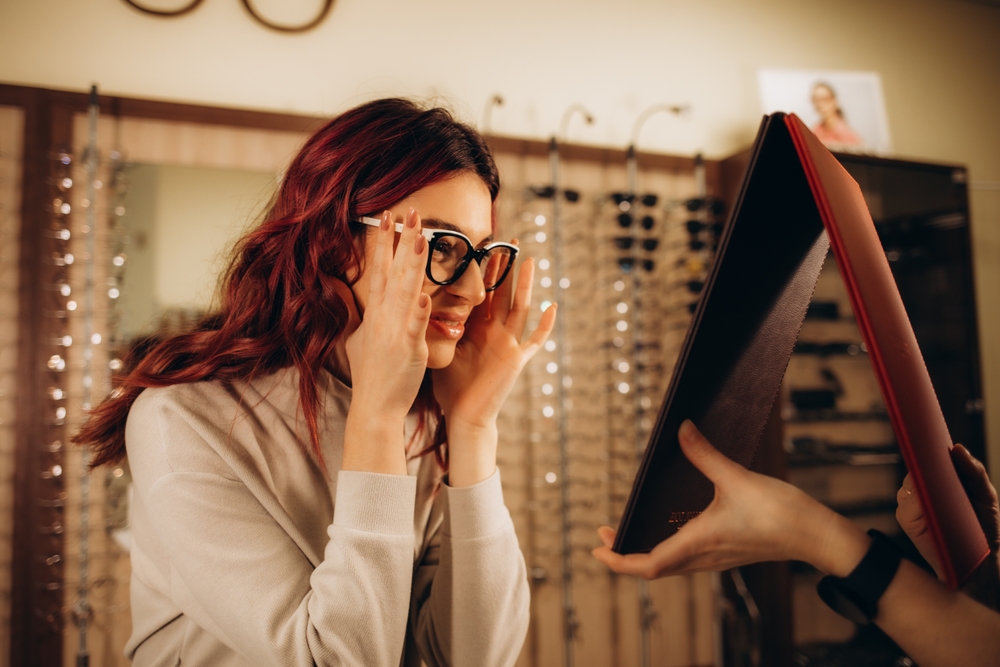
The Hidden Problem: Why Perfect Prescriptions Still Feel Imperfect
Have you ever experienced any of the following after getting new glasses?
- Eye fatigue after short screen sessions
- Slight dizziness when walking
- Difficulty adapting to progressive lenses
- Blurred edges despite sharp central vision
- Neck strain from adjusting head position
Many people assume these issues come from incorrect prescriptions. Surprisingly, prescriptions are often accurate—the problem lies in alignment.
Traditional glasses fitting typically assumes that:
- Frames sit symmetrically on every face
- Pupils are centered equally
- Head posture is consistent
- Lens distance from eyes is uniform
In reality, none of these assumptions are true.
Human faces are asymmetrical. Nose bridges vary. Ear heights differ. Even subtle posture habits change how lenses interact with your visual axis.
When lenses are not aligned precisely with your pupils, your eyes must constantly compensate. Over time, this creates visual stress similar to walking with slightly uneven shoes.
Understanding the Optical “Golden Position”
The optical golden position refers to the exact point where:
- The pupil aligns with the lens’s optimal optical center
- Light enters the eye with minimal distortion
- Peripheral aberrations are minimized
- Eye muscles remain relaxed during focus shifts
In simple terms, it is the sweet spot where lenses perform exactly as engineered.
Modern lenses—especially progressive, digital, and high-index designs—are mathematically optimized around this position. When your pupils fall outside it, even slightly, performance decreases.
Think of it like looking through a high-quality camera lens:
- Center alignment → sharp, natural image
- Off-axis viewing → distortion and blur
Your glasses function the same way.
Why Standard Frames Often Miss the Mark
Mass-produced frames are designed for averages. But averages rarely match individuals.
Several factors influence pupil alignment:
1. Pupillary Distance Variations
Pupillary distance (PD) measures the distance between pupils. However, many people have asymmetrical PD, meaning each eye sits at a slightly different distance from the nose bridge.
Standard fitting often averages these measurements, introducing subtle misalignment.
2. Frame Wrap Angle
The curvature of frames around the face changes how light enters lenses. Sports or fashion frames with strong wrap angles significantly alter optical geometry.
Without compensation, vision distortion increases toward the edges.
3. Pantoscopic Tilt
This refers to how much the frame tilts toward the cheeks.
A few degrees difference can shift focal zones in progressive lenses dramatically.
4. Vertex Distance
Vertex distance measures how far lenses sit from your eyes. Even a millimeter difference affects lens power perception.
Custom calibration accounts for this distance precisely.
The Rise of Digital Vision Calibration
Digital vision calibration uses advanced measurement systems to capture real-world wearing conditions instead of theoretical averages.
Modern optical systems may include:
- High-resolution facial scanning
- 3D head posture analysis
- Eye-tracking measurements
- Frame position mapping
- Dynamic gaze simulations
Rather than measuring eyes alone, these systems analyze how eyes, frames, and posture interact together.
The result is a personalized optical blueprint.
How Digital Measurement Actually Works
Let’s walk through the calibration process step by step.
Step 1: Natural Posture Capture
You stand or sit naturally while cameras record your habitual head position.
This matters because many people tilt their heads slightly forward when reading or using screens.
Step 2: Frame Mapping
The selected frame is analyzed on your face, measuring:
- Lens height relative to pupils
- Frame curvature
- Nose bridge positioning
- Ear alignment differences
Step 3: Monocular Pupil Measurement
Each eye is measured independently rather than averaged.
This ensures precise optical centering.
Step 4: Viewing Behavior Analysis
Some systems simulate:
- Reading distance
- Screen usage angles
- Walking gaze patterns
This allows lenses to be optimized for real-life behavior.
Custom Frames vs. Adjustable Frames: What’s the Difference?
Not all personalization is equal.
Adjustable Frames
- Minor nose pad adjustments
- Limited alignment correction
- Still based on standardized geometry
Custom Frames
- Designed around facial anatomy
- Built to hold lenses at exact angles
- Maintain alignment throughout daily wear
Custom frames act like a stable platform for optical precision.
Without stability, even perfectly calibrated lenses lose effectiveness.
The Science Behind Eye Comfort
When pupils align with the optical center:
- Light rays enter symmetrically
- Eye muscles relax
- Accommodation demand decreases
- Peripheral distortions reduce
This leads to measurable improvements:
- Faster visual adaptation
- Reduced headaches
- Improved depth perception
- Longer comfortable screen time
Your brain spends less energy correcting visual errors.
Why Progressive Lenses Benefit the Most
Progressive lenses contain multiple viewing zones blended seamlessly:
- Distance vision
- Intermediate (computer)
- Near reading
Each zone must align precisely with natural eye movement paths.
Even 1–2 mm misalignment can cause:
- “Swim” effect
- Narrow reading areas
- Difficulty finding focus zones
Digital calibration expands usable viewing areas because the lens design matches how you actually look through glasses.
Digital Device Usage Changed Everything
Historically, lenses were optimized for:
- Driving
- Reading books
- Occasional close work
Today’s visual behavior includes:
- Continuous screen switching
- Downward gaze angles
- Rapid focal changes
- Extended near vision tasks
Custom calibration considers modern digital habits, repositioning optical zones accordingly.
This is why digitally calibrated eyewear often feels dramatically different—even with the same prescription.
Facial Asymmetry: The Factor Nobody Talks About
Almost no human face is perfectly symmetrical.
Common variations include:
- One ear higher than the other
- Slight nose deviation
- Uneven cheekbone structure
- Different eye heights
Traditional glasses ignore these differences.
Custom fitting embraces them.
By compensating for asymmetry, lenses sit evenly relative to your eyes—even if frames appear slightly uneven when measured geometrically.
Optically, they are perfectly balanced.
The Role of Custom Frame Geometry
Custom frames allow precise control over:
- Lens tilt angles
- Optical center height
- Frame curvature
- Weight distribution
This ensures alignment remains consistent throughout the day.
Poorly fitted frames shift during movement, constantly changing optical alignment. Custom geometry minimizes this movement.
Digital Calibration and Eye Health
While glasses do not cure eye conditions, proper alignment can reduce strain linked to modern visual stress.
Benefits may include:
- Reduced digital eye fatigue
- Less squinting
- Improved blinking patterns
- Better posture habits
When vision feels effortless, users naturally maintain healthier viewing behavior.
Materials Matter: Why Frame Construction Affects Alignment
Frame materials influence stability.
Lightweight Titanium
- Maintains shape over time
- Resistant to deformation
- Ideal for precise calibration
Acetate
- Customizable fit
- Comfortable weight distribution
- Good long-term stability
Memory Metals
- Flexible but may shift alignment slightly
- Better for durability than precision
Custom eyewear balances comfort and structural integrity.
Real-Life Example: Office Worker vs. Designer
Two people share identical prescriptions.
Office Worker
- Mostly forward gaze
- Moderate screen distance
Graphic Designer
- Multiple monitors
- Frequent downward viewing
- Close detail work
Digital calibration creates different optical positioning for each user, even though prescriptions match.
Vision becomes task-optimized rather than generic.
Adaptation Time: Why Some Glasses Feel Instantly Better
When lenses align correctly:
- The brain recognizes familiar visual geometry
- Less neural adjustment is required
- Motion perception stabilizes faster
Many users report adaptation within hours instead of days.
Common Myths About Custom Eyewear
Myth 1: “Only strong prescriptions need customization.”
Even mild prescriptions benefit because alignment affects comfort more than power strength.
Myth 2: “Customization is only cosmetic.”
In reality, it is primarily optical engineering.
Myth 3: “All opticians already do this.”
Many still rely on manual measurements rather than digital calibration systems.
The Future of Personalized Vision
Emerging technologies are pushing customization further:
- AI-assisted fitting analysis
- Real-time gaze tracking
- Adaptive lens optimization
- Augmented reality measurement tools
Soon, eyewear may adjust design dynamically based on lifestyle data.
Digital calibration is the foundation of this evolution.
How to Know If You Need Digital Vision Calibration
You may benefit if you:
- Spend 6+ hours daily on screens
- Struggle adapting to new glasses
- Use progressive lenses
- Experience recurring eye fatigue
- Frequently adjust glasses position
Even small discomforts often signal alignment issues.
Questions to Ask Before Choosing Custom Frames
Consider asking:
- Are monocular PD measurements taken?
- Is frame tilt digitally measured?
- Is vertex distance included?
- Are lenses optimized for my daily tasks?
- Will the frame maintain calibration long-term?
These questions help ensure true personalization.

The Psychological Effect of Effortless Vision
When vision becomes seamless:
- Cognitive load decreases
- Focus improves
- Visual awareness feels natural
- Productivity often increases
People rarely notice perfect alignment—but they immediately notice its absence.
Cost vs. Value: Understanding the Investment
Custom eyewear typically costs more upfront because it involves:
- Advanced measurement technology
- Personalized lens calculations
- Precision manufacturing
- Specialized fitting expertise
However, many users replace glasses less frequently due to improved satisfaction.
Comfort often outweighs initial cost differences.
Maintenance Tips for Maintaining Optical Alignment
To preserve calibration:
- Avoid placing glasses lens-down
- Store in protective cases
- Schedule periodic adjustments
- Clean frames gently to prevent bending
- Replace worn nose pads
Even minor frame deformation can affect alignment.
The Optical Golden Position Explained Simply
Imagine headlights aligned perfectly on a road:
- Correct alignment → clear illumination
- Slight misalignment → glare and shadows
Your lenses work the same way.
Digital calibration ensures light reaches your eyes exactly as designers intended.
Why Custom Eyewear Represents the Next Era of Vision Care
Eyewear is transitioning from standardized products to personalized systems.
Just as shoes evolved from generic sizes to ergonomic designs, glasses are evolving toward anatomical precision.
Digital vision calibration bridges medical optics, ergonomics, and wearable technology.
It recognizes a simple truth:
Vision is personal, so eyewear should be too.
Final Thoughts: Precision Vision Starts with Alignment
Clear vision is no longer defined solely by prescription numbers. The relationship between your eyes, your lenses, and your frames determines how comfortably you see the world.
Custom frames combined with digital calibration place your pupils in the optical golden position—where lenses deliver their full potential.
The result is not just sharper sight, but smoother visual experiences throughout your day.
As digital lifestyles continue to reshape how we use our eyes, personalized optical alignment is becoming less of a luxury and more of a necessity.
The future of eyewear isn’t about stronger lenses.
It’s about smarter alignment.
And when your vision aligns perfectly with optical design, seeing clearly finally feels effortless.
Share this post




Living a Multifaceted Life: How Custom Modular Eyewear Defines Your Personal Identity
Yet for years, eyewear has tried to force all these identities into one fixed frame.In a world where people change roles, moods,...
The Secret Weapon for Sculpting Your Face: How to Customize Eyewear Based on Your Cheekbones and Brow Shape
When it comes to elevating your appearance, most people think about hairstyles, makeup, or wardrobe upgrades. But there’s one transformative accessory that...
How Mechanical Clip Systems Make Quick Temple Replacement Possible: The Future of Modular Eyewear Design
Eyewear has evolved far beyond simple vision correction. Today, glasses are fashion statements, performance tools, and everyday essentials that must adapt to...
Are Pink Glasses in Style?
Pink glasses are a timeless symbol of charm and personality. They evoke feelings of compassion, love, and hope, making them a popular...
One-Second Color Switch
How to Match Your Glasses Frame to Today’s Outfit—EffortlesslyLet’s be honest.You don’t wear the same outfit every day.Some days it’s clean and...
“Five O’Clock Headache”: Could Custom Eyewear Be the Cure for Your Daily Fatigue?
Around 4:30 p.m., your focus softens. By 5:00 p.m., there’s a dull pressure behind your eyes. Your temples tighten. The screen feels...