

Value & Pitfalls in Custom Eyewear: Why Prescription Glasses Cost Anywhere from $200 to $2,000
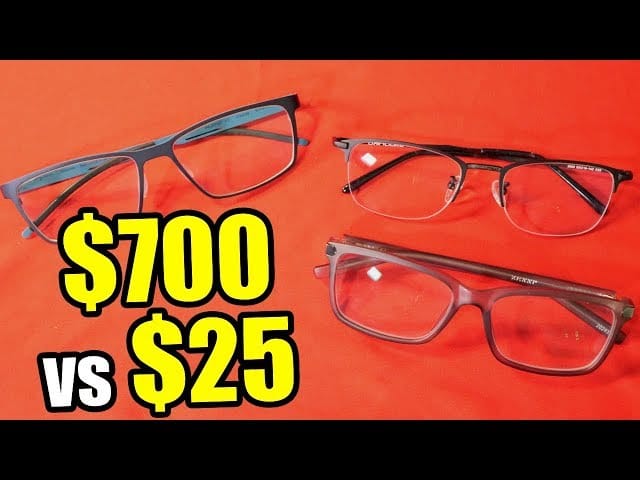
Walk into any eyewear store—or browse online—and you’ll quickly notice something confusing: prescription glasses can cost as little as $200 or soar past $2,000. At first glance, they may look surprisingly similar. Same basic shape. Same purpose. Same promise: clearer vision.
So what exactly are you paying for?
Is a $2,000 pair of custom glasses truly better, or are you just paying for branding? And on the flip side, is a $200 pair cutting corners that could affect your comfort or vision?
This guide breaks down the real pricing logic behind custom eyewear—from lenses and materials to craftsmanship and brand markup—so you can make an informed decision and avoid common (and costly) mistakes.
Understanding the Baseline: What Does “Custom Eyewear” Actually Mean?
Before diving into price differences, it’s important to define what “custom” really means in the eyewear world.
Custom eyewear can include:
- Prescription lenses tailored to your vision needs
- Frame adjustments based on face shape and fit
- Lens coatings (anti-reflective, blue light filtering, UV protection)
- Specialized lens designs (progressive, high-index, occupational)
- Personalized aesthetics (materials, colors, engraving)
Not all “custom” glasses are created equal. Some are minimally customized (basic prescription), while others are engineered down to microscopic precision.
The $200 Range: Entry-Level Custom Glasses
Let’s start at the lower end of the spectrum.
What You Typically Get
At around $200, you’re usually getting:
- Standard plastic lenses (CR-39)
- Basic single-vision prescription
- Limited frame materials (injection-molded plastic or basic metal)
- Minimal coatings (sometimes optional or lower quality)
- Mass-produced frames
These glasses are functional and accessible—but they’re built with cost efficiency in mind.
Where Costs Are Saved
- Lens technology: Basic optical design with less precision
- Materials: Lower-cost plastics and coatings
- Manufacturing: High-volume production
- Fit customization: Limited adjustments
Who It’s Best For
- Mild prescriptions
- Backup glasses
- Budget-conscious buyers
- Short-term use
The $500–$800 Range: Mid-Tier Value Zone
This is where many consumers find the “sweet spot.”
What Improves at This Level
- Higher-quality lenses (often digitally surfaced)
- Better anti-reflective coatings
- More durable frame materials (acetate, stainless steel)
- Improved comfort and fit
- Wider style selection
Why the Price Increases
You’re paying for:
- Better visual clarity
- Longer-lasting coatings
- More refined frame construction
- Moderate brand influence
Who It’s Best For
- Everyday wearers
- Moderate prescriptions
- People who value comfort and durability
The $1,000–$2,000 Range: Premium Custom Eyewear
Now we enter the high-end market—where pricing often raises eyebrows.
What You’re Paying For
1. Advanced Lens Technology
Premium lenses may include:
- Freeform digital surfacing
- High-index materials for thinner lenses
- Personalized progressive lens design
- Wavefront optimization
These technologies improve clarity, especially in complex prescriptions.
2. Precision Fit and Personalization
High-end eyewear often involves:
- Face mapping and measurements
- Pupillary distance (PD) precision
- Frame tilt and wrap adjustments
- Custom lens positioning
This level of customization enhances comfort and reduces visual distortion.
3. Premium Materials
Frames in this category may use:
- Japanese or Italian acetate
- Titanium or beta-titanium
- Carbon fiber
- Hand-polished finishes
These materials are lighter, stronger, and more comfortable.
4. Craftsmanship
Luxury eyewear brands often emphasize:
- Handmade or small-batch production
- Detailed finishing processes
- Higher quality control standards
5. Brand Value
Let’s be honest—branding plays a significant role.
Designer labels can add hundreds (or more) to the price, even when materials are similar to mid-range options.
Breaking Down the Price Gap: Where Does the Money Go?
Let’s simplify the difference between a $200 and a $2,000 pair:
| Component | $200 Glasses | $2,000 Glasses |
|---|---|---|
| Lenses | Basic | Advanced, personalized |
| Frame Material | Standard plastic | Premium materials |
| Coatings | Minimal | Multi-layer, durable |
| Fit Customization | Limited | Highly precise |
| Craftsmanship | Mass-produced | Hand-finished |
| Brand Influence | Low | High |
The Law of Diminishing Returns
One of the most important concepts in eyewear pricing is diminishing returns.
The jump from $200 to $600 often brings noticeable improvements. But the leap from $1,200 to $2,000? That difference may be subtle—and sometimes purely aesthetic.
In other words:
- First $500: Big gains in quality and comfort
- Next $500: Moderate improvements
- Final $1,000: Smaller, more specialized benefits
Understanding this helps you decide where your money is best spent.
Common Pitfalls to Avoid
Even experienced buyers can fall into these traps.
Pitfall #1: Overpaying for Branding
A luxury logo doesn’t always mean better performance.
What to do instead:
Focus on lens quality and fit first. Frames are important—but they shouldn’t be the only reason for a high price.
Pitfall #2: Ignoring Lens Quality
Many people focus on frames and overlook lenses—the most important part.
Reality:
A $300 frame with premium lenses often outperforms a $1,000 frame with basic lenses.
Pitfall #3: Buying Without Proper Measurements
Even the best lenses won’t perform well if they’re not aligned correctly with your eyes.
Watch for:
- Incorrect PD (pupillary distance)
- Poor frame fit
- Misaligned optical centers
Pitfall #4: Falling for Unnecessary Add-Ons
Not all upgrades are worth it.
Examples include:
- Overpriced blue light filters (sometimes unnecessary)
- Redundant coatings
- Marketing-driven features with minimal real benefit
Pitfall #5: Choosing Style Over Comfort
A stylish frame that doesn’t fit well can cause:
- Pressure points
- Slipping
- Eye strain
Smart Investment Strategies for Custom Eyewear
If you want the best value for your money, here’s how to approach your purchase.
1. Prioritize Lenses First
Your lenses determine how well you see.
Invest in:
- High-quality optical design
- Durable anti-reflective coating
- Appropriate lens material for your prescription
2. Choose Frames Based on Fit, Not Just Looks
A well-fitting frame:
- Improves comfort
- Enhances lens performance
- Reduces the need for constant adjustments
3. Match Your Spending to Your Needs
Ask yourself:
- Do I wear glasses all day?
- Is my prescription complex?
- Do I need specialized lenses (e.g., progressive)?
The more you rely on your glasses, the more it makes sense to invest.
4. Consider Long-Term Value
Cheaper glasses may need to be replaced more often.
Higher-quality options often:
- Last longer
- Maintain clarity better
- Provide a more consistent experience
5. Don’t Ignore Warranty and Service
Premium eyewear often includes:
- Better warranties
- Adjustment services
- Replacement policies
These can add real value over time.
Are Expensive Glasses Worth It?
The answer depends on your specific needs.
Worth It If You:
- Have a strong or complex prescription
- Wear glasses all day
- Need maximum comfort and clarity
- Value craftsmanship and materials
Not Necessary If You:
- Have a mild prescription
- Use glasses occasionally
- Prefer budget-friendly options
- Don’t need advanced features
Real-World Scenarios
Let’s look at a few examples.
Scenario 1: The Budget Buyer
- Mild prescription
- Occasional use
Best choice:
$200–$400 range with basic upgrades
Scenario 2: The Daily Professional
- Wears glasses 10+ hours/day
- Works on screens
Best choice:
$500–$1,000 with premium lenses and coatings
Scenario 3: The Precision User
- Strong prescription
- Needs progressive lenses
Best choice:
$1,000+ for advanced lens technology
The Hidden Costs You Should Know
Even after purchase, eyewear comes with ongoing considerations:
- Lens replacement over time
- Frame wear and tear
- Prescription updates
- Maintenance and adjustments
Spending more upfront can sometimes reduce these long-term costs.
Final Thoughts: Finding the Right Balance
Custom eyewear pricing isn’t random—it reflects a combination of technology, materials, craftsmanship, and branding.
But higher price doesn’t always mean better value.
The key is understanding what actually improves your vision and comfort—and what’s simply adding to the price tag.
If you focus on lens quality, proper fit, and realistic needs, you can confidently choose a pair of glasses that delivers excellent performance—whether it costs $300 or $1,500.
Share this post






- Burgundy – Crystal (C01)
- Red – Crystal(C02)
- Burnt Orange – Crystal(C03)
- Marmalade – Crystal(C04)
- Sunshine Yellow – Crystal(C05)
- Lime Green – Crystal(C06)
- Sage – Crystal(C08)
- Green Forest – Crystal(C07)
- Army Green – Crystal(C09)
- Spruce – Crystal(C10)
- Turquiise – Crystal(C11)
- Cornflower– Crystal(C12)
- Navy – Crystal(C13)
- Indigo – Crystal(C14)
- Blue Orchid – Crystal(C15)
- Mauve – Crystal(C16)
- Lavender – Crystal(C21)
- Purple – Crystal(C17)
- Grape – Crystal(C18)
- Coral – Crystal(C19)
- Hot Pink – Crystal(C20)
- Chocolate – Crystal(C22)




From Office Pro to Party Icon
10 Style Transformations You Can Master With Modular GlassesFor a long time, glasses were treated as a necessity.You picked one pair.You wore...
Will Magnetic Eyeglass Frames Become a Burden?A Deep Dive Into the Safety Advantages of Lock-In Custom Fit Eyewear
Eyewear has evolved far beyond simple vision correction. Today’s consumers expect comfort, durability, style, adaptability, and above all—safety. In recent years, magnetic...
The “Invisible” Companion in Daily Life: My 30-Day Journey from Ready-Made Glasses to Custom Eyewear
There are some things in life you don’t notice—until they change.For years, my glasses were just… there. I wore ready-made frames from...
Not Just Prescription Power: Why Facial Measurement Data Is the Real Key to Perfect Eyewear
When most people think about buying glasses, they focus on one thing: prescription strength. Whether it’s nearsightedness, farsightedness, or astigmatism, the assumption...
MirrorVision Concierge: Your All-in-One Eyewear Care Expert
Eyeglasses have become more than a simple vision correction tool. Today, they are an essential part of everyday life, personal style, workplace...
Seamlessness is key to beauty: Why snap-on custom glasses offer a more seamless aesthetic than magnetic closures
In today’s eyewear market, aesthetics are no longer just about frame color or lens shape. Modern consumers want precision, cohesion, and craftsmanship...
Magnets Lose Strength, Mechanical Closures Last: An Economic Audit of Custom Eyewear as a Long-Term Investment
In a marketplace driven by novelty, convenience, and clever marketing, magnetic eyeglass frames have gained attention for their snap-on ease and modular...
Say Goodbye to Blurry Vision: How to Effectively Remove Grease and Oil Buildup from Eyeglasses
For millions of people, eyeglasses are an essential part of daily life. Whether used for reading, driving, working, gaming, studying, or simply...
A Blessing for the Nearsighted: The Advanced Guide to Eyeglass Maintenance
For millions of nearsighted people, eyeglasses are far more than a fashion accessory. They are an essential tool for daily life, helping...
How to Measure Pupillary Distance(PD)?
What Is Pupillary Distance(PD)?Pupillary Distance (PD) is the measurement, in millimeters, between the centers of your two pupils. This measurement is essential...
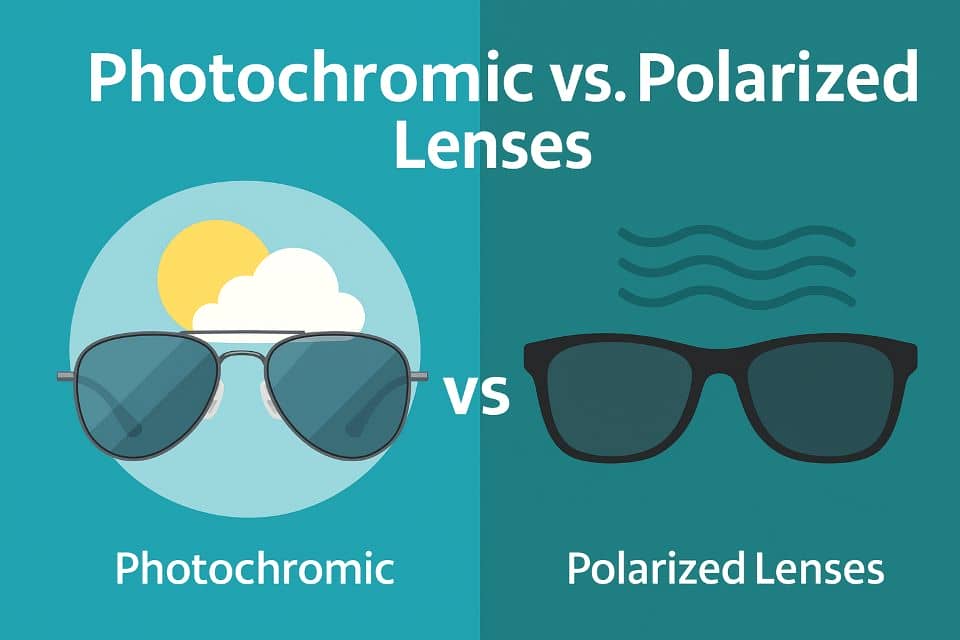
Polarized vs. Photochromic Lenses: How to Customize the Perfect Tint for Your Driving and Outdoor Lifestyle
When it comes to choosing the right eyewear for outdoor activities, the decision goes far beyond style. The lenses you wear can...
How One-Second Color Switch Glasses Transform Your Daily Style
How to Match Your Glasses Frame to Today’s Outfit—EffortlesslyLet’s be honest.You don’t wear the same outfit every day.Some days it’s clean and...