


Not Just Prescription Power: Why Facial Measurement Data Is the Real Key to Perfect Eyewear
When most people think about buying glasses, they focus on one thing: prescription strength. Whether it’s nearsightedness, farsightedness, or astigmatism, the assumption is simple — if the prescription is correct, the glasses will work.
But here’s the reality that eyewear professionals understand:
Prescription alone does not guarantee comfortable, clear, or effective vision.
Two people with identical prescriptions can have completely different experiences with the same lenses and frames. One may enjoy sharp vision and all-day comfort, while the other suffers from distortion, headaches, or constant adjustment.
The difference often comes down to something many consumers overlook:
facial measurement data.
In this comprehensive guide, we’ll explore why facial dimensions — not just lens power — determine whether your glasses truly fit your vision and lifestyle. You’ll learn how facial measurements affect clarity, comfort, and eye health, and why personalized eyewear fitting is becoming the future of optical design.
Why Prescription Alone Is Not Enough
Your prescription defines how strongly lenses correct vision errors, but it does not determine how lenses interact with your eyes in physical space.
Glasses are not simply visual tools — they are precision optical devices positioned in front of your eyes. Their performance depends heavily on alignment, distance, and orientation.
Even a perfectly accurate prescription can fail if:
- The optical center is misaligned
- The lens sits at the wrong angle
- The frame does not match your facial width
- The distance between eyes and lenses is incorrect
This is where facial measurement data becomes essential.
What Is Facial Measurement Data in Eyewear?
Facial measurement data refers to detailed information about the physical structure of your face and how glasses sit on it. These measurements help ensure lenses align precisely with your eyes.
Common measurements include:
- Pupillary distance (PD)
- Monocular PD
- Vertex distance
- Pantoscopic tilt
- Frame wrap angle
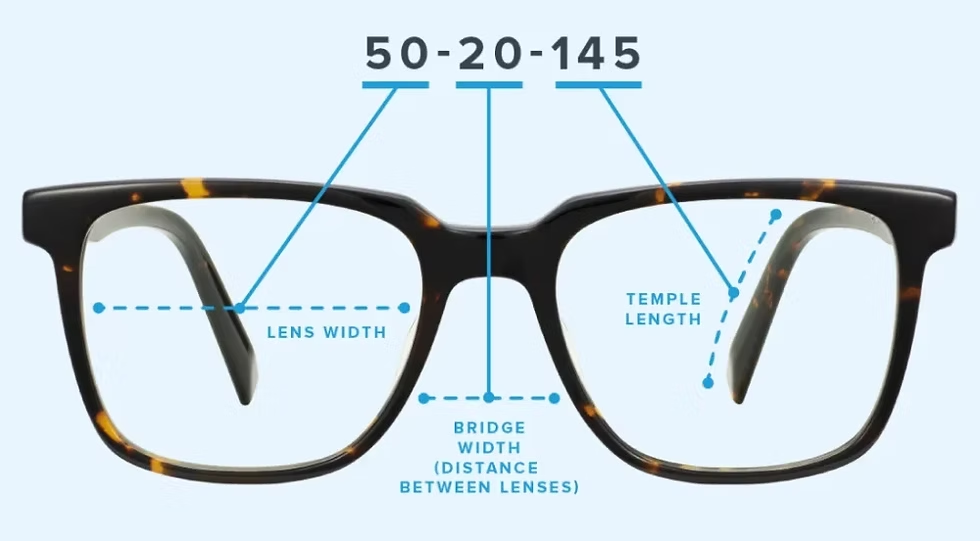
- Bridge width
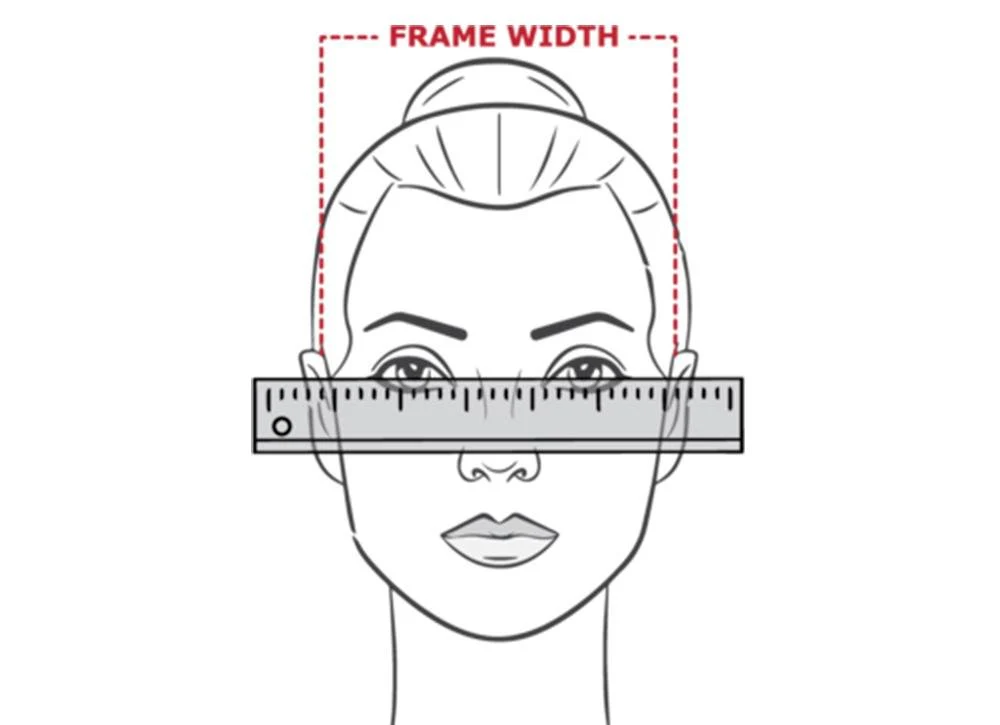
- Face width
- Temple length
- Eye height and positioning
Together, these parameters determine how light enters the lenses and reaches your retina.
How Light Alignment Affects Vision Quality
Eyeglass lenses bend light to correct vision. For optimal performance, light must pass through the lens at the intended point.
If lenses are misaligned:
- Images can appear distorted
- Peripheral clarity decreases
- Eye strain increases
- Adaptation becomes difficult
- Headaches may occur
Accurate facial measurements ensure the optical center of the lens aligns with your natural line of sight.
Key Facial Measurements That Determine Eyewear Success
Let’s explore the most important data points and why they matter.
Pupillary Distance (PD)
Pupillary distance measures the space between your pupils.
Why it matters:
- Ensures the optical center matches your eye position
- Prevents image displacement
- Reduces eye strain
Even a small PD error can cause significant discomfort, especially with high prescriptions.
Monocular PD
Unlike standard PD, monocular PD measures each eye separately.
This is crucial because:
- Human faces are rarely perfectly symmetrical
- Each eye may sit slightly differently
- Precision alignment improves visual comfort
Monocular PD is especially important for progressive lenses.
Vertex Distance
Vertex distance refers to the space between your eye and the back surface of the lens.
Why it matters:
- Changes effective lens power
- Affects magnification
- Influences clarity in strong prescriptions
If vertex distance varies from the design standard, vision quality can change.
Pantoscopic Tilt
This measures the angle of the frame relative to your face.
Proper tilt:
- Improves optical performance
- Enhances peripheral vision
- Increases comfort during reading
Incorrect tilt may create visual distortion.
Frame Wrap Angle
Wrap angle describes how much the frame curves around your face.
This affects:
- Side vision accuracy
- Optical distortion
- Light entry angle
Sports and lifestyle frames often require precise wrap measurements.
Bridge Fit and Nose Structure
The bridge determines how the frame sits on your face.
A poor bridge fit can cause:
- Frame slippage
- Uneven lens positioning
- Pressure discomfort
- Constant readjustment
Proper measurement ensures stable lens alignment.
Temple Length and Ear Position
Temple arms keep glasses stable.
Correct length:
- Prevents sliding
- Maintains lens alignment
- Improves long-term comfort
Why One-Size-Fits-All Frames Fail Many Wearers
Mass-produced eyewear assumes standard face proportions. But real faces vary widely.
People differ in:
- Face width
- Nose shape
- Eye spacing
- Cheekbone height
- Ear position
Standard frames may not accommodate these variations, leading to compromised vision and comfort.
Custom fitting solves this problem.
How Facial Data Impacts Different Types of Lenses
Single-Vision Lenses
Even basic lenses benefit from proper alignment.
Accurate measurements ensure:
- Consistent focus
- Reduced distortion
- Better comfort
Progressive Lenses
Progressive lenses are highly sensitive to positioning.
Incorrect facial data can cause:
- Narrow viewing zones
- Blurred transitions
- Adaptation failure
Precise measurements dramatically improve success rates.
High-Prescription Lenses
Strong prescriptions amplify alignment errors.
Benefits of accurate fitting include:
- Reduced edge distortion
- Improved visual stability
- Better weight balance
Digital and Freeform Lenses
Modern lenses are designed using personalized facial data.
They optimize:
- Viewing angles
- Eye movement patterns
- Frame position
This represents the future of eyewear customization.
The Role of Frame Size in Optical Accuracy
Frame size is not just a style choice.
It influences:
- Lens thickness
- Optical center placement
- Field of vision
- Weight distribution
A properly sized frame improves both performance and aesthetics.
How Poor Fit Affects Eye Health
Incorrectly fitted glasses can lead to:
- Chronic eye strain
- Headaches
- Neck tension
- Reduced visual efficiency
- Poor posture
Long-term discomfort may affect productivity and quality of life.
The Rise of Personalized Eyewear Fitting
Advances in optical technology now allow extremely precise measurements.
Modern fitting may include:
- Digital facial scanning
- 3D modeling
- Motion analysis
- Eye-tracking systems
These technologies capture data impossible to measure manually.
Digital Measurement vs Traditional Methods
Traditional fitting uses rulers and manual observation.
Digital fitting offers:
- Higher accuracy
- Greater consistency
- Personalized lens optimization
- Better repeatability
This shift is transforming the eyewear industry.
How Facial Shape Influences Frame Performance
Your facial structure affects how glasses sit and function.
Wide Faces
Require:
- Wider frames
- Stable bridge support
- Balanced lens positioning
Narrow Faces
Benefit from:
- Smaller frames
- Reduced lens displacement
- Better weight distribution
High Nose Bridge
Needs:
- Different bridge shapes
- Proper frame elevation
Low Nose Bridge
Requires:
- Adjusted nose pads
- Improved frame stability
Comfort vs Optical Performance: Finding the Balance
A successful pair of glasses must achieve both:
- Accurate vision correction
- Physical comfort
Facial measurements help balance these goals.
Why Online Eyewear Often Misses the Mark
Online purchases typically rely on:
- Approximate PD
- Generic frame sizing
- Limited fitting guidance
Without precise measurements, visual performance may suffer.
However, some platforms now use virtual fitting technology to improve accuracy.
How to Ensure Proper Eyewear Fitting
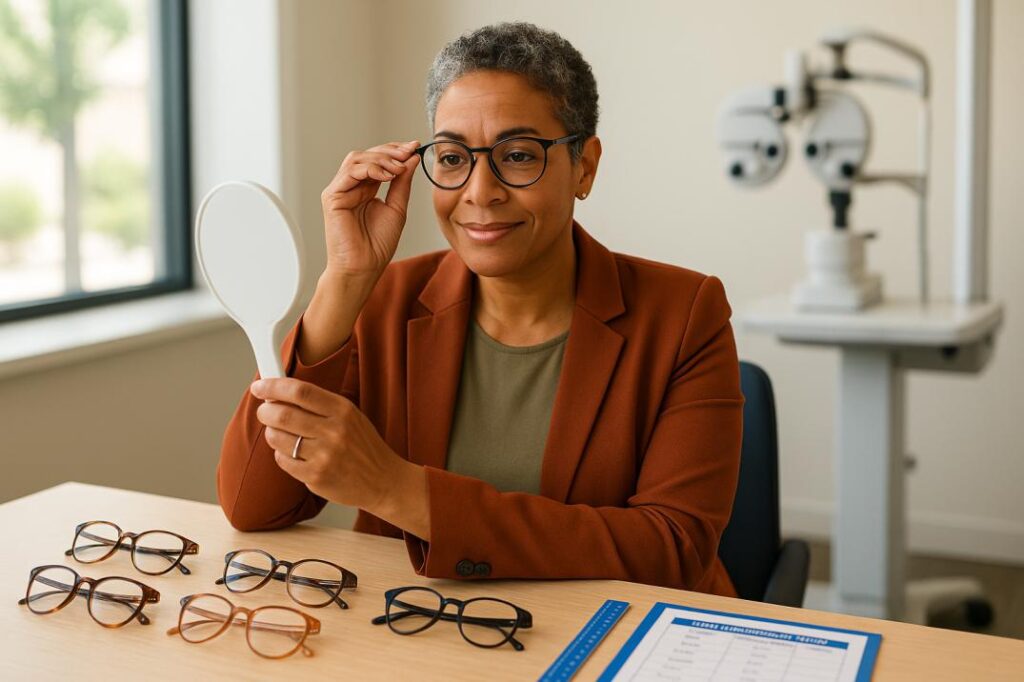
Get a Professional Measurement
An experienced optician can assess:
- Face structure
- Frame fit
- Lens positioning
Try Frames in Real Conditions
Test glasses while:
- Walking
- Reading
- Looking at screens
Request Personalized Lens Design
Many optical labs offer custom optimization based on facial data.
The Psychological Impact of Well-Fitted Glasses
Good eyewear improves more than vision.
Benefits include:
- Increased confidence
- Better posture
- Reduced visual fatigue
- Enhanced appearance
Comfort influences daily experience.
Facial Data and Aesthetic Harmony
Properly fitted glasses complement facial proportions.
They can:
- Balance facial symmetry
- Enhance features
- Improve visual proportions
This combination of function and style defines premium eyewear.
The Future of Eyewear: Fully Personalized Optics
The industry is moving toward:
- AI-assisted fitting
- 3D-printed frames
- Dynamic lens adjustment
- Real-time visual optimization
Facial data will play an even larger role.
Common Myths About Eyeglass Fitting
“Prescription is all that matters.”
False. Alignment and positioning are equally important.
“All frames fit the same.”
Face shapes vary widely.
“Discomfort is normal.”
Well-fitted glasses should feel natural.
“Only high prescriptions need precise fitting.”
Every prescription benefits from proper alignment.
Signs Your Glasses Don’t Fit Properly
Watch for:
- Frequent slipping
- Uneven pressure
- Blurred side vision
- Eye fatigue
- Constant adjustment
These indicate fitting issues.
Why Facial Measurement Data Is the True Foundation of Eyewear Success
Vision correction depends on more than lens strength.
It requires:
- Precise alignment
- Accurate positioning
- Stable frame support
- Personalized design
Facial measurements provide the foundation for all of these elements.
Final Thoughts: The Future of Vision Is Personal
Eyewear is no longer just about correcting eyesight. It’s about optimizing how lenses interact with your unique facial structure.
Prescription defines what correction you need.
Facial data determines how well that correction works.
If you want clearer vision, greater comfort, and truly personalized eyewear, the next time you choose glasses, look beyond the numbers on your prescription.
Ask about facial measurements.
Because successful eyewear fitting isn’t just about how strong your lenses are — it’s about how perfectly they fit you.
Share this post


- Burgundy – Crystal (C01)
- Red – Crystal(C02)
- Burnt Orange – Crystal(C03)
- Marmalade – Crystal(C04)
- Sunshine Yellow – Crystal(C05)
- Lime Green – Crystal(C06)
- Sage – Crystal(C08)
- Green Forest – Crystal(C07)
- Army Green – Crystal(C09)
- Spruce – Crystal(C10)
- Turquiise – Crystal(C11)
- Cornflower– Crystal(C12)
- Navy – Crystal(C13)
- Indigo – Crystal(C14)
- Blue Orchid – Crystal(C15)
- Mauve – Crystal(C16)
- Lavender – Crystal(C21)
- Purple – Crystal(C17)
- Grape – Crystal(C18)
- Coral – Crystal(C19)
- Hot Pink – Crystal(C20)
- Chocolate – Crystal(C22)




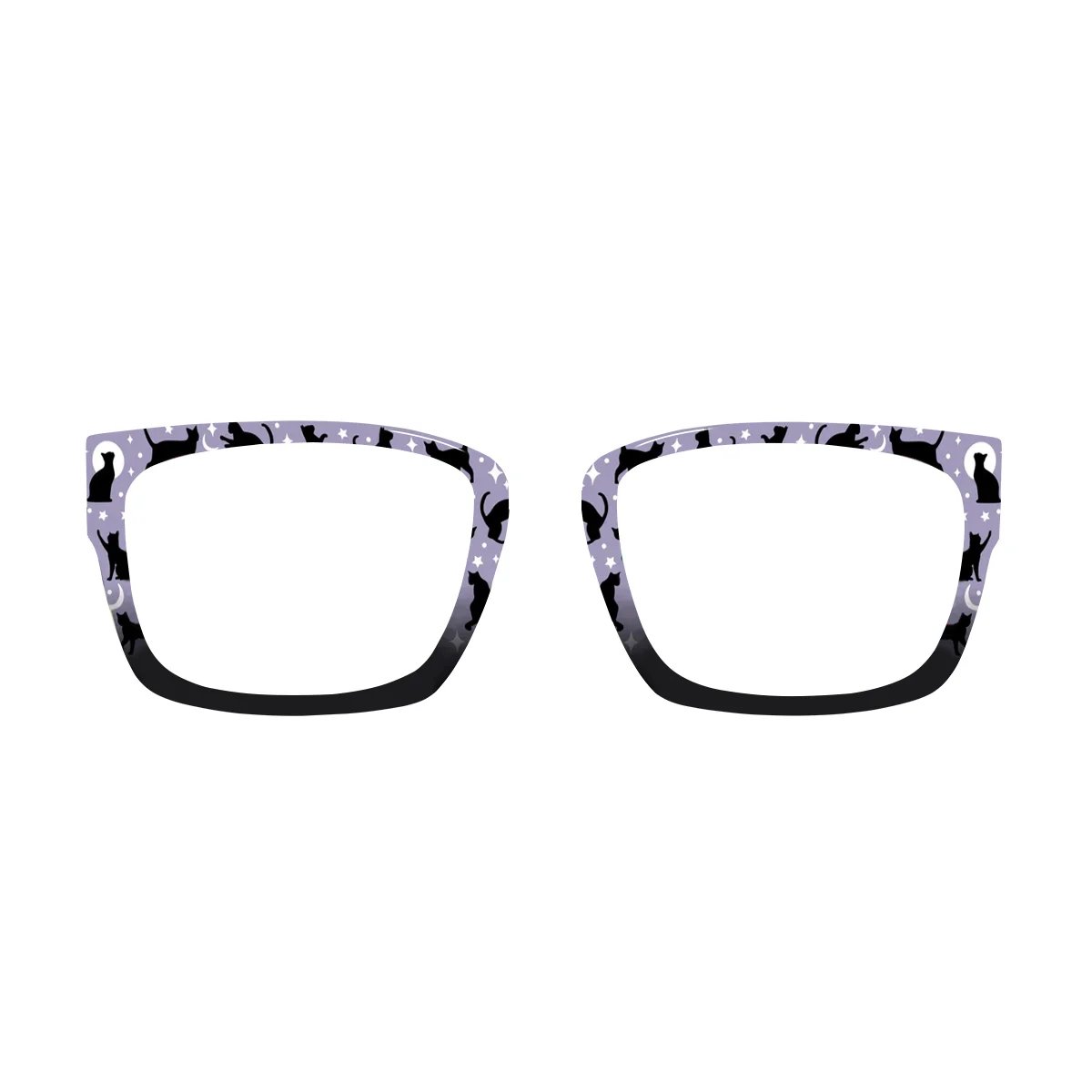
- Bone Rattle (PH01)
- Haunted Plaid (PH02)
- Pumpkin King (PH03)
- Night Sky Bat (PH04)
- Pumpkin Parade (PH05)
- Spooky Duo (PH06)
- Witch’s Cat (PH07)
- Mint Ghost (PH08)
- Dark Spell (PH09)
- Midnight Meow (PH10)
- Ghost Mosaic (PH11)
- Skull Storm (PH13)
- Wicked Glow (PH14)
- Haunted Gray (PH15)
- Phantom Mosaic (PH16)
- Midnight Dots (PH17)
- Haunted Medley (PH18)
- Nightmare Mix (PH19)
- Ghost Fade (PH20)
- Candy Curse (PH26)
- Ghost Drift (PH21)
- Pumpkin Fusion (PH22)
- Shadow Spirit (PH23)
- Spooky Toon (PH24)
- Demon Grin (PH25)
- Autumn Bloom (PH27)


Don’t Bend Crooked Glasses by Hand: The Real Difference Between Professional Frame Alignment Tools and DIY Adjustments
Few everyday frustrations compare to putting on your glasses and realizing something feels wrong. The frame tilts. One lens sits higher than...
Are Ultrasonic Cleaners Worth Buying? A Complete Deep-Cleaning Review for Eyeglasses at Home
For anyone who wears glasses daily, one frustration never seems to disappear:No matter how often you wipe your lenses, they never stay...
Why Your Next Pair of Custom Glasses Shouldn’t Have Screws
Eyeglasses have come a long way from the fragile metal frames and thick lenses that once defined vision correction. Modern eyewear now...
Digital Life Customization: Blue-Light Protection and Focus Optimization Solutions for Programmers and Designers
Modern work lives increasingly unfold behind screens. Programmers write thousands of lines of code daily, designers spend hours refining pixels and typography,...
Goodbye to “Magnetic Slip-Off”: Why Clip-Lock Eyewear Frames Outperform Magnetic Frames in Dynamic Lifestyles
In today’s fast-moving world, eyewear isn’t just a vision tool — it’s performance gear. Whether you’re commuting through crowded subway platforms, chasing...
The Zero-Gravity Vision: How Material Science Makes Custom Frames Lighter Than a Sheet of Paper
In the world of high-end optics, there is a "Sound Barrier" that designers have been trying to break for decades. It is...
How Should Your Glasses Fit for Comfort and Style?
Choosing the right pair of eyeglasses involves not only selecting the perfect frame design but also ensuring a proper fit for maximum...
Custom Glasses Hurting Your Ears? Before You Return Them, Try These Expert Adjustment Solutions
You finally receive your custom glasses — the frame looks perfect, the lenses are clear, and everything matches your style. But after...
How to Adjust Your EyeGlasses at Home: A Complete Guide
Glasses are essential for vision correction, but they also serve as a stylish accessory. However, even the best frames can feel uncomfortable...
Titanium Alloy vs. Aerospace Carbon Fiber: Which Custom Material Is the Ultimate Solution for Sensitive Skin?
For people with sensitive skin or allergy-prone conditions, everyday accessories can become unexpected sources of discomfort. Items designed for long-term wear —...
Value & Pitfalls in Custom Eyewear: Why Prescription Glasses Cost Anywhere from $200 to $2,000
Walk into any eyewear store—or browse online—and you’ll quickly notice something confusing: prescription glasses can cost as little as $200 or soar...
How to Clean 3D-Printed Glasses: Avoid These Chemicals to Protect Your Frame’s Texture and Finish
3D-printed eyewear has transformed how people think about glasses. Instead of mass-produced frames that look identical on everyone, modern additive manufacturing allows...