


Say Goodbye to Blurry Vision: How to Effectively Remove Grease and Oil Buildup from Eyeglasses
For millions of people, eyeglasses are an essential part of daily life. Whether used for reading, driving, working, gaming, studying, or simply navigating everyday routines, clean lenses play a major role in visual comfort and overall eye health.
Yet one of the most frustrating problems eyeglass wearers face is persistent oil and grease buildup.
You clean your glasses, only to notice smudges returning within minutes. Bright lights suddenly produce glare. Screens become hazy. Outdoor sunlight creates distracting streaks. Even after wiping the lenses repeatedly, they still seem cloudy.
Over time, oily residue can make glasses feel impossible to keep clean.
The good news is that greasy lenses are usually not caused by defective eyewear. Instead, they are often the result of daily habits, environmental exposure, skin oils, cosmetic products, improper cleaning techniques, and residue accumulation.
Understanding why lenses become greasy — and how to clean them correctly — can dramatically improve clarity, comfort, and the lifespan of your eyewear.
This guide explores the causes of oily eyeglasses, common cleaning mistakes, proper maintenance routines, and practical solutions for keeping your lenses crystal clear every day.

Why Eyeglasses Become Greasy So Easily
Eyeglasses sit directly against the face for hours every day.
As a result, lenses and frames are constantly exposed to:
- Natural skin oils
- Sweat
- Cosmetic products
- Fingerprints
- Airborne particles
- Hair products
- Moisture
- Dust
Modern lenses also contain specialized coatings that attract certain residues differently than older untreated lenses.
Even careful eyeglass wearers eventually experience buildup.
The Main Sources of Oil on Eyeglass Lenses
Grease accumulation usually comes from several overlapping sources.
Natural Facial Oils
Human skin naturally produces sebum, an oily substance that protects the skin barrier.
Sebum easily transfers to:
- Nose pads
- Lens edges
- Frame arms
- The center of lenses during adjustments
People with oily skin often notice faster buildup.
Fingerprints
Touching lenses is one of the fastest ways to create smudges.
Even clean-looking fingers carry:
- Oil
- Sweat
- Dirt
- Lotion residue
Frequent lens touching spreads grease across the surface.
Makeup and Skincare Products
Cosmetics often contain oils, waxes, silicones, and moisturizers.
Products that commonly affect glasses include:
- Foundation
- Sunscreen
- Moisturizer
- Face cream
- Concealer
- Facial oils
- Setting spray
These substances can leave stubborn residue on lenses.
Hair Products
Hairspray, dry shampoo, pomade, and styling products release fine particles into the air.
These particles settle onto glasses and mix with oils over time.
Environmental Pollution
Urban environments expose glasses to:
- Vehicle emissions
- Cooking grease
- Smoke
- Air pollution
- Dust particles
These contaminants combine with facial oils to create sticky buildup.
Why Greasy Lenses Cause More Than Just Annoyance
Dirty lenses affect more than appearance.
Oil buildup may contribute to:
- Reduced visual clarity
- Increased glare
- Eye strain
- Headaches
- Light distortion
- Reduced driving visibility
- Screen discomfort
Persistent smudges can also reduce the effectiveness of anti-reflective coatings.
How Oil Interacts with Modern Lens Coatings
Most modern eyeglass lenses include advanced coatings.
These may include:
- Anti-reflective coatings
- Blue light filtering layers
- Scratch-resistant coatings
- Hydrophobic treatments
- Oleophobic layers
Although these coatings improve performance, they also require proper care.
Incorrect cleaning methods may damage them over time.
Why Some Lenses Seem to Attract More Grease
Not all lenses behave the same way.
Factors affecting grease accumulation include:
- Lens material
- Coating quality
- Humidity
- Skin type
- Cleaning habits
- Environmental exposure
Lower-quality coatings may retain oils more easily.
Premium oleophobic coatings generally resist fingerprints better.
The Biggest Mistake People Make When Cleaning Glasses
One of the most common mistakes is dry wiping.
Many people clean lenses using:
- Shirts
- Tissues
- Paper towels
- Napkins
without rinsing first.
This spreads oils while grinding microscopic debris across the surface.
Over time, this can create scratches and haze.
Why Shirts Are Bad for Cleaning Lenses
Clothing fibers may appear soft, but they often contain:
- Dust
- Fabric softener residue
- Dirt particles
- Skin oils
Shirts can smear grease rather than remove it properly.
Repeated shirt cleaning may gradually damage lens coatings.
Why Paper Towels Can Scratch Lenses
Paper products contain wood fibers that are surprisingly abrasive.
Even “soft” tissues may scratch lenses over time.
Some tissues also contain:
- Lotion additives
- Fragrances
- Chemical treatments
These substances can leave residue behind.
The Proper Way to Clean Greasy Eyeglasses
A safe cleaning routine dramatically improves lens clarity.
The ideal process includes several simple steps.
Step 1: Rinse the Lenses First
Always rinse glasses with lukewarm water before wiping.
This removes:
- Dust
- Loose particles
- Dirt
- Debris
Skipping this step increases scratch risk.
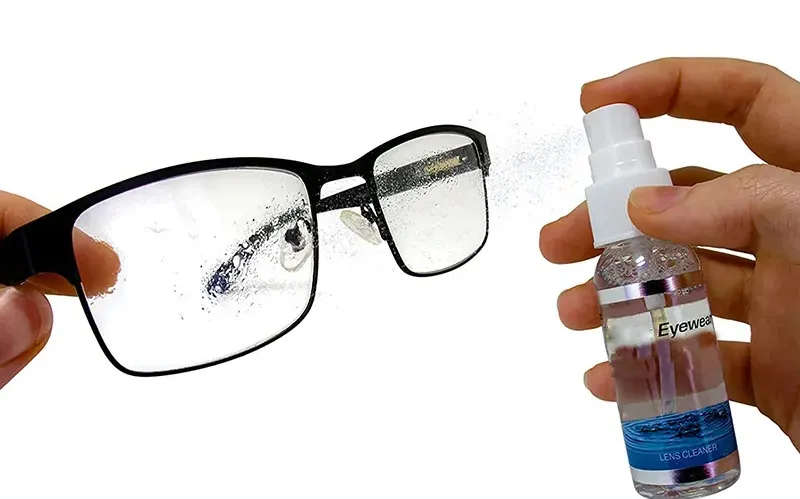
Step 2: Use a Lens-Safe Cleaner
Apply a cleaner specifically designed for eyeglasses.
Quality lens cleaners help break down:
- Oils
- Fingerprints
- Cosmetic residue
- Pollution buildup
Avoid household cleaners unless explicitly approved for lenses.
Step 3: Clean Gently with Your Fingers
Use clean fingertips to spread the cleaner gently across the lens surfaces.
Pay special attention to:
- Nose bridge areas
- Lens edges
- Areas near frame contact points
These zones collect the most oil.
Step 4: Rinse Thoroughly
Residual soap or cleaner may leave streaks.
Rinse thoroughly with lukewarm water.
Step 5: Dry with a Clean Microfiber Cloth
Microfiber cloths safely absorb oils without scratching lenses.
Use gentle motions rather than aggressive rubbing.
Why Microfiber Cloths Work So Well
Microfiber contains ultra-fine fibers that trap:
- Oil
- Dust
- Moisture
- Smudges
without damaging delicate coatings.
Unlike ordinary fabric, microfiber lifts residue instead of simply moving it around.
Dirty Microfiber Cloths Can Make Things Worse
Many people reuse dirty microfiber cloths for weeks or months.
Over time, cloths accumulate:
- Oil
- Dust
- Cosmetic residue
- Environmental particles
A contaminated cloth spreads grease back onto the lenses.
Regular washing is important.
How to Wash Microfiber Cloths Properly
Wash microfiber cloths using:
- Mild detergent
- Warm water
- No bleach
- No fabric softener
Fabric softeners reduce microfiber effectiveness by coating the fibers.
Air drying often works best.
Why Hot Water Can Damage Lens Coatings
Excessive heat may weaken coating adhesion.
Very hot water can contribute to:
- Peeling coatings
- Distortion
- Fine cracking
- Surface haze
Always use lukewarm water instead of hot water.
Avoid Using Household Glass Cleaner
Many glass cleaners contain chemicals unsuitable for eyeglasses.
Problematic ingredients may include:
- Ammonia
- Alcohol
- Acetone
- Harsh solvents
These chemicals may gradually damage coatings.
Can Dish Soap Be Used Safely?
Mild lotion-free dish soap may work occasionally.
However, heavily fragranced or moisturizing soaps may leave residue.
Choose gentle formulas if using dish soap for lens cleaning.
Why Alcohol Wipes Are Risky
Alcohol wipes may seem convenient, but repeated use can weaken certain coatings over time.
Some prepackaged wipes also contain additives that create streaking.
Frequent use is generally not ideal for premium lenses.
How Anti-Reflective Coatings Change Cleaning Needs
Anti-reflective coatings improve visual clarity significantly.
However, they also make smudges more visible.
Greasy buildup may create:
- Rainbow streaks
- Glare distortion
- Persistent haze
Proper cleaning becomes even more important for AR-coated lenses.
Blue Light Glasses and Oil Buildup
Blue light filtering lenses often include multiple coating layers.
These coatings may attract fingerprints differently depending on the manufacturer.
Cleaning gently helps preserve coating performance.
Why Oily Nose Pads Affect Lens Clarity
Greasy nose pads transfer oil continuously during wear.
Over time, residue spreads upward onto the lenses.
Cleaning the entire frame — not just the lenses — improves overall cleanliness.
Cleaning the Frames Matters Too
Frames accumulate:
- Sweat
- Skin oils
- Hair products
- Makeup residue
Dirty frames quickly recontaminate clean lenses.
Wash frames regularly during lens cleaning routines.
Why Skin Type Affects Lens Grease
People with naturally oily skin may experience faster smudging.
Factors influencing skin oil production include:
- Genetics
- Humidity
- Hormones
- Diet
- Stress
- Skincare products
While glasses cannot completely avoid oil exposure, proper habits reduce buildup.
Humidity and Sweat Increase Smudging
Hot weather often worsens lens grease problems.
Sweat combines with skin oils and environmental particles, creating stubborn smears.
Summer months may require more frequent cleaning.
How Makeup Wearers Can Reduce Lens Smudges
Certain beauty habits help minimize contamination.
Helpful practices include:
- Applying makeup before wearing glasses
- Using oil-free products
- Avoiding excessive powder near lenses
- Letting setting sprays dry fully
These steps reduce residue transfer.
Why Sunscreen Frequently Smears Glasses
Sunscreen contains oils and active ingredients designed to stay on the skin.
Unfortunately, this also means it transfers easily onto lenses.
Mineral sunscreens may leave white haze.
Frequent gentle cleaning becomes important during outdoor activities.
How Cooking Grease Affects Glasses
Kitchen environments expose glasses to airborne oils.
Cooking vapors from:
- Frying
- Sautéing
- Grilling
can settle on lenses invisibly.
This buildup becomes noticeable under bright lighting.
Why Steam Creates Smear Problems
Steam itself does not usually damage lenses, but moisture combines with oils already present on the surface.
This creates foggy streaking.
Common sources include:
- Hot showers
- Cooking steam
- Hot beverages
- Humid weather
Clean lenses fog less severely than greasy ones.
How to Keep Glasses Cleaner Longer
Several habits reduce daily buildup significantly.
Avoid Touching the Lenses
Handle glasses by the frame whenever possible.
Reducing direct contact minimizes fingerprints.
Store Glasses Properly
Leaving glasses exposed allows dust and oils to accumulate.
Use a protective case when not wearing them.
Clean Glasses Daily
Regular cleaning prevents heavy buildup from becoming difficult to remove.
Wash Your Hands Frequently
Clean hands transfer less oil onto frames and lenses.
Why Cheap Lens Coatings Sometimes Smear More
Lower-quality coatings may lack effective oleophobic properties.
This allows oils to spread more easily across the lens surface.
Higher-quality coatings often resist fingerprints better.
What Is an Oleophobic Coating?
Oleophobic coatings repel oils and fingerprints.
These coatings help lenses:
- Stay cleaner longer
- Smudge less easily
- Clean more quickly
Many premium lenses include oleophobic treatments.
Can Scratched Lenses Trap More Oil?
Yes.
Microscopic scratches create uneven surfaces that hold grease more easily.
Older damaged lenses often appear harder to clean because oils accumulate inside tiny scratches.
Why Old Glasses Sometimes Always Look Dirty
Over time, coatings may deteriorate.
This can create:
- Permanent haze
- Embedded residue
- Coating damage
- Cloudiness
If lenses remain blurry after proper cleaning, replacement may eventually become necessary.
The Importance of Proper Lighting When Cleaning
Good lighting helps reveal hidden smudges.
Bright natural light often exposes:
- Fingerprints
- Grease streaks
- Cosmetic residue
Cleaning under poor lighting may leave unnoticed buildup behind.
Travel Tips for Keeping Glasses Clean
Travel environments expose glasses to:
- Airplane cabin dryness
- Pollution
- Sunscreen
- Sweat
- Dust
Helpful travel items include:
- Portable microfiber cloths
- Lens-safe cleaning spray
- Hard protective cases
Proper storage prevents unnecessary contamination.
Why Gym Workouts Increase Lens Grease
Exercise increases:
- Sweat production
- Skin oil activity
- Humidity exposure
Sports eyewear often requires more frequent cleaning.
Headbands and sweat management can help reduce contamination.
Computer Users Often Notice Smudges More
Digital screens increase visual sensitivity to lens clarity.
Even minor grease buildup may become highly noticeable during computer use due to:
- Bright screen contrast
- Blue light reflections
- Indoor lighting glare
Clean lenses improve visual comfort significantly.
Professional Cleaning Services
Optical shops often provide professional cleaning services.
Ultrasonic cleaners may help remove stubborn buildup from:
- Hinges
- Nose pads
- Hard-to-reach frame areas
Routine professional maintenance helps extend eyewear lifespan.
Common Cleaning Myths
Several popular cleaning methods may actually cause damage.
Myth: Breath and Shirt Cleaning Is Fine
Repeated dry wiping increases scratching risk.
Myth: Any Glass Cleaner Works
Household chemicals may damage coatings.
Myth: More Pressure Cleans Better
Aggressive rubbing can worsen lens wear.
Myth: Hot Water Sanitizes Better
High temperatures may weaken coatings.
How Long Should Quality Lenses Stay Clear?
With proper care, quality lenses may remain in excellent condition for several years.
Good maintenance habits significantly slow:
- Coating wear
- Scratching
- Grease accumulation
- Optical distortion
Prevention is far easier than replacing damaged lenses.
Building a Long-Term Lens Care Routine
Simple daily habits create major long-term benefits.
An effective routine includes:
- Gentle daily cleaning
- Proper storage
- Clean microfiber cloths
- Minimal lens touching
- Safe cleaning products
- Regular frame maintenance
Consistency matters more than occasional deep cleaning.
Final Thoughts
Greasy eyeglasses are one of the most common frustrations for eyewear users, but the problem is often easier to manage than many people realize.
Oil buildup usually comes from normal daily exposure to skin oils, fingerprints, cosmetics, sweat, pollution, and environmental particles. However, improper cleaning habits can quickly make the situation worse by spreading grease, scratching lenses, or damaging protective coatings.
Fortunately, maintaining clear lenses does not require expensive equipment or complicated routines.
By using proper cleaning techniques, rinsing lenses before wiping, choosing safe lens cleaners, washing microfiber cloths regularly, avoiding harsh chemicals, and developing smarter everyday habits, eyeglass wearers can dramatically reduce smudging and improve visual clarity.
Clean lenses not only look better but also improve comfort, reduce glare, decrease eye strain, and help preserve the lifespan of modern lens coatings.
With consistent care and the right maintenance approach, it becomes much easier to enjoy sharper, cleaner, and more comfortable vision every day.
Share this post



Mira Metallic Silver Metal Sunglasses – Wide Cat Eye, Tinted Lenses - Interchangeable Eyewear




- Deep Burgundy - Solid (S01)
- Red - Solid (S02)
- Burnt Orange - Solid (S03)
- Marmalade - Solid (S04)
- Sunshine Yellow - Solid (S05)
- Lime Green - Solid (S06)
- Green Forest - Solid (S07)
- Sage - Solid (S08)
- Army Green - Solid (S09)
- Spruce - Solid (S10)
- Turquiise - Solid (S11)
- Cornflower blue - Solid (S12)
- Navy - Solid (S13)
- Indigo - Solid (S14)
- Blue Orchid - Solid (S15)
- Lavender - Solid (S21)
- Mauve - Solid (S16)
- Purple - Solid (S17)
- Grape - Solid (S18)
- Warm Coral - Solid (S19)
- Hot Pink - Solid (S20)
- Chocolate - Solid (S22)
- Black – Solid (S23)
- White - Solid (S24)
Solid Color Top Frame for Soline

Soline Gunmetal Gray Interchangeable Base Frame – Wide Rectangle Metal Glasses


Living a Multifaceted Life: How Custom Modular Eyewear Defines Your Personal Identity
Yet for years, eyewear has tried to force all these identities into one fixed frame.In a world where people change roles, moods,...
The Secret Weapon for Sculpting Your Face: How to Customize Eyewear Based on Your Cheekbones and Brow Shape
When it comes to elevating your appearance, most people think about hairstyles, makeup, or wardrobe upgrades. But there’s one transformative accessory that...
How Mechanical Clip Systems Make Quick Temple Replacement Possible: The Future of Modular Eyewear Design
Eyewear has evolved far beyond simple vision correction. Today, glasses are fashion statements, performance tools, and everyday essentials that must adapt to...
Why Your Glasses Keep Getting Looser Over Time: How Improper Handling Causes Hidden Structural Damage
Glasses are designed to be durable, precise, and comfortable. Yet many people notice the same frustrating pattern: a new pair fits perfectly...
A Must-Read for Glasses Wearers: Build These 5 Habits to Make Your Eyeglasses Last Three Years Longer
Eyeglasses are more than just a vision aid—they’re a daily essential, a style statement, and often a significant investment. Yet many people...
Are Pink Glasses in Style?
Pink glasses are a timeless symbol of charm and personality. They evoke feelings of compassion, love, and hope, making them a popular...