



Say Goodbye to Grease: How to Thoroughly Clean Sweat, Oil, and Salt Buildup Inside Your Eyeglass Frames During Summer
Summer brings longer days, brighter sunlight, outdoor activities—and a frustrating problem for anyone who wears glasses daily: sweat and oil buildup on eyeglass frames.
If you’ve ever noticed your glasses slipping down your nose, developing a strange odor, or feeling sticky even after wiping them, you’re not alone. Warm weather dramatically increases perspiration, and that sweat doesn’t just evaporate. It mixes with skin oils, sunscreen, cosmetics, and environmental dust, gradually accumulating on the inner surfaces of your frames.
The areas most affected are often the ones people forget to clean:
- the inside of temples (arms)
- nose pads and pad arms
- hinge joints
- frame grooves near lenses
- areas touching skin behind ears
Over time, this invisible buildup can damage frames, irritate skin, and even shorten the lifespan of custom eyewear.
In this comprehensive guide, we’ll explain why summer sweat is particularly harmful to eyeglasses, what actually accumulates on frames at a microscopic level, and how to properly remove oil and salt residue using safe, professional-level cleaning techniques you can perform at home.

Why Summer Is Tough on Eyeglass Frames
During hot weather, your body produces more sweat to regulate temperature. While sweating is natural and healthy, it introduces new challenges for eyewear maintenance.
Sweat Is More Than Just Water
Many people assume sweat is harmless moisture, but its chemical composition tells a different story.
Human sweat contains:
- sodium (salt)
- potassium
- calcium
- lactic acid
- urea
- skin oils
- bacteria
When sweat dries, salt crystals remain behind. These crystals can cling tightly to frame surfaces.
Oil and Sweat Create a Sticky Film
Sebum (natural skin oil) mixes with sweat to form a thin greasy layer. This film traps dust and pollutants, creating buildup that ordinary wiping cannot remove.
Heat Accelerates Chemical Reactions
High temperatures speed up oxidation and material degradation, especially in:
- metal frames
- coated surfaces
- silicone nose pads
- acetate materials
This is why glasses often age faster during summer months.
The Hidden Problems Caused by Oil and Salt Buildup
Ignoring frame cleaning doesn’t just affect appearance—it can lead to real functional issues.
1. Frame Slippage
Oil reduces friction between skin and nose pads, causing glasses to slide constantly.
2. Skin Irritation
Salt residue and bacteria may cause redness or acne where frames touch the skin.
3. Corrosion of Metal Frames
Salt is mildly corrosive. Over time, it can damage protective coatings and expose metal underneath.
4. Odor Development
Bacteria feeding on sweat and oils create unpleasant smells around nose pads and temple tips.
5. Hinge Stiffness
Residue accumulation inside hinges can make frames harder to open or close smoothly.
Where Dirt Actually Hides on Eyeglasses
Most people clean only the lenses, but frames contain many hidden contamination zones.
Nose Pads
Constant skin contact makes this the dirtiest part of most glasses.
Pad Arms and Screws
Tiny crevices trap oils and salt crystals.
Temple Ends
Behind-the-ear areas collect sweat throughout the day.
Inner Frame Rim
Moisture accumulates where lenses meet the frame.
Hinges
These small mechanical areas trap debris that wipes cannot reach.
Understanding these hotspots is essential for effective cleaning.
Step-by-Step Guide to Deep Cleaning Eyeglass Frames
Professional opticians follow structured cleaning methods. You can safely replicate a simplified version at home.
Step 1: Rinse Away Loose Contaminants
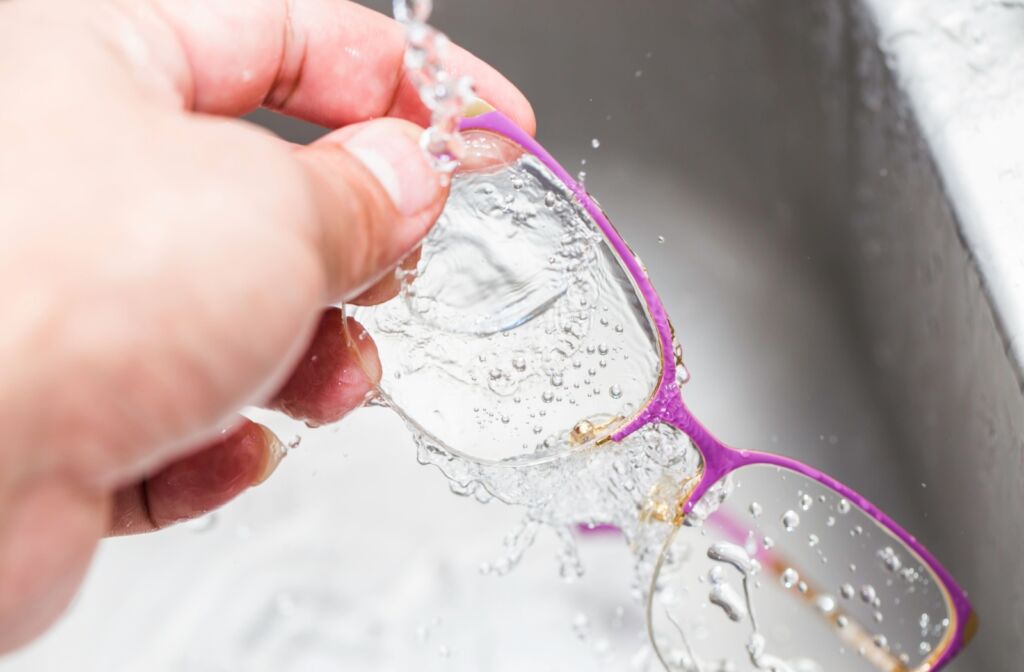
Start with lukewarm running water.
This removes:
- dust particles
- salt crystals
- loose oils
Never clean frames dry—this spreads residue rather than removing it.
Step 2: Use Mild Soap
Apply a small drop of gentle, lotion-free dish soap.
Avoid soaps containing:
- moisturizers
- abrasives
- strong fragrances
Gently rub using your fingertips, focusing on contact areas.
Step 3: Clean Hard-to-Reach Areas
Use soft tools such as:
- a soft toothbrush
- cotton swabs
- foam cleaning sticks
Work carefully around:
- nose pads
- hinges
- inner temples
Light pressure is enough.
Step 4: Pay Special Attention to Nose Pads
Nose pads often require extra care.
Clean both sides thoroughly, as oil accumulates underneath.
If pads appear yellowed or hardened, replacement may be necessary.
Step 5: Rinse Thoroughly
Soap residue attracts dirt if left behind.
Rinse until surfaces feel completely clean.
Step 6: Dry Properly
Use a clean microfiber cloth and gently pat dry.
Avoid paper towels or clothing fabrics.
Removing Stubborn Summer Residue
Sometimes basic cleaning isn’t enough, especially after heavy sweating.
Here are safe advanced techniques.
Warm Soak Method
Place frames (without hot water) in a bowl of lukewarm soapy water for 5–10 minutes.
This softens hardened oil deposits.
Alcohol Wipes for Metal Parts Only
A small amount of diluted alcohol can help disinfect metal hinges—but avoid lens coatings and plastic areas.
Always rinse afterward.
Ultrasonic Cleaning (Occasional Use)
Ultrasonic cleaners can remove deep residue from hinges and nose pad mounts when used correctly and infrequently.
Limit cleaning cycles to avoid stress on coatings.
How Often Should You Clean Frames in Summer?
Frequency depends on activity level.
Light Use
Clean every 2–3 days.
Moderate Daily Wear
Clean daily or every other day.
Heavy Sweating or Outdoor Activity
Quick rinse every evening and deep clean weekly.
Consistency prevents buildup from becoming difficult to remove.
Preventing Oil and Salt Accumulation
Cleaning is important, but prevention reduces effort significantly.
Wash Your Face Regularly
Reducing facial oil lowers transfer onto frames.
Use Anti-Slip Nose Pads
Modern silicone pads resist oil buildup better.
Keep a Microfiber Cloth Handy
Gently wipe moisture during the day before sweat dries into salt residue.
Rotate Glasses When Possible
Allowing frames to dry fully overnight reduces bacterial growth.
Materials Matter: Cleaning Tips by Frame Type
Different materials require slightly different care.
Acetate Frames
Use gentle soap only. Avoid alcohol or harsh chemicals.
Metal Frames
Dry thoroughly to prevent corrosion.
Titanium Frames
Highly resistant but still benefit from regular cleaning.
Sports Frames
Often exposed to heavy sweat; require more frequent rinsing.
Signs Your Frames Need Immediate Cleaning
Watch for these warning signs:
- glasses slipping frequently
- visible white residue near pads
- unpleasant smell
- sticky feeling when touched
- skin irritation near contact points
These indicate accumulated oils and salts.
Mistakes That Make Frame Buildup Worse
Avoid these common habits.
Only Cleaning Lenses
Frames often hold more bacteria than lenses.
Using Hot Water
Heat may warp plastic frames.
Skipping Drying
Moisture trapped in hinges encourages corrosion.
Using Household Cleaners
Harsh chemicals degrade coatings and finishes.
Why Professional Cleaning Still Matters Occasionally
Even with excellent home care, professional cleaning once or twice per year can help.
Opticians may:
- tighten screws
- replace nose pads
- remove deep hinge debris
- inspect coating wear
Professional maintenance extends eyewear lifespan significantly.
The Science Behind Comfortable Glasses
Clean frames don’t just look better—they feel better.
Removing oils restores friction between nose pads and skin, improving fit stability.
Clean hinges operate smoothly.
Reduced bacteria lowers skin irritation risk.
In short, proper cleaning improves both hygiene and comfort.
Building a Simple Summer Cleaning Routine
Here’s an easy routine anyone can follow.
Daily
- rinse frames after heavy sweating
- wipe moisture with microfiber cloth
Weekly
- deep clean with soap and soft brush
Monthly
- inspect nose pads and hinges
Seasonally
- consider professional cleaning or adjustment
Final Thoughts: Small Maintenance, Big Difference
During summer, eyeglasses face constant exposure to sweat, oil, salt, and environmental debris. While buildup happens gradually, its effects become noticeable quickly—slipping frames, dull appearance, and uncomfortable wear.
The good news is that preventing these problems requires only a few minutes of regular care.
By understanding where residue accumulates and adopting proper cleaning habits, you can keep your eyewear feeling fresh, hygienic, and comfortable even during the hottest months.
Clean frames don’t just improve appearance—they enhance comfort, protect materials, and extend the life of your custom eyewear investment.
So the next time summer heat leaves your glasses feeling greasy, remember: a thorough, gentle cleaning routine is the simplest way to restore clarity, comfort, and confidence—no matter how high the temperature climbs.
Share this post


Mira Metallic Silver Cat Eye Base Frame
Soline Classic Gold Base Frame – Wide Rectangle




Living a Multifaceted Life: How Custom Modular Eyewear Defines Your Personal Identity
Yet for years, eyewear has tried to force all these identities into one fixed frame.In a world where people change roles, moods,...
The Secret Weapon for Sculpting Your Face: How to Customize Eyewear Based on Your Cheekbones and Brow Shape
When it comes to elevating your appearance, most people think about hairstyles, makeup, or wardrobe upgrades. But there’s one transformative accessory that...
How Mechanical Clip Systems Make Quick Temple Replacement Possible: The Future of Modular Eyewear Design
Eyewear has evolved far beyond simple vision correction. Today, glasses are fashion statements, performance tools, and everyday essentials that must adapt to...
Are Pink Glasses in Style?
Pink glasses are a timeless symbol of charm and personality. They evoke feelings of compassion, love, and hope, making them a popular...
One-Second Color Switch
How to Match Your Glasses Frame to Today’s Outfit—EffortlesslyLet’s be honest.You don’t wear the same outfit every day.Some days it’s clean and...
“Five O’Clock Headache”: Could Custom Eyewear Be the Cure for Your Daily Fatigue?
Around 4:30 p.m., your focus softens. By 5:00 p.m., there’s a dull pressure behind your eyes. Your temples tighten. The screen feels...