



No Slipping During Workouts, Polished in Meetings
The Hidden Tech Behind Interchangeable Eyeglass Temples
Let’s start with a familiar frustration.
You’re wearing glasses.
At your desk, they look sharp.
In meetings, they feel professional.
Everything is fine—until you move.
You stand up.
You walk fast.
You sweat.
Suddenly, your glasses start sliding down your nose.
You push them back up.
Again.
And again.
Now rewind the scene.
Later that day, you’re in a meeting.
You want to look composed.
Minimal.
Clean.
But your glasses—designed for sport—look bulky, rubbery, and out of place.
Two moments.
Two needs.
One face.
This is exactly the problem interchangeable eyeglass temples were designed to solve.
The Core Conflict of Modern Eyewear
Modern life doesn’t fit into one category.
You might:
- Exercise in the morning
- Commute at noon
- Sit in meetings in the afternoon
- Go out at night
Yet traditional glasses assume one thing:
One frame. One behavior. One scenario.
That assumption no longer works.
Eyewear needs to adapt as fast as your schedule does.
What Are Interchangeable Temples, Exactly?
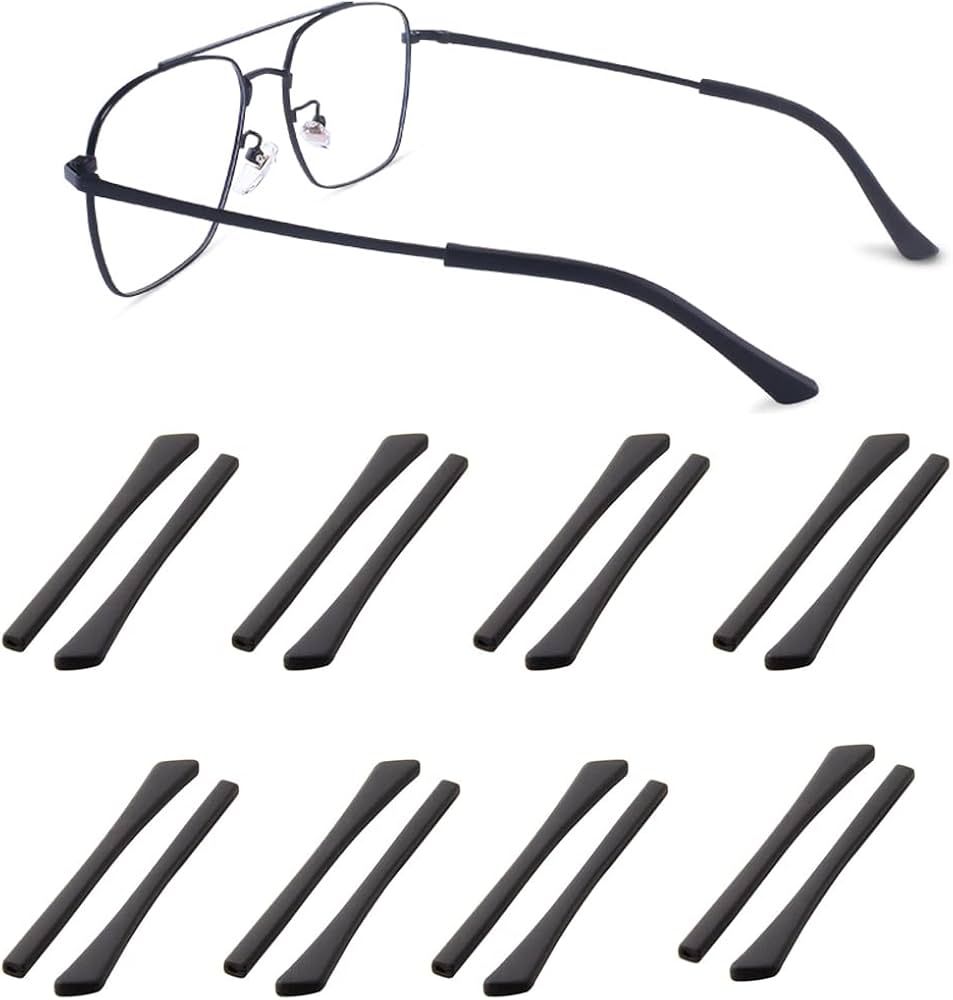
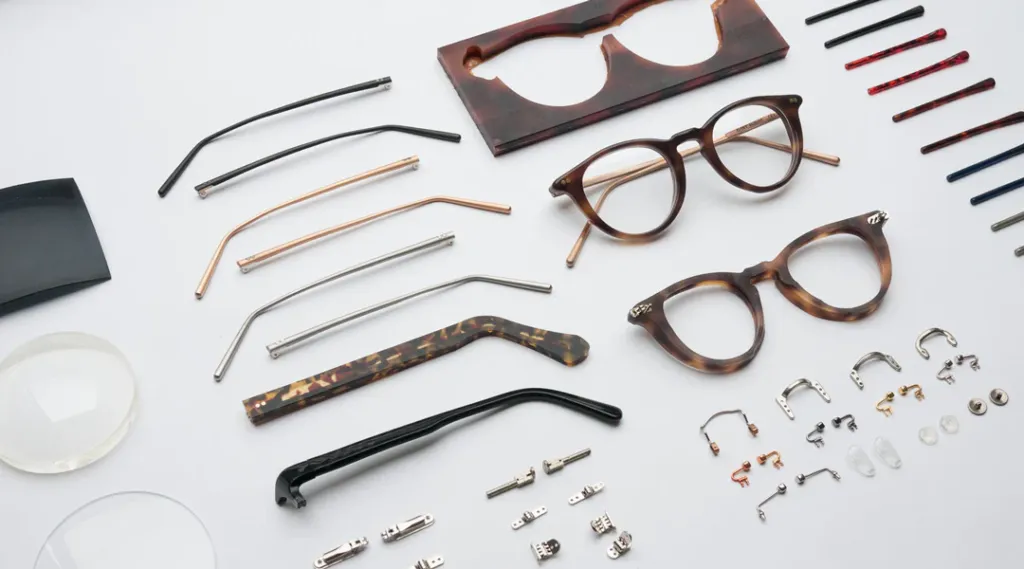
Interchangeable temples (also called replaceable arms) are modular components that attach to a base frame.
Instead of fixing one type of temple permanently, the system allows you to:
- Swap temple styles
- Change materials
- Adjust grip levels
- Alter visual tone
All without changing the lenses or base frame.
Think of it as footwear logic applied to eyewear.
You don’t wear dress shoes to the gym.
So why should your glasses behave like they do?
Two Temples, Two Worlds
Let’s break down the two most common temple types tested in real-world use.
1. Sport-Oriented Temples: Built to Stay Put
Sport temples are designed with function first.
Key characteristics:
- High-friction materials (rubberized or silicone-coated)
- Curved or hooked ends
- Slightly stronger grip behind the ears
- Sweat-resistant finishes
In testing, these temples:
- Stayed stable during jogging
- Didn’t slide during body movement
- Reduced the need for constant readjustment
The difference is immediate.
Instead of thinking about your glasses, you forget they’re there.
That’s the goal.
2. Classic / Business Temples: Designed to Disappear
Now switch contexts.
Meetings.
Presentations.
Client calls.
Here, subtlety matters.
Business-style temples focus on:
- Slim profiles
- Clean lines
- Neutral finishes
- Lightweight materials
They don’t shout “tech.”
They don’t scream “sport.”
They frame your face quietly—and that’s exactly the point.
One Frame, Two Personalities
With interchangeable temples, the base frame stays the same.
Your lenses stay the same.
Your prescription stays the same.
Only the function and attitude change.
Morning:
- Sport temples
- Secure grip
- Movement-friendly
Afternoon:
- Swap temples
- Clean silhouette
- Boardroom-ready
The transition takes seconds—but the effect feels dramatic.
Why Slipping Happens in the First Place
To understand why interchangeable temples matter, you need to understand why glasses slip.
It usually comes down to:
- Sweat reducing friction
- Smooth plastic surfaces
- Insufficient tension behind the ears
- Weight imbalance
Traditional glasses try to compromise.
They’re:
- Not too tight
- Not too loose
- Not too sporty
- Not too formal
That middle ground fails in both extremes.
Interchangeable temples remove the compromise.
The Science of Grip Without Discomfort
Here’s something many people don’t realize:
More grip doesn’t have to mean more pressure.
Sport temples use:
- Material friction, not force
- Surface texture, not squeezing
This reduces:
- Headaches
- Ear fatigue
- Pressure points
You get stability without punishment.
That’s a big deal for all-day wearers.
Professional Appearance Still Matters
Let’s be honest.
Appearance isn’t vanity—it’s communication.
In professional settings, eyewear sends signals:
- Attention to detail
- Reliability
- Taste
Bulky, rubberized sport frames can undermine that signal.
Interchangeable temples let you:
- Keep one refined frame
- Avoid “athleisure creep” in formal spaces
- Look intentional instead of improvised
You don’t look like you just came from the gym—even if you did.
Tested in Real Life, Not Just Marketing Photos
During long-term testing, users reported:
- Fewer adjustments during workouts
- Improved confidence in meetings
- Reduced need for multiple pairs
Most interesting feedback:
“I stopped thinking about my glasses entirely.”
That’s not flashy—but it’s meaningful.
Travel-Friendly by Design
Travel amplifies eyewear problems.
You want:
- Lightweight packing
- Fewer items
- Maximum versatility
Interchangeable temples reduce:
- The need for multiple frames
- Case clutter
- Risk of losing prescriptions
One base frame.
Two temple sets.
Endless flexibility.

Comfort Over Long Hours
People who wear glasses 10–12 hours a day know this truth:
Small discomforts add up.
Switching temple styles mid-day:
- Relieves pressure points
- Adapts to posture changes
- Matches activity level
This isn’t about novelty—it’s about ergonomics.
A Subtle Confidence Boost
There’s an emotional layer here.
When your glasses:
- Stay in place
- Match the moment
- Don’t distract you
You show up differently.
You’re more focused.
More relaxed.
More present.
That confidence is quiet—but visible.
Who Benefits Most From Interchangeable Temples?
This technology isn’t for everyone—but it’s perfect for certain lifestyles.
Ideal for:
- Professionals who exercise
- Hybrid workers
- Frequent travelers
- Creatives and presenters
- Anyone tired of “almost right” glasses
If your day includes more than one version of you, this system makes sense.
Common Concerns (And Honest Answers)
“Will they fall off?”
Quality systems use secure locking or magnetic mechanisms. Properly designed, they stay in place.
“Is it complicated?”
After the first swap, it becomes intuitive—no tools required.
“Do they look gimmicky?”
Only if poorly designed. Well-executed systems are nearly invisible.
Why This Feels Like the Future of Eyewear
Eyewear hasn’t changed much in decades.
Lenses improved.
Materials got lighter.
But structure stayed the same.
Interchangeable temples represent a shift:
From static products
To adaptive systems
From one-size-fits-all
To context-aware design
That’s not a trend.
That’s evolution.
Final Thoughts: One Face, Many Moments
Your life isn’t one-dimensional.
Your eyewear shouldn’t be either.
Interchangeable temples don’t ask you to choose between:
- Stability and style
- Sport and professionalism
- Comfort and appearance
They let you have all of it—at different moments.
Stable when you move.
Polished when you speak.
Comfortable all day.
Same face.
Same frame.
Smarter design.

Share this post


Mira Classic Gold Cat Eye Base Frame



Mira Gunmetal Gray Cat Eye Base Frame






Magnetic vs Clip-On Modular Glasses
Which Structure Actually Lasts Longer Over Time?Modular glasses are no longer a novelty.They’ve moved past the “cool idea” phase and into real-world...
Minimalist Aesthetics: Exploring the Precision Craftsmanship Behind Mechanical Snap-Fit Eyewear
Minimalism is often misunderstood as simplicity. In reality, true minimalism represents one of the most demanding forms of design. Removing elements does...
Micron-Level Precision: How 3D Cranial Modeling Creates the Feeling of “Invisible” Wear
There is a moment many people experience when trying truly well-designed wearable products for the first time — glasses that seem to...