



Is Your Eyewear’s Weight Distribution Off? A Step-by-Step Guide to Adjusting the Ear Hook Pressure Points on Custom Glasses
Introduction: When Great Glasses Still Feel Wrong
You invested in custom eyewear expecting perfect comfort and crystal-clear vision. The prescription is accurate, the lenses are premium, and the frames match your style — yet something feels off.
Maybe the glasses slide forward constantly.
Maybe one ear feels sore after an hour.
Maybe the frame tilts slightly, or pressure builds behind one ear by the end of the day.
These issues are often caused not by the lenses or frame quality, but by imbalanced weight distribution, also known as shifted wearing balance. The good news is that many of these problems can be corrected through careful micro-adjustments of the ear hooks (temple tips).
This guide explains how eyewear balance works, why pressure shifts happen, and how to safely fine-tune the ear hook force points step by step — just like an experienced optician would.
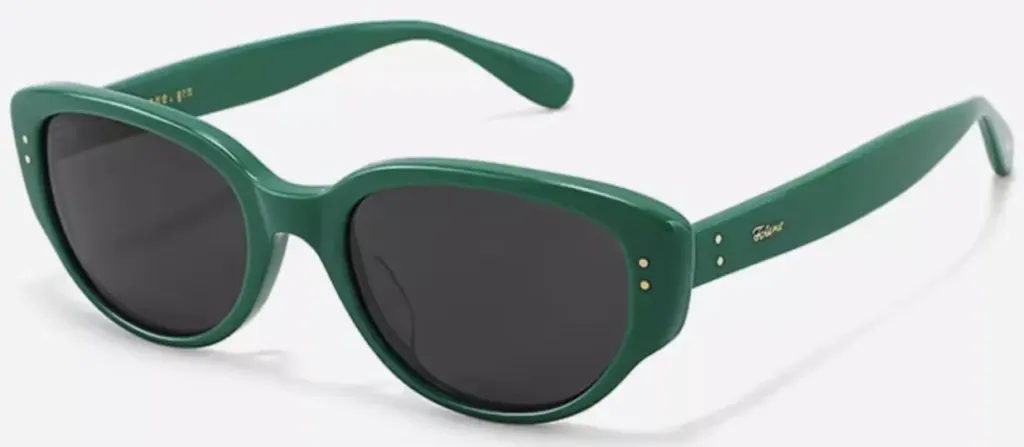
Understanding Eyewear Balance: The Hidden Engineering Behind Comfort
Custom glasses are not simply placed on your face; they are engineered to distribute weight across three primary support zones:
- Nose bridge contact area
- Left ear hook support point
- Right ear hook support point
Together, these create what opticians call a three-point balance system.
When properly aligned:
- Weight spreads evenly
- Frames stay level
- Pressure disappears
- Vision remains stable
When imbalance occurs, one support point compensates for another, creating discomfort.
What Does “Shifted Center of Gravity” Mean in Eyewear?
The center of gravity refers to how the frame’s weight is distributed while worn.
A shift happens when:
- One temple applies more downward force
- Nose pads carry unequal pressure
- Frame angles change slightly
- Ear hooks sit at different heights
Even millimeter-level differences can dramatically change wearing comfort.
Symptoms appear gradually, which is why many users assume they simply need time to “get used” to new glasses.
Common Signs Your Ear Hook Pressure Points Are Misaligned
Before adjusting anything, identify whether imbalance is actually the problem.
Physical Comfort Signs
- One ear becomes sore faster than the other
- Glasses leave deeper marks on one side
- Frame presses behind ear cartilage
- Headaches near temples
Stability Signs
- Glasses slide forward repeatedly
- Frame tilts when viewed in a mirror
- One lens sits closer to your eye
- Glasses shift when chewing or talking
Visual Signs
- Slight blur on one side
- Uneven focal comfort
- Frequent repositioning improves clarity temporarily
These are strong indicators that ear hook force distribution needs adjustment.
Why Custom Eyewear Still Needs Adjustment
Many people assume custom glasses arrive perfectly fitted forever. In reality, multiple factors change fit over time.
Face Asymmetry Is Normal
Almost no human face is perfectly symmetrical.
Common differences include:
- Ear height variation
- Uneven nose bridge angles
- Different temple pressure tolerance
Custom fitting compensates initially, but daily wear slowly alters alignment.
Material Memory and Daily Use
Frame materials respond to:
- Body heat
- Repeated removal
- One-handed handling
- Storage habits
Small shifts accumulate, gradually moving the center of gravity.
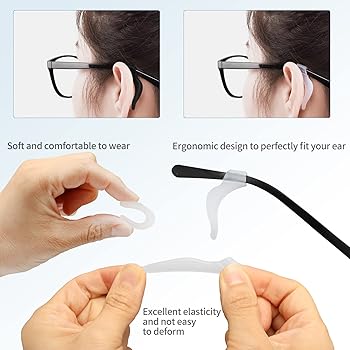
Anatomy of the Ear Hook (Temple Tip)
Understanding the parts helps you adjust safely.
The temple consists of:
- Straight temple arm
- Bend point
- Ear hook curve
- Tip contact zone
The pressure point should sit gently behind the ear, not on top of it.
Proper positioning allows the ear to stabilize the frame rather than carry its full weight.
Tools You Should (and Shouldn’t) Use
Recommended
- Clean microfiber cloth
- Warm water (not hot)
- Mirror with good lighting
- Both hands for adjustments
Avoid
- Pliers
- Heat guns
- Hair dryers on high heat
- Aggressive bending
Improper tools cause irreversible frame stress.
Step-by-Step: Adjusting Ear Hook Pressure Points
Step 1: Identify the Heavy Side
Put glasses on and relax your face.
Ask yourself:
- Which side feels tighter?
- Which ear notices pressure first?
- Which side slides lower?
Mark this mentally — it guides all adjustments.
Step 2: Check Frame Level
Stand before a mirror.
Look for:
- One lens sitting higher
- Tilt across eyebrows
- Uneven temple angle
A tilted frame usually means uneven ear hook height.
Step 3: Warm the Temple Slightly
For plastic or acetate frames:
Run the temple tip under warm (not hot) water for 20–30 seconds.
This softens material slightly, allowing safe micro-adjustment.
Metal frames typically require minimal warming.
Step 4: Adjust the Vertical Height
If one side sits lower:
Gently bend the ear hook downward on the higher side.
If one side feels tight:
Open the curve slightly outward.
Move only 1–2 millimeters at a time.
Small adjustments create large comfort changes.
Step 5: Adjust the Wrap Angle
The temple should follow the natural contour of your head.
Too straight → glasses slide forward.
Too curved → pressure behind ear.
Shape gradually until tension feels balanced.
Step 6: Re-Test Wearing Balance
After each adjustment:
- Wear glasses for 5 minutes
- Walk around
- Look downward and upward
Comfort improvements should feel immediate.
If not, adjust incrementally again.
The Golden Rule of Eyewear Adjustment
Adjust the uncomfortable side indirectly whenever possible.
Instead of loosening the painful side aggressively, slightly increase support on the opposite side.
This maintains structural symmetry.
Advanced Micro-Adjustment Techniques
Balancing Forward Slide
If glasses move forward:
- Increase ear hook curvature slightly
- Ensure hooks sit deeper behind ears
- Avoid tightening nose pads excessively
Rear stabilization works better than front pressure.
Correcting One-Ear Pain
Often caused by uneven temple spread.
Solution:
- Reduce inward pressure on sore side
- Increase gentle retention on opposite side
Think redistribution, not tightening.
Fixing Frame Rotation
If one lens angles inward:
Adjust temple twist subtly so both temples contact evenly.
Rotation often originates from uneven ear hook angles.
Mistakes People Commonly Make
Over-Adjusting
Large bends create new imbalance.
Always adjust minimally.
Adjusting While Frames Are Cold
Cold acetate cracks more easily.
Warmth increases flexibility safely.
Using One Hand to Remove Glasses
This habit slowly twists frame alignment and shifts pressure points.
Always remove glasses with two hands.
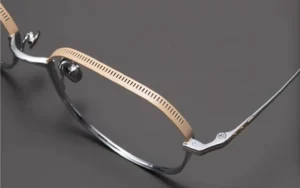
How Professionals Adjust Ear Hook Force Points
Opticians analyze three metrics:
- Pantoscopic tilt (vertical angle)
- Temple tension symmetry
- Contact pressure distribution
They perform multiple micro-adjustments rather than one large correction.
You can replicate much of this process carefully at home.
When to Stop DIY Adjustments
Seek professional help if:
- Frames creak during bending
- Metal hinges resist movement
- Lenses shift inside frame
- Discomfort worsens
Some adjustments require specialized heating equipment.
Maintaining Balanced Fit Long-Term
Weekly Fit Check
Spend 30 seconds checking:
- Frame level
- Ear pressure
- Sliding tendency
Early corrections prevent major misalignment.
Proper Storage Habits
Always store glasses:
- Inside a protective case
- With temples folded evenly
- Away from heat exposure
Improper storage gradually reshapes ear hooks.
Seasonal Adjustments Matter
Temperature changes alter frame flexibility.
Summer heat softens materials.
Winter cold stiffens them.
Minor seasonal tuning keeps comfort consistent.
Why Balanced Eyewear Improves Vision Quality
Comfort is not only physical — it affects visual accuracy.
Balanced frames maintain:
- Correct optical center alignment
- Stable viewing angle
- Consistent focal distance
Even slight tilting changes how lenses interact with your eyes.
Many people experience clearer vision immediately after proper adjustment.
The Psychology of Comfortable Eyewear
When glasses fit correctly:
- You stop touching them constantly
- Facial muscles relax
- Posture improves
- Eye fatigue decreases
Comfort allows your brain to forget the presence of eyewear entirely — the true goal of customization.
A Realistic Expectation: Adjustment Is Normal
Custom eyewear fitting is not a one-time event.
Your glasses adapt to you, and you adapt to them.
Small periodic adjustments are part of maintaining premium performance, not a sign of poor quality.
Conclusion: Mastering the Art of Micro-Adjustment
A shifted center of gravity can turn excellent custom eyewear into a daily annoyance. Fortunately, understanding ear hook pressure points gives you control over comfort and stability.
By learning how weight distribution works and applying gentle, precise adjustments, you can restore balance, eliminate pressure, and dramatically improve wearing experience.
Remember:
- Move slowly
- Adjust minimally
- Test frequently
- Prioritize balance over tightness
With practice, you will recognize imbalance early and correct it confidently — keeping your custom eyewear comfortable, stable, and perfectly aligned every day.
Well-balanced glasses should feel almost invisible. Once the ear hook force points are tuned correctly, you may finally experience what custom eyewear was designed to deliver: effortless vision and all-day comfort.
Share this post




Living a Multifaceted Life: How Custom Modular Eyewear Defines Your Personal Identity
Yet for years, eyewear has tried to force all these identities into one fixed frame.In a world where people change roles, moods,...
The Secret Weapon for Sculpting Your Face: How to Customize Eyewear Based on Your Cheekbones and Brow Shape
When it comes to elevating your appearance, most people think about hairstyles, makeup, or wardrobe upgrades. But there’s one transformative accessory that...
How Mechanical Clip Systems Make Quick Temple Replacement Possible: The Future of Modular Eyewear Design
Eyewear has evolved far beyond simple vision correction. Today, glasses are fashion statements, performance tools, and everyday essentials that must adapt to...
Are Pink Glasses in Style?
Pink glasses are a timeless symbol of charm and personality. They evoke feelings of compassion, love, and hope, making them a popular...
One-Second Color Switch
How to Match Your Glasses Frame to Today’s Outfit—EffortlesslyLet’s be honest.You don’t wear the same outfit every day.Some days it’s clean and...
“Five O’Clock Headache”: Could Custom Eyewear Be the Cure for Your Daily Fatigue?
Around 4:30 p.m., your focus softens. By 5:00 p.m., there’s a dull pressure behind your eyes. Your temples tighten. The screen feels...