


Goodbye to “Magnetic Slip-Off”: Why Clip-Lock Eyewear Frames Outperform Magnetic Frames in Dynamic Lifestyles
In today’s fast-moving world, eyewear isn’t just a vision tool — it’s performance gear. Whether you’re commuting through crowded subway platforms, chasing kids through a park, cycling at sunrise, or jumping between meetings and workouts, your glasses need to keep up.
For years, magnetic clip-on frames have been marketed as a sleek, convenient solution for people who want both prescription lenses and sun protection in one package. Snap on the magnetic sunglasses, snap them off indoors — simple, right?
In theory, yes. In real life? Not always.
A growing number of active users are saying goodbye to “magnetic slip-off” frustrations and switching to clip-lock (mechanical snap-fit) frames. These frames use physical locking mechanisms instead of magnets to secure attachments, delivering stability that magnetic systems often fail to provide during movement.
If you live an active, dynamic lifestyle, this guide explains why clip-lock eyewear frames consistently outperform magnetic frames — and why the difference matters more than you might think.
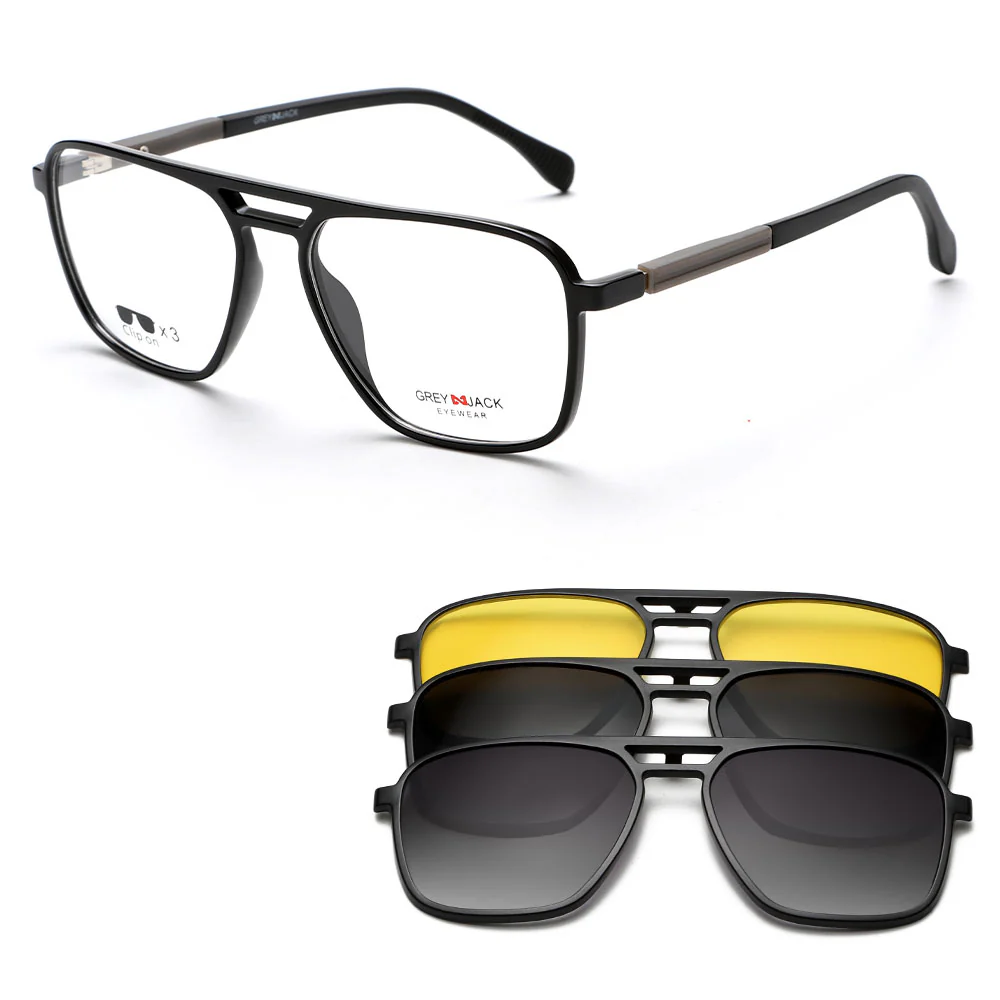
The Evolution of Convertible Eyewear
Convertible eyewear — glasses that transform between optical and sun modes — emerged to solve a practical problem:
- Carrying two pairs of glasses is inconvenient.
- Prescription sunglasses can be expensive.
- Light conditions change quickly throughout the day.
Magnetic clip-on frames quickly gained popularity because they:
- Offer a clean aesthetic.
- Avoid visible hooks or hinges.
- Attach quickly.
However, as users began wearing them in real-world, high-movement environments, limitations became apparent.
Clip-lock frames evolved as a response — engineered for stability under stress rather than convenience alone.
Understanding Magnetic Clip-On Frames
Magnetic frames rely on embedded magnets within both the base frame and the clip-on lens attachment.
When aligned correctly, the magnets pull the clip into place.
Advantages of Magnetic Systems
- Fast attachment
- Minimal visible hardware
- Lightweight feel
- Sleek, modern appearance
The Core Weakness: Lateral Movement
Magnets excel at vertical holding force — but they are less resistant to lateral shifts.
During dynamic activities such as:
- Running
- Cycling
- Playing sports
- Rapid head turns
- Bending forward
Magnetic attachments can:
- Shift alignment
- Tilt slightly
- Detach completely
Even small displacements can cause visual distortion and frustration.
What Are Clip-Lock (Mechanical Snap) Frames?
Clip-lock frames use physical locking components such as:
- Micro-hooks
- Side latches
- Groove channels
- Pressure-fit snap points
Instead of relying on magnetic attraction, these systems create mechanical engagement between parts.
When properly designed, clip-lock frames:
- Resist vibration
- Withstand sudden movement
- Stay aligned under torque
The difference becomes obvious in motion.
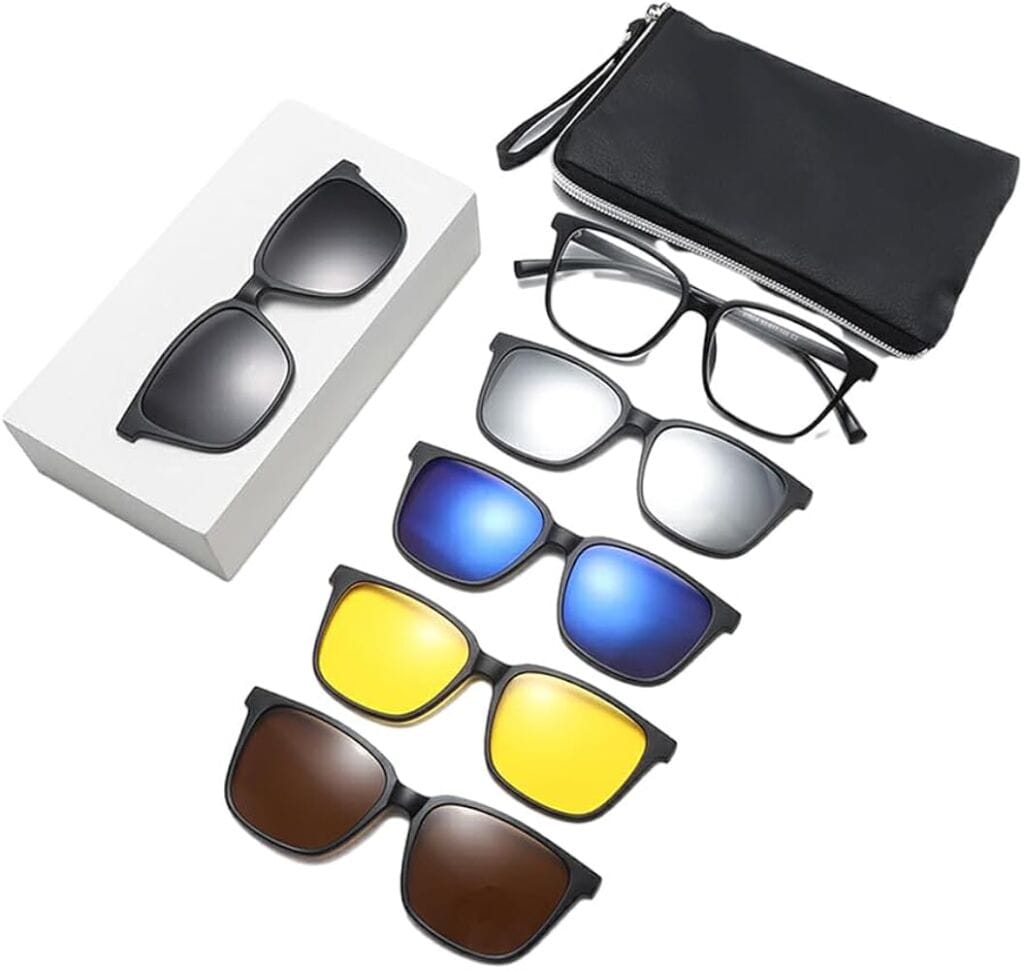
Why Dynamic Lifestyles Expose Magnetic Weaknesses
Static testing rarely reflects real-life conditions.
Consider everyday scenarios:
Scenario 1: Urban Commuting
You’re stepping onto a crowded train. Someone bumps your shoulder. Your head turns quickly.
With magnetic frames:
- The clip may shift.
- Alignment can skew.
- One corner might lift slightly.
With clip-lock frames:
- Physical anchors prevent sliding.
- Stability remains intact.
Scenario 2: Outdoor Exercise
Cycling downhill creates wind pressure. Running produces vertical impact. Basketball involves rapid directional changes.
Magnetic clips can vibrate loose under repeated motion.
Clip-lock frames absorb movement without disengaging.
Scenario 3: Parenting on the Move
Bending to pick up a toddler. Getting head-butted accidentally. Quick motions during play.
Magnets don’t discriminate — force is force.
Mechanical locks provide resistance.
The Physics Behind the Difference
Magnets operate on attraction force. That force weakens with:
- Slight misalignment
- Increased distance
- Lateral shear force
Mechanical locking systems distribute force across structural contact points.
This creates:
- Multi-directional resistance
- Friction-based stability
- Reduced detachment probability
In physics terms, magnets depend on field strength. Clip-lock systems depend on structural engagement.
Structure wins under dynamic load.
Stability and Optical Alignment
Even slight movement in clip-on lenses can affect:
- Visual clarity
- Polarization alignment
- Light filtering effectiveness
When a magnetic clip shifts by even a millimeter:
- Polarized filters may misalign.
- Reflections increase.
- Peripheral light leaks in.
Clip-lock systems maintain precise positioning.
For drivers, athletes, and outdoor enthusiasts, consistent alignment is critical.
Wind Resistance and Aerodynamics
Wind creates upward lift and vibration on lightweight attachments.
Magnetic frames can detach at higher speeds — particularly during:
- Cycling
- Motorcycling
- Boating
- Skiing
Mechanical locks resist wind shear by anchoring attachment points.
For high-speed movement, magnet-only systems often underperform.
Durability Over Time
Magnets can lose strength gradually due to:
- Repeated impact
- Environmental factors
- Heat exposure
- Corrosion
Mechanical locks, when properly engineered, maintain consistent holding force because they rely on physical design rather than magnetic intensity.
Long-term durability often favors mechanical systems.
Security and Loss Prevention
Magnetic clip-ons that detach mid-activity can:
- Fall onto pavement
- Get lost in grass
- Scratch on impact
Replacing lost magnetic clips can be costly.
Clip-lock systems reduce accidental detachment, lowering replacement risk.
For travelers and commuters, this matters.
Psychological Confidence
There’s a subtle but important factor: confidence.
When wearing magnetic clip-ons, many users report:
- Frequently checking alignment
- Adjusting position
- Feeling uncertain during activity
With clip-lock frames:
- Users report “set it and forget it” confidence.
- No need for repeated repositioning.
- Greater focus on activity.
Confidence enhances user experience.
Aesthetics vs Functionality
Magnetic systems often prioritize clean lines and minimal hardware.
Clip-lock systems may include:
- Slightly visible hooks
- Discreet locking tabs
- Structural channels
However, modern designs integrate locks seamlessly, preserving aesthetics without sacrificing function.
Performance-focused consumers increasingly choose functionality over purely minimalist appearance.
Maintenance Considerations
Magnetic frames:
- Can attract small metallic debris.
- May accumulate dust at magnet points.
- Require precise alignment.
Clip-lock frames:
- Require occasional cleaning of latch areas.
- Less sensitive to dust or metal particles.
- Offer tactile feedback when secured.
Ease of maintenance varies by design, but mechanical locks generally tolerate more environmental exposure.
Comparing Performance Across Activities
| Activity | Magnetic Frames | Clip-Lock Frames |
|---|---|---|
| Office Work | Excellent | Excellent |
| Driving | Good | Excellent |
| Running | Moderate | Excellent |
| Cycling | Moderate | Excellent |
| Hiking | Good | Excellent |
| Sports | Risk of detachment | High stability |
| Travel | Moderate | Secure |
For low-movement environments, magnets may suffice.
For dynamic lifestyles, clip-lock consistently performs better.
Who Benefits Most from Clip-Lock Frames?
- Active professionals
- Outdoor enthusiasts
- Parents with young children
- Athletes
- Travelers
- Students on the move
If your day includes constant movement, mechanical locking systems offer peace of mind.
When Magnetic Frames May Still Make Sense
Magnetic clip-ons remain suitable for:
- Office-only use
- Minimal activity lifestyles
- Quick indoor/outdoor transitions
- Users prioritizing ultra-light feel
Understanding your usage pattern is key.
Engineering Matters More Than Marketing
Not all magnetic systems are weak. Not all clip-lock systems are superior.
Quality depends on:
- Frame material
- Precision machining
- Lock design
- Fit tolerance
- Durability testing
However, as a category, mechanical locking systems provide stronger resistance to dynamic stress.
The Cost Factor
Clip-lock frames sometimes cost slightly more due to:
- Additional structural components
- Engineering complexity
But they may reduce long-term replacement costs from lost attachments.
Value depends on activity level.
The Future of Convertible Eyewear
Design innovation continues:
- Hybrid magnetic + mechanical systems
- Ultra-light locking materials
- Improved latch miniaturization
- Enhanced alignment channels
But the industry trend is clear: as consumers demand performance, stability becomes a priority.
Dynamic lifestyles require dynamic engineering.
Final Verdict: Stability Over Simplicity
Magnetic clip-ons prioritize convenience and minimalism.
Clip-lock frames prioritize security and performance.
If your life involves:
- Movement
- Speed
- Impact
- Outdoor exposure
Mechanical locking systems offer superior stability, alignment, and reliability.
The era of “magnetic slip-off” frustration is fading.
Clip-lock frames represent a practical evolution — built not just for style, but for motion.
In a world where we rarely stand still, your eyewear shouldn’t either.
Choose stability. Choose confidence. Choose performance that moves with you.
Share this post




Living a Multifaceted Life: How Custom Modular Eyewear Defines Your Personal Identity
Yet for years, eyewear has tried to force all these identities into one fixed frame.In a world where people change roles, moods,...
The Secret Weapon for Sculpting Your Face: How to Customize Eyewear Based on Your Cheekbones and Brow Shape
When it comes to elevating your appearance, most people think about hairstyles, makeup, or wardrobe upgrades. But there’s one transformative accessory that...
Are Pink Glasses in Style?
Pink glasses are a timeless symbol of charm and personality. They evoke feelings of compassion, love, and hope, making them a popular...
One-Second Color Switch
How to Match Your Glasses Frame to Today’s Outfit—EffortlesslyLet’s be honest.You don’t wear the same outfit every day.Some days it’s clean and...
“Five O’Clock Headache”: Could Custom Eyewear Be the Cure for Your Daily Fatigue?
Around 4:30 p.m., your focus softens. By 5:00 p.m., there’s a dull pressure behind your eyes. Your temples tighten. The screen feels...
Nerd Glasses: Choosing the Best Pair to Match Your Style
Nerd glasses have evolved from being a stereotype to a trendy fashion statement. With their unique designs and bold frames, these glasses...