



Do Long-Unused Custom Eyeglasses Need Lubrication? The Correct Way to Store and Preserve Them Long Term
Custom eyeglasses are more than everyday accessories. They are precision-built optical tools designed to match your face shape, prescription needs, and personal style. Yet many people own multiple pairs of glasses — backup frames, seasonal designs, specialty lenses, or older prescriptions — that end up sitting unused for months or even years.
A common question arises when rediscovering these stored frames:
Should you apply lubricant or oil before storing eyeglasses long term?
The answer is more nuanced than a simple yes or no. Improper lubrication can damage coatings, attract dust, or degrade materials, while correct preservation techniques can keep glasses in near-new condition even after extended storage.
This comprehensive guide explains how eyeglass components age during inactivity, whether lubrication is necessary, and the safest long-term storage strategy for custom eyewear.
Why Long-Term Storage Affects Eyeglasses
Many people assume that glasses only wear out through use. In reality, inactivity can also cause deterioration.
When glasses sit unused, environmental factors slowly affect materials:
- Air humidity
- Temperature fluctuations
- Oxidation
- Dust accumulation
- Material memory loss in hinges and plastics
Unlike active wear, where movement redistributes stress, idle frames remain under constant static tension.
Over time, this can lead to stiffness, looseness, or surface degradation.
Understanding the Structure of Custom Eyeglasses
Before deciding whether lubrication is needed, it helps to understand how glasses are constructed.
A typical pair includes:
- Frame front (metal, acetate, or composite)
- Temples (arms)
- Hinges with micro screws
- Nose pads and pad arms
- Lens coatings
- Protective finishes
Among these parts, hinges are the only components that might benefit from lubrication, and even then, only under specific conditions.
What Happens to Eyeglasses During Long Periods of Non-Use
1. Hinge Stiffness
Metal hinge joints rely on tiny tolerances. When unused:
- Microscopic oxidation forms.
- Dust settles into gaps.
- Lubrication residue dries out.
This can cause resistance when reopening stored glasses.
2. Screw Relaxation
Without movement, screws may gradually loosen due to:
- Material expansion and contraction
- Vibration from surrounding environments
- Natural settling of threaded components
This explains why stored glasses sometimes feel unstable despite never being worn.
3. Plastic Frame Stress Memory
Acetate and polymer frames retain shape through internal tension. Long-term pressure inside tight cases may cause:
- Slight warping
- Temple misalignment
- Uneven opening angles
4. Lens Coating Aging
Anti-reflective and protective coatings slowly react with oxygen and humidity, especially if stored improperly.
Improper oils or chemicals accelerate degradation.
Should You Apply Lubricating Oil Before Storage?
The short answer:
Usually no — and sometimes absolutely not.
Lubrication is often misunderstood in eyewear care.
Why Oil Can Be Harmful
Applying oil before storage may:
- Attract dust particles
- Spread onto lenses
- Break down acetate finishes
- Damage anti-reflective coatings
- Create sticky residue over time
Many household oils oxidize, becoming gummy instead of protective.
When Lubrication Is Appropriate
Lubrication is helpful only if:
- Hinges already feel stiff
- Frames produce squeaking sounds
- Movement resistance is noticeable
Even then, lubrication should be minimal and precise.
The Only Safe Types of Lubricants for Eyeglasses
If lubrication is necessary, choose products carefully.
Recommended Options
Micro silicone lubricant
- Non-reactive
- Dust resistant
- Safe for metal components
Dry PTFE lubricant
- Leaves almost no residue
- Ideal for precision hinges
Avoid Completely
- Cooking oil
- Machine oil
- Petroleum jelly
- Automotive lubricants
- Multipurpose sprays with solvents
These substances migrate easily and damage eyewear materials.
How to Lubricate Eyeglass Hinges Correctly (If Needed)
Proper application matters more than the product itself.
Step 1: Clean First
Remove dust using:
- Microfiber cloth
- Soft brush
- Compressed air (low pressure)
Never lubricate dirty hinges.
Step 2: Apply Micro Amount
Use a toothpick or needle tip to apply one tiny drop directly onto the hinge joint.
Avoid spraying.
Step 3: Open and Close Gently
Move temples slowly 10–15 times to distribute lubricant.
Step 4: Remove Excess Immediately
Wipe surrounding areas carefully to prevent migration toward lenses.
The Correct Long-Term Storage Method for Custom Eyeglasses
Lubrication is secondary. Proper storage conditions matter far more.
1. Clean Thoroughly Before Storage
Always store glasses clean.
Residue left on frames becomes harder to remove later.
Recommended cleaning steps:
- Rinse with lukewarm water
- Use lens-safe cleaner
- Dry with microfiber cloth
Avoid storing fingerprints, sweat, or cosmetics on frames.
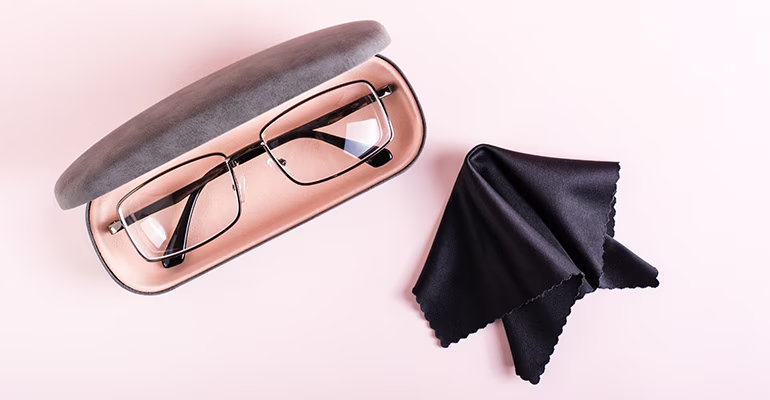
2. Use a Structured Protective Case
Choose a hard-shell case that:
- Prevents compression
- Maintains frame shape
- Blocks dust entry
Soft pouches alone are insufficient for long-term storage.
3. Control Humidity
Ideal humidity range:
40–55% relative humidity
Too dry:
- Materials become brittle.
Too humid:
- Metal corrosion increases.
Silica gel packets help stabilize moisture levels.
4. Avoid Heat Exposure
Never store glasses near:
- Radiators
- Attics
- Car interiors
- Sunny windowsills
Heat warps plastic frames and weakens adhesives.
5. Store in a Neutral Position
Place glasses inside the case:
- Fold temples naturally
- Avoid forcing closure
- Ensure lenses face upward or rest evenly
Pressure imbalance causes gradual misalignment.
Mistakes People Commonly Make When Storing Eyeglasses
Wrapping in Tissue Paper
Paper absorbs moisture unevenly and may scratch lenses.
Sealing in Plastic Bags
Trapped humidity accelerates oxidation.
Leaving in Bathroom Cabinets
Temperature and moisture fluctuate dramatically.
Storing Dirty Frames
Residue chemically reacts with coatings over time.
How Often Should Stored Glasses Be Checked?
Even unused eyewear benefits from occasional inspection.
Recommended schedule:
- Every 3–6 months
During inspection:
- Open and close hinges gently.
- Check screw tightness.
- Wipe away dust.
- Confirm no odor or moisture buildup.
This redistributes tension and prevents stiffness.
Special Considerations for Premium Custom Frames
High-end frames often include delicate materials such as:
- Titanium
- Buffalo horn
- Wood composites
- Hand-polished acetate
These materials require extra care.
Avoid lubrication unless absolutely necessary, as finishes may react unpredictably.
Instead, prioritize environmental stability.
Lens Protection During Long Storage
Lenses are often more vulnerable than frames.
Protect coatings by:
- Keeping lenses clean and dry
- Avoiding chemical exposure
- Using microfiber separators if stacking cases
Never store lenses facing abrasive surfaces.
Traveling or Seasonal Storage Tips
If rotating eyewear seasonally:
- Label cases with prescription details.
- Store upright in drawers.
- Avoid stacking heavy objects on cases.
Consistent organization prevents accidental compression damage.
Signs Your Stored Glasses Need Professional Adjustment
After long storage, seek professional help if you notice:
- Uneven temple alignment
- Loose hinges despite tightening
- Nose pad imbalance
- Frame twisting
Opticians can recalibrate alignment safely without stressing materials.
Why Proper Storage Extends Eyewear Lifespan
Well-preserved eyeglasses can last many years beyond daily-use expectations.
Benefits include:
- Backup readiness during emergencies
- Reduced replacement costs
- Maintained optical accuracy
- Preserved frame aesthetics
Custom eyewear represents both financial and functional investment worth protecting.
A Simple Long-Term Preservation Checklist
Before storing:
✔ Clean lenses and frames
✔ Dry completely
✔ Inspect hinges
✔ Lubricate only if stiff
✔ Place inside hard case
✔ Add silica gel packet
✔ Store in cool, stable environment
Every few months:
✔ Inspect condition
✔ Open and close gently
✔ Remove dust buildup
The Psychology Behind Over-Lubrication
Many people associate maintenance with adding oils or treatments. In precision accessories like eyewear, restraint is often better.
Modern hinges are engineered to operate dry or with minimal factory lubrication. Excess intervention introduces risks rather than benefits.
Think preservation, not modification.
Future Trends in Eyewear Storage and Materials
New eyewear technologies increasingly address long-term durability:
- Self-lubricating hinge materials
- Corrosion-resistant alloys
- Advanced coating chemistry
- Memory-shape polymers
These innovations reduce maintenance needs but still rely on proper storage practices.
Final Thoughts: Preservation Over Lubrication
Long-unused custom eyeglasses do not typically require lubrication before storage. In most cases, applying oil creates more problems than it solves.
The true secret to maintaining eyewear during inactivity lies in:
- Cleanliness
- Controlled humidity
- Stable temperature
- Protective storage
- Occasional inspection
Lubrication should remain a targeted solution for specific hinge stiffness — not a routine step.
By following correct preservation methods, your custom glasses can remain comfortable, aligned, and visually pristine even after years of storage, ready to serve again whenever you need them.
Proper storage transforms eyewear from a temporary accessory into a long-term investment — one that maintains both performance and craftsmanship long after it leaves daily rotation.
Share this post


Soline Classic Gold Base Frame – Wide Rectangle


Mira Gunmetal Gray Cat Eye Base Frame


Living a Multifaceted Life: How Custom Modular Eyewear Defines Your Personal Identity
Yet for years, eyewear has tried to force all these identities into one fixed frame.In a world where people change roles, moods,...
The Secret Weapon for Sculpting Your Face: How to Customize Eyewear Based on Your Cheekbones and Brow Shape
When it comes to elevating your appearance, most people think about hairstyles, makeup, or wardrobe upgrades. But there’s one transformative accessory that...
How Mechanical Clip Systems Make Quick Temple Replacement Possible: The Future of Modular Eyewear Design
Eyewear has evolved far beyond simple vision correction. Today, glasses are fashion statements, performance tools, and everyday essentials that must adapt to...
Why Your Glasses Keep Getting Looser Over Time: How Improper Handling Causes Hidden Structural Damage
Glasses are designed to be durable, precise, and comfortable. Yet many people notice the same frustrating pattern: a new pair fits perfectly...
Are Pink Glasses in Style?
Pink glasses are a timeless symbol of charm and personality. They evoke feelings of compassion, love, and hope, making them a popular...
One-Second Color Switch
How to Match Your Glasses Frame to Today’s Outfit—EffortlesslyLet’s be honest.You don’t wear the same outfit every day.Some days it’s clean and...