


High-Impact Protection: Why Professional Athletes Choose Clip-Lock Eyewear Over Magnetic Glasses
In elite sports, equipment is never an afterthought. Every gram, every hinge, every millimeter of alignment can influence performance. Professional athletes train their bodies to operate at peak efficiency — and they expect the same from their gear.
When it comes to performance eyewear, stability is non-negotiable. Vision clarity, peripheral awareness, impact resistance, and secure fit all matter. Over the past decade, magnetic eyewear designs have gained popularity in the consumer market for their sleek appearance and easy interchangeability. But in high-intensity athletic environments, professionals overwhelmingly choose clip-lock (mechanical latch) eyewear over magnetic systems.
Why?
Because when movement is explosive, speed is high, and impact is unpredictable, mechanical security consistently outperforms magnetic convenience.
This comprehensive guide explores the engineering, biomechanics, safety standards, and real-world performance factors that explain why professional athletes favor clip-lock eyewear in demanding environments.
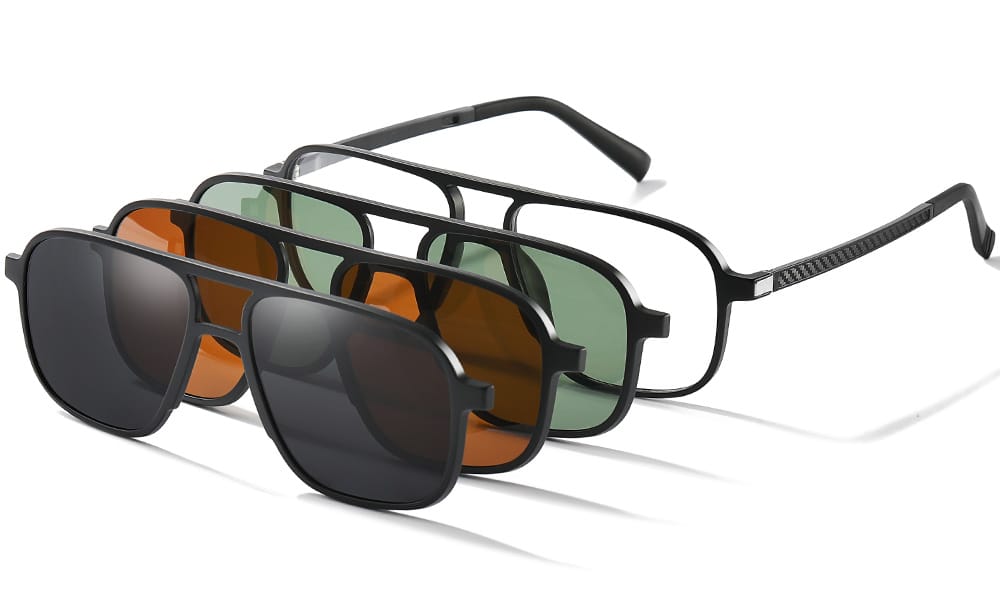
The Demands of Professional Sports Vision
Athletes depend on visual precision for:
- Reaction timing
- Depth perception
- Contrast sensitivity
- Peripheral awareness
- Hand-eye coordination
In sports such as cycling, baseball, tennis, skiing, and basketball, even a slight visual disruption can affect outcome.
Performance eyewear must remain:
- Perfectly aligned
- Secure under vibration
- Stable during rapid head movement
- Resistant to sweat and weather
The attachment system plays a critical role in achieving this stability.
Understanding Magnetic Eyewear Systems
Magnetic eyewear typically uses embedded magnets to attach clip-on lenses, side shields, or interchangeable filters. These systems are popular because they:
- Allow quick switching between lenses
- Offer minimalist aesthetics
- Reduce visible hardware
- Feel lightweight
In low-impact settings, magnets function adequately. But high-performance sports introduce forces that expose inherent limitations.
The Physics of Magnetic Attachment
Magnets rely on attractive force between two surfaces. This force is strongest when:
- Surfaces are directly aligned
- Separation occurs vertically
However, magnetic force weakens under:
- Lateral shear
- Twisting torque
- Repetitive vibration
- Micro-misalignment
Sports environments rarely apply straight pull forces. Instead, they generate multi-directional stress.
Under such conditions, magnetic attachments may:
- Shift slightly out of alignment
- Vibrate loose over time
- Detach during sudden acceleration
Even small shifts can compromise optical precision.
What Is Clip-Lock Eyewear?
Clip-lock eyewear uses mechanical retention systems such as:
- Micro-latches
- Snap-fit grooves
- Hook-and-channel designs
- Locking tabs
- Pressure clips
These systems create structural engagement between frame and attachment.
Instead of relying on magnetic attraction, they require physical disengagement to separate.
The result: higher resistance to motion-induced forces.
High-Impact Environments Demand Mechanical Security
Professional athletes routinely encounter:
- Hard landings
- Shoulder contact
- Rapid head turns
- Wind resistance
- Sweat saturation
- Equipment collisions
Magnetic systems can weaken under repeated stress. Clip-lock systems distribute force across mechanical anchor points, reducing the chance of accidental release.
In sports like mountain biking or downhill skiing, where vibration is constant, mechanical locking systems maintain consistent hold.
Stability protects both performance and safety.
Optical Alignment: Precision Matters
Performance lenses often include:
- Polarization
- Contrast enhancement
- UV filtration
- Glare reduction coatings
These features require precise alignment relative to the eye.
If a magnetic lens shifts even slightly:
- Polarization angle may misalign
- Peripheral distortion may occur
- Light leakage may increase
Mechanical clip-lock systems maintain fixed positioning, ensuring optical consistency throughout activity.
For professionals, optical reliability is not optional.
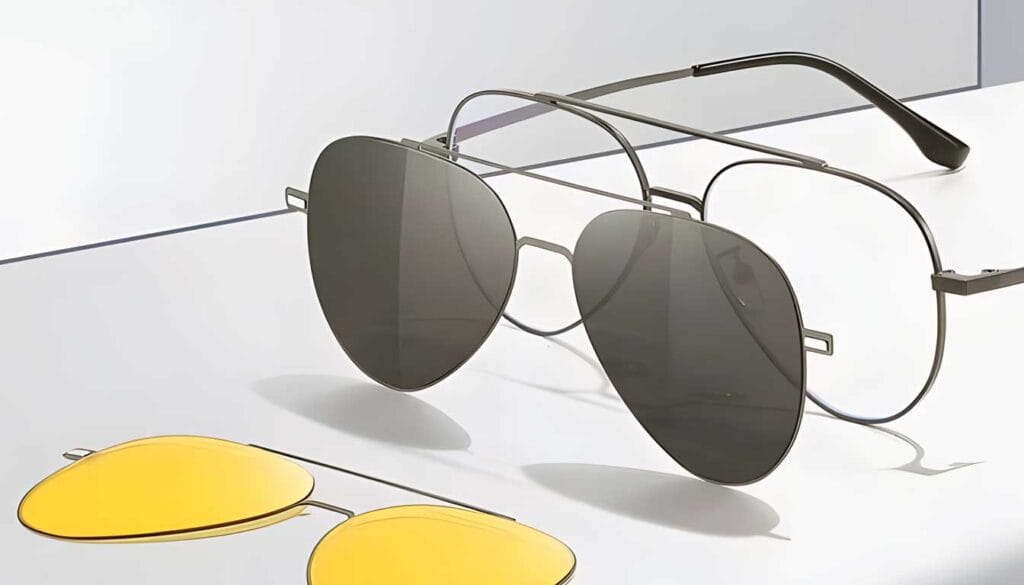
Wind Resistance and Aerodynamics
Cyclists, runners, and skiers face sustained airflow at high speeds.
Wind exerts:
- Upward lift
- Side shear
- Vibration
Magnetic attachments can gradually loosen under prolonged aerodynamic stress.
Clip-lock designs anchor lenses securely into frame channels, preventing wind-induced displacement.
This makes mechanical systems particularly favored in endurance and high-speed sports.
Sweat, Moisture, and Environmental Stress
Athletes produce significant sweat during competition. Moisture can:
- Reduce friction between surfaces
- Cause magnetic corrosion over time
- Introduce debris at attachment points
Mechanical clip systems are less sensitive to moisture because retention depends on structural geometry rather than surface attraction.
In rainy or humid environments, mechanical locks provide greater reliability.
Impact and Collision Safety
In contact sports, eyewear may absorb unexpected blows.
If a magnetic lens detaches upon impact, it can:
- Expose the eye
- Create distraction
- Become a projectile hazard
Mechanical clip-lock systems require intentional disengagement, reducing accidental release during collision.
Safety testing standards in high-impact environments often prioritize mechanical retention.
Long-Term Durability
Magnets can degrade over time due to:
- Heat exposure
- Repeated impact
- Environmental oxidation
- Material fatigue
While high-quality magnets are durable, mechanical latches typically maintain consistent strength across longer usage cycles.
Professional athletes train daily. Their equipment endures intense repetition.
Longevity matters.
Psychological Confidence and Focus
Elite performance requires mental clarity.
If athletes worry about gear shifting or detaching, focus suffers.
Magnetic systems sometimes create subtle uncertainty:
- Did it fully align?
- Will it shift during sprinting?
- Is it seated correctly?
Clip-lock systems often provide tactile or audible confirmation — a “click” that signals secure engagement.
Confidence reduces distraction.
Equipment Standards in Professional Sports
In professional leagues and sanctioned competitions, safety standards frequently emphasize:
- Secure attachment
- Impact resistance
- Mechanical integrity
Many performance eyewear manufacturers design their professional lines around mechanical retention systems.
This is not coincidence. It reflects field testing in real athletic environments.
Weight Considerations: A Myth of Magnetic Superiority
Magnetic systems are often marketed as lighter.
However, modern clip-lock designs use:
- Advanced composite materials
- Lightweight polymers
- Precision-molded micro-components
The actual weight difference is minimal.
Professional athletes consistently prioritize stability over negligible weight savings.
Real-World Performance Comparison
| Performance Factor | Magnetic Eyewear | Clip-Lock Eyewear |
|---|---|---|
| Quick lens change | Excellent | Very Good |
| Lateral stability | Moderate | Excellent |
| Vibration resistance | Moderate | Excellent |
| Wind resistance | Moderate | Excellent |
| Impact retention | Moderate | High |
| Long-term durability | Moderate | High |
For everyday casual wear, magnetic systems may suffice.
For elite athletic performance, mechanical retention wins.
Which Sports Favor Clip-Lock Designs?
Clip-lock eyewear is especially common in:
- Road cycling
- Mountain biking
- Baseball
- Skiing and snowboarding
- Track and field
- Triathlon
- Tactical training
These sports demand unwavering optical stability under dynamic motion.
Are Magnetic Glasses Ever Appropriate?
Magnetic eyewear can work well for:
- Office transitions (indoor to outdoor)
- Casual walking
- Low-impact recreation
- Fashion-forward designs
The issue isn’t that magnets are inherently bad. It’s that high-intensity sports expose their limitations.
Engineering Principles: Why Structure Beats Attraction
Magnetic systems rely on field strength.
Mechanical systems rely on physical geometry.
Under multidirectional force, structural interlocking:
- Distributes stress
- Resists shear
- Maintains alignment
- Prevents micro-shift
In physics and engineering, mechanical engagement consistently outperforms magnetic attachment in high-load conditions.
Athletic environments are high-load conditions.
The Broader Lesson: Gear Should Match Lifestyle
Professional athletes choose clip-lock eyewear because their environment demands it.
But you don’t have to be a pro to benefit.
If you:
- Run daily
- Cycle long distances
- Train outdoors
- Play contact sports
- Move constantly throughout the day
Mechanical retention systems provide extra protection and reliability.
Final Thoughts: Performance Over Convenience
Magnetic eyewear prioritizes simplicity and minimalist design.
Clip-lock eyewear prioritizes structural stability and impact resistance.
In high-intensity athletic environments, secure attachment protects:
- Vision clarity
- Eye safety
- Competitive focus
- Long-term durability
That’s why professional athletes consistently choose clip-lock designs over magnetic systems.
When speed increases and impact becomes unpredictable, stability matters more than convenience.
In the world of high-performance sports, mechanical precision isn’t just a preference — it’s a necessity.

Share this post
Soline Light Gold Base Frame - Wide Rectangle


Living a Multifaceted Life: How Custom Modular Eyewear Defines Your Personal Identity
Yet for years, eyewear has tried to force all these identities into one fixed frame.In a world where people change roles, moods,...
The Secret Weapon for Sculpting Your Face: How to Customize Eyewear Based on Your Cheekbones and Brow Shape
When it comes to elevating your appearance, most people think about hairstyles, makeup, or wardrobe upgrades. But there’s one transformative accessory that...
Are Pink Glasses in Style?
Pink glasses are a timeless symbol of charm and personality. They evoke feelings of compassion, love, and hope, making them a popular...
One-Second Color Switch
How to Match Your Glasses Frame to Today’s Outfit—EffortlesslyLet’s be honest.You don’t wear the same outfit every day.Some days it’s clean and...
“Five O’Clock Headache”: Could Custom Eyewear Be the Cure for Your Daily Fatigue?
Around 4:30 p.m., your focus softens. By 5:00 p.m., there’s a dull pressure behind your eyes. Your temples tighten. The screen feels...
Nerd Glasses: Choosing the Best Pair to Match Your Style
Nerd glasses have evolved from being a stereotype to a trendy fashion statement. With their unique designs and bold frames, these glasses...