


The Physics Behind the Click: Why Clip-Lock Glasses Outperform Magnetic Eyewear
In recent years, magnetic eyewear has gained popularity for its sleek design, easy lens swapping, and minimalist appeal. A quick snap, and lenses attach effortlessly. It’s satisfying, elegant, and seemingly convenient. But for anyone who values stability, precision, and high-impact reliability, magnetic systems fall short.
Professional athletes, outdoor enthusiasts, and safety-focused eyewear users overwhelmingly prefer mechanical clip-lock glasses. The reason isn’t marketing — it’s physics. The audible click of a mechanical latch is more than a satisfying sound; it’s proof that forces are securely distributed, alignment is locked, and the eyewear can withstand dynamic, unpredictable movement.
This article explores the physics of mechanical clip-lock glasses, the limitations of magnetic eyewear, and why mechanical systems are superior for stability, alignment, and performance under stress.
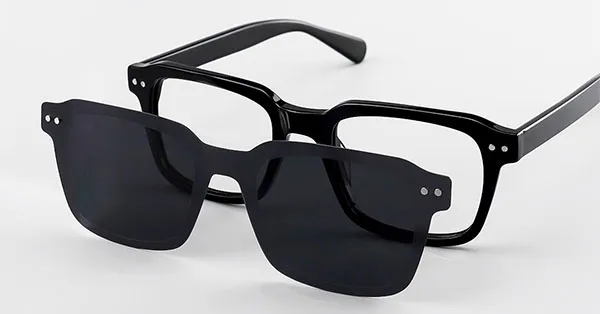
How Magnetic Eyewear Works
Magnetic glasses rely on magnetic force to hold lenses or attachments in place. Each magnet creates a field that attracts a corresponding metal component or another magnet. The strength of this connection depends on:
- The magnet’s field strength
- Alignment of the magnetic poles
- Distance between components
Magnetic systems are effective for low-stress applications like casual sunglasses, office eyewear, or fashion-driven designs. They offer quick interchangeability without visible hardware.
However, their performance dramatically decreases under multi-directional forces, such as twisting, lateral shear, or vibration — all common in active or professional environments.
Mechanical Clip-Lock Glasses: How They Work
Mechanical clip-lock glasses rely on structural engagement rather than field attraction. Typical designs include:
- Snap-fit tabs
- Hook-and-channel latches
- Micro-spring clips
- Sliding groove locks
When the components snap together, they create:
- Interlocking geometry – Forces are distributed across contact surfaces rather than relying on attraction.
- Friction resistance – Surfaces in contact resist lateral and rotational forces.
- Multi-point anchoring – Multiple engagement points reduce stress on any single latch.
The “click” you hear is the mechanical confirmation of full engagement, signaling stability and alignment.
Shear and Torque Resistance
One of the fundamental weaknesses of magnetic eyewear is its inability to resist shear and torque forces.
- Shear forces push lenses sideways relative to the frame.
- Torque forces twist the lens or frame around an axis.
Magnets are strongest when pulled directly apart along the axial plane. Sideways or rotational forces drastically reduce the holding strength.
Mechanical clips, by contrast, convert shear and torque into compressive forces along their interlocking geometry, keeping lenses aligned and firmly in place even during vigorous movement.
Vibration Resistance
Active users — cyclists, runners, skiers, or athletes — expose eyewear to repetitive vibrations.
- Magnetic attachments can shift slightly with each vibration, gradually loosening over time.
- Clip-lock glasses remain locked due to mechanical engagement and multi-point contact.
Vibration that might compromise magnetic lenses has virtually no effect on properly designed mechanical clip systems.
Impact and Shock Absorption
Magnetic lenses can detach or misalign when subjected to sudden impacts, such as:
- A fall while cycling
- Collisions during sports
- Accidental bumps against hard surfaces
Mechanical clips distribute the force of impact across multiple surfaces, maintaining engagement and alignment. The click-lock system effectively absorbs shock while holding components securely.
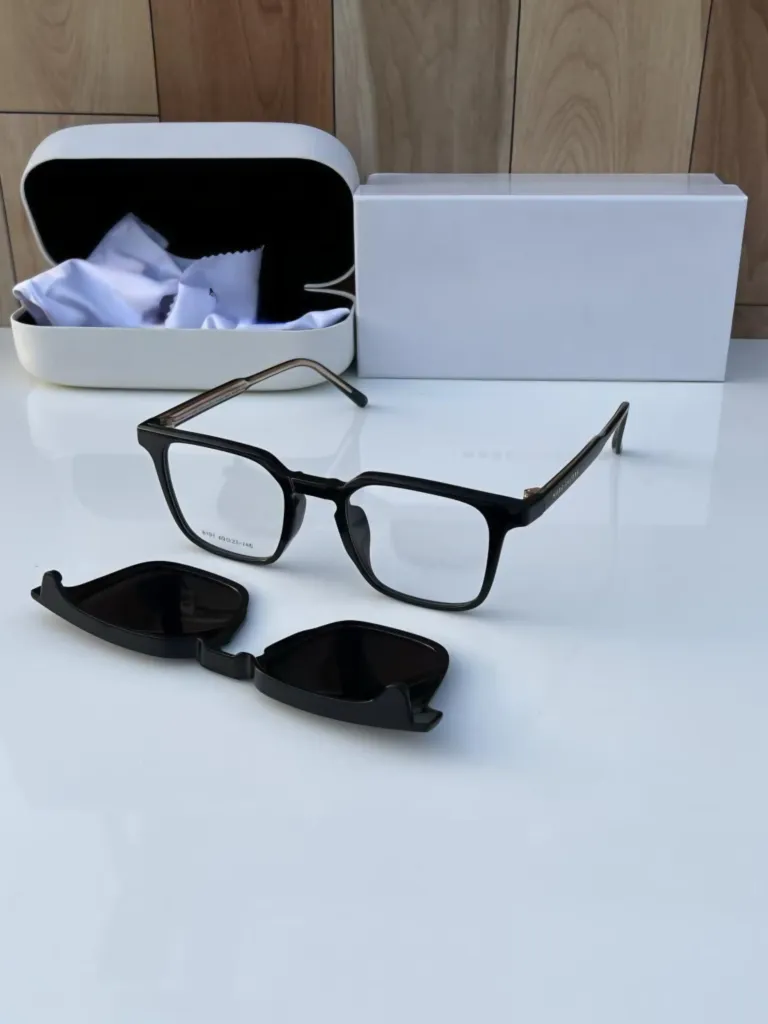
Alignment and Optical Precision
For professional and high-performance users, even a minor lens misalignment can cause:
- Polarization errors
- Distorted vision
- Reduced depth perception
- Light leakage
Magnetic systems allow micro-movements that compromise alignment. Mechanical clip-lock glasses constrain the lens in predetermined positions, ensuring consistent optical performance.
Tactile and audible feedback ensures the user knows the lens is fully seated — a feature magnets lack.
Environmental Resilience
Magnetic systems are affected by:
- Dust accumulation
- Moisture and sweat
- Corrosion or oxidation
- Temperature fluctuations
Mechanical clip systems rely on geometry and material properties, making them largely immune to environmental factors. This is crucial for outdoor athletes and users in humid or variable climates.
Durability Over Time
Magnets can gradually weaken under repeated stress, heat, or impact, decreasing attachment reliability.
Mechanical clips maintain consistent performance because:
- The locking geometry remains stable
- Material fatigue occurs gradually and predictably
- Multi-point engagement preserves overall stability
This makes mechanical clip-lock glasses ideal for long-term use and repeated assembly/disassembly.
The Click: Psychological and Safety Benefits
The audible “click” isn’t just satisfying — it signals full engagement and secure attachment.
- Provides confidence in high-impact environments
- Reduces the risk of accidental detachment
- Enhances focus for athletes and professionals
Magnetic systems provide no such confirmation. Users can’t feel whether the lens is fully seated or if lateral forces may cause misalignment.
Practical Examples of Mechanical Superiority
- Athletic Eyewear: Maintains lens position during running, skiing, cycling, and other high-impact activities.
- Protective Glasses: Resists detachment in industrial, tactical, and safety-critical settings.
- Modular Lenses: Clip-lock designs enable interchangeable lenses without sacrificing stability.
- Outdoor Sunglasses: Retains secure attachment under wind, vibration, and uneven terrain.
These applications demand predictable, repeatable performance, where magnets simply cannot compete.
Weight and Design Considerations
A common misconception is that magnets are lighter and therefore preferable. Modern clip-lock designs:
- Use lightweight, durable polymers
- Employ precision-engineered micro-latches
- Offer minimal visual hardware
The slight weight difference is negligible compared to the stability and safety benefits.
Hybrid Systems: Magnetic Alignment, Mechanical Security
Some advanced eyewear combines magnetic guidance with mechanical locking:
- Magnets help align the lens quickly
- Clips provide structural stability and shock resistance
Even in hybrids, the primary holding power comes from mechanical engagement, not the magnets.
Engineering Principles: Geometry vs. Field Strength
- Magnetic attachment = field-dependent, susceptible to lateral and rotational forces.
- Mechanical clips = geometry-dependent, distributing load across surfaces.
In dynamic or high-stress conditions, structural engagement always outperforms magnetic attraction.
Who Benefits Most From Clip-Lock Glasses?
- Professional and amateur athletes
- Outdoor enthusiasts
- Industrial workers or technicians
- Anyone in high-movement or high-impact environments
If stability, safety, and optical performance matter, mechanical clip-lock glasses are the clear choice.
Conclusion: The Physics of Stability
Magnetic glasses are convenient and elegant for low-stress applications. But mechanical clip-lock systems dominate when stability, durability, and alignment precision are required.
The click you hear is more than satisfying — it’s proof that forces are properly distributed, lenses are aligned, and the eyewear will perform under stress.
For professionals, athletes, and anyone seeking reliable, high-performance eyewear, mechanical clips provide security magnets cannot match.
In the battle between convenience and reliability, the physics is clear: geometry beats magnetism every time.
Share this post


Living a Multifaceted Life: How Custom Modular Eyewear Defines Your Personal Identity
Yet for years, eyewear has tried to force all these identities into one fixed frame.In a world where people change roles, moods,...
The Secret Weapon for Sculpting Your Face: How to Customize Eyewear Based on Your Cheekbones and Brow Shape
When it comes to elevating your appearance, most people think about hairstyles, makeup, or wardrobe upgrades. But there’s one transformative accessory that...
Are Pink Glasses in Style?
Pink glasses are a timeless symbol of charm and personality. They evoke feelings of compassion, love, and hope, making them a popular...
One-Second Color Switch
How to Match Your Glasses Frame to Today’s Outfit—EffortlesslyLet’s be honest.You don’t wear the same outfit every day.Some days it’s clean and...
“Five O’Clock Headache”: Could Custom Eyewear Be the Cure for Your Daily Fatigue?
Around 4:30 p.m., your focus softens. By 5:00 p.m., there’s a dull pressure behind your eyes. Your temples tighten. The screen feels...
Nerd Glasses: Choosing the Best Pair to Match Your Style
Nerd glasses have evolved from being a stereotype to a trendy fashion statement. With their unique designs and bold frames, these glasses...